
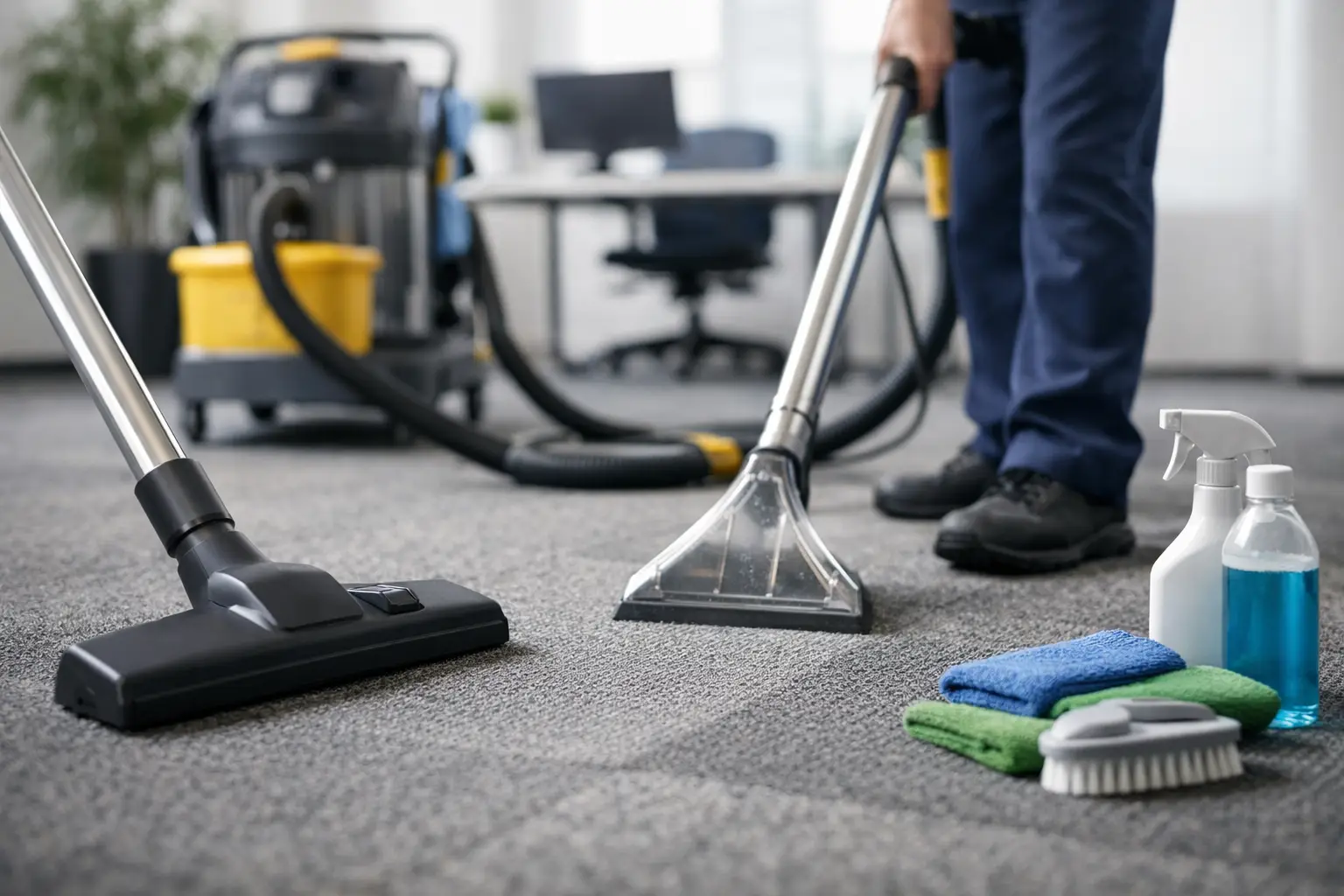
A carpeted office can look clean at 8:00 a.m. and tired by lunch. A few wet shoes, rolling chairs, coffee drips, and constant foot traffic are all it takes. That is why the best office carpet maintenance practices are not about quick cosmetic fixes. They are about protecting appearance, indoor air quality, and the life of the carpet before traffic patterns, stains, and odors become permanent problems.
Why office carpet fails faster than most managers expect
Office carpet takes a different kind of abuse than residential carpet. The damage is not always dramatic, but it is constant. Fine grit gets tracked in from parking lots and sidewalks, then ground into the fibers under shoes and chair wheels. That abrasive soil acts like sandpaper. Over time, the carpet starts looking gray, matted, and worn even if nobody can point to a single spill.
Then there is moisture. In Wisconsin, seasonal slush, salt, mud, and rain create a cycle that can beat up entryways and hallways in a hurry. Once that contamination settles into the carpet, vacuuming alone will not fully correct it. If the buildup continues, the office starts to carry a stale smell and the carpet loses the clean, professional look customers and staff notice right away.
Best office carpet maintenance practices start with traffic control
The biggest mistake in office carpet care is treating every square foot the same. Some areas hardly get touched. Others get hammered all day. Entry zones, reception areas, hallways, conference rooms, and paths between desks usually need far more attention than perimeter spaces or private offices.
A good maintenance plan starts by identifying those hot spots and building the schedule around them. If you wait until the entire office looks dirty, you are already behind. Carpet should be maintained based on traffic load, not just the calendar.
Walk-off mats help a lot, but only if they are long enough and kept clean. A mat packed with dirt stops catching dirt. In many offices, a better mat program can reduce how much grit reaches the carpet in the first place. That is one of the simplest ways to slow down wear.
Vacuuming is not glamorous, but it does most of the heavy lifting
If an office wants carpets to last, vacuuming has to be taken seriously. This is where many maintenance plans fail. Either the vacuuming is inconsistent, or it is done with equipment that leaves too much embedded soil behind.
Daily vacuuming in high-traffic areas is often the right move. Moderate-traffic spaces may do well with several passes a week. Low-use areas can usually be addressed less often. The point is not to overdo it everywhere. The point is to stay ahead of soil in the areas where it builds fastest.
Technique matters too. Fast, rushed passes over the surface do not remove much from the base of the pile. Slower vacuuming with overlapping passes gives better results, especially in commercial carpet that traps fine debris deep in the fibers. If the office has entry salt, dry soil, or visible grit, more frequent vacuuming is not optional. It is basic protection.
Spill response needs to happen right away
Office stains get worse because people hesitate. Someone notices a coffee spill, puts a paper towel over it, and plans to deal with it later. Later usually means the stain sets, spreads, or wicks back after a partial cleanup.
The better approach is immediate blotting and controlled spot treatment. Blot, do not scrub. Scrubbing roughs up fibers and can spread the stain deeper into the carpet. Use a clean white towel so dye does not transfer. Work from the outside toward the center to avoid enlarging the spot.
Not every spill should be handled the same way. Coffee, tracked-in mud, food grease, toner, and restroom-related accidents all behave differently. That is where offices get in trouble with over-the-counter products. A harsh spotter may remove one stain and leave behind residue that attracts more soil, or worse, cause discoloration. When the stain is significant or the source is unknown, professional treatment is the safer move.
Best office carpet maintenance practices include periodic deep cleaning
Even a well-vacuumed office carpet still holds embedded soil, allergens, oils, and residues that routine maintenance cannot fully remove. That is why periodic deep cleaning is essential. This is not about making the carpet smell fresh for a day. It is about flushing out what settles below the surface and restoring the fibers as much as possible.
Truckmounted hot water extraction remains the highest-standard method for this kind of work when it is done correctly by trained technicians. It reaches deep into the carpet, removes embedded dirt, and helps address stains and odors in a way surface cleaning cannot match. For offices that need dependable, noticeable results, this method gives a stronger reset than basic maintenance alone.
How often should deep cleaning happen? It depends on the office. A small professional office with light foot traffic may need less frequent service than a busy medical waiting area, retail floor, or property management office with heavy public traffic. The right schedule is based on use, soil load, weather exposure, and appearance standards. Waiting until the carpet looks obviously dirty usually means the office has already lost ground.
Odor control is part of carpet care, not a separate issue
If an office carpet smells off, there is usually a reason. Moisture, food spills, winter slush, and repeated foot traffic can create odor issues that simple deodorizing will not solve. Covering the smell is not cleaning. It is delaying the real fix.
True odor control means identifying the source and removing it from the carpet and, when necessary, the pad or affected area below. This matters in shared spaces where staff and customers are close to the flooring all day. A clean-looking office that smells stale still feels unclean.
Pet-related issues can also show up in offices more often than people think, especially in mixed-use buildings or small businesses where animals are occasionally present. Those situations need targeted treatment, not guesswork.
Protecting appearance between professional cleanings
Maintenance is easier when the office team pays attention to small habits. Rolling chairs should be used with proper chair mats where needed because repeated wheel traffic can crush and distort carpet fibers. Entry doors should be watched during wet weather so water and mud do not spread unchecked. Food and drink policies matter too, especially in conference rooms and at workstations.
Furniture can also create hidden wear patterns. If the same lanes are used every day and furniture never shifts, carpet wear becomes concentrated and obvious. In some layouts, modest adjustments help distribute traffic more evenly. It is not a cure-all, but it can buy time.
Another practical step is keeping HVAC filters maintained. Offices collect airborne dust, and much of it eventually settles into carpet. Good filtration supports cleaner flooring and better indoor air quality at the same time.
What businesses should avoid
One of the worst habits is relying on janitorial shortcuts that make the carpet look decent for a day while leaving behind residue or moisture issues. Another is using the wrong spotting products without understanding the fiber type, stain source, or proper rinse process.
It is also a mistake to treat carpet maintenance as a reaction-only task. Once high-traffic lanes are blackened, fibers are crushed, and odors are set in, results become more limited. Professional cleaning can make a major improvement, but neglected carpet does not always bounce all the way back. Preventive care gives the best return.
For offices that want a cleaner, sharper-looking space, quality matters. Workmanship matters. Safe, effective cleaning agents matter. And trained technicians matter. A maintenance plan built around real use patterns will always outperform random cleanup and occasional emergency calls.
At Lake Geneva Carpet Cleaning, we have seen the difference a proper maintenance schedule makes for commercial carpet. Offices that stay ahead of traffic, spills, and embedded soil keep their carpets looking better longer and avoid the constant cycle of decline that comes from waiting too long.
If your office carpet is starting to show traffic lanes, hold odors, or look tired long before it should, that is the signal to tighten up your maintenance plan and bring in a professional when routine care is no longer enough. Clean carpet does more than improve appearance. It tells everyone who walks in that your business pays attention to the details that matter.
Leave a Reply