
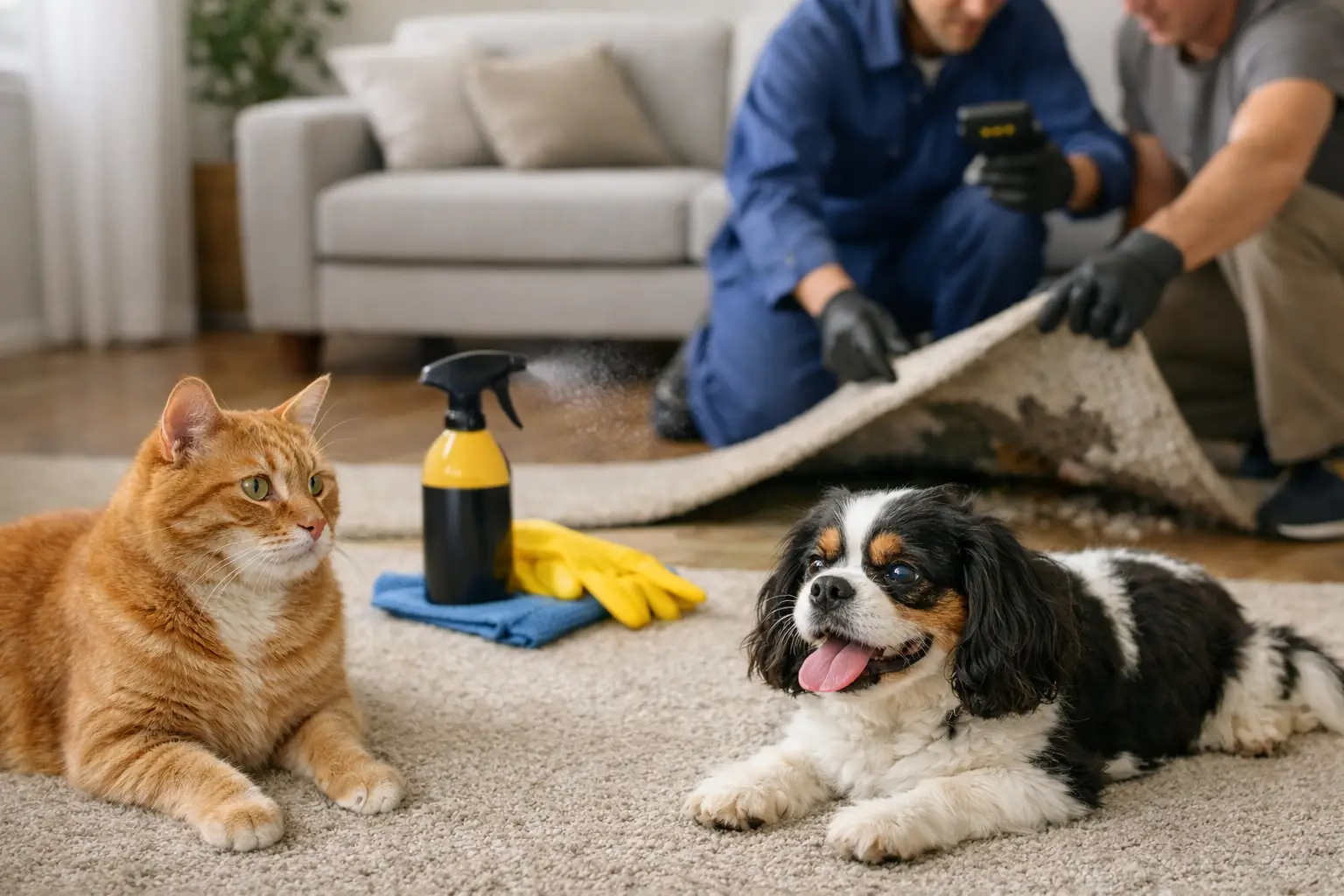
The smell hit before the front door fully opened. Not a light pet smell you notice only if you are looking for it – a heavy, built-up urine odor that had settled into the carpet, the pad, and the room itself. This pet odor treatment case study is a good example of what happens when surface cleaning is asked to solve a deep contamination problem. It also shows why the right process matters more than quick cosmetic results.
In this home, the customer had done what most people do first. They blotted accidents, used store-bought spot products, and ran a rented machine over the problem areas more than once. The carpet looked better for a short time, but the odor kept coming back, especially on humid days. That detail matters. When pet odor gets worse with moisture in the air, it is often a sign that urine residue is still active below the surface.
This was not a case where a little deodorizer was going to fix the problem. It needed inspection, targeted treatment, and true deep extraction.
What made this pet odor treatment case study different
The first step was not cleaning. It was figuring out how far the problem had spread. Pet odor is rarely limited to the visible stain. Urine can wick out through the carpet face fibers, soak into the backing, reach the pad, and in some cases affect the subfloor. If you treat only what you can see, you usually leave the source behind.
In this home, the strongest odor was in two connected rooms where the family dog had repeated accidents over time. Some spots were obvious. Others were not visible at all but showed up clearly during inspection. That is common in homes with older pet contamination. The carpet may not look terrible, yet the odor is strong because the contamination is concentrated underneath.
There is also a trade-off that homeowners deserve to hear plainly. Not every pet odor issue can be solved with one standard cleaning visit. If the contamination is light and recent, treatment is often straightforward. If the urine has dried repeatedly over months or years, the process becomes more involved. Honest contractors should say that upfront.
Why the odor kept returning
A lot of recurring pet odor problems come from one simple mistake: treating the symptom instead of the source. Room sprays, powders, and light shampooing may cover odor for a while, but they do not remove the urine salts and organic contamination embedded in the carpet system. Once humidity rises or the carpet picks up moisture again, the smell comes right back.
Another issue is over-wetting from consumer machines. If too much water is used and not fully recovered, contamination can spread deeper or wider. That can make the room smell even worse later. Homeowners are not wrong for trying these products first, but there is a point where DIY work starts adding to the problem.
In this case, previous attempts had improved appearance but not removal. The carpet fibers were holding residue, and the pad had absorbed enough contamination that odor was lingering in the entire area. The customer did not need fragrance. They needed real remediation.
The treatment process that solved the problem
The solution started with targeted urine treatment in the affected zones. This is where experience matters. Different odor situations call for different chemistry, dwell time, and extraction technique. A trained technician has to identify whether the issue is isolated spotting, widespread contamination, or something severe enough to require more invasive correction.
For this home, the carpet was pretreated in the heavy-use odor areas with pet-specific treatment designed to break down contamination, not just mask it. The treated areas were given proper dwell time so the solution could do its job. Rushing this step is one of the biggest reasons odor work fails.
After that, the carpet was thoroughly cleaned using truckmounted hot water extraction. This method is the highest standard for deep carpet cleaning because it flushes out embedded soil and treatment residue while delivering much stronger recovery than portable or rental equipment. When you are dealing with pet odor, extraction power is not a luxury. It is the difference between moving contamination around and actually removing it.
The high-odor sections received extra attention. Instead of giving the entire room a quick pass and calling it good, the treatment focused on the worst zones until recovery improved. That matters because odor problems are rarely uniform. A quality-first process adjusts to the condition of the carpet instead of forcing every job into the same routine.
The cleaning agents used were pet-safe and appropriate for occupied homes. That is another point worth making. Strong odor treatment should not mean careless chemistry. You can be aggressive on contamination and still be responsible about safety.
What changed after cleaning
The first result was immediate. The heavy urine smell that had been obvious at the door was dramatically reduced after treatment and extraction. The rooms smelled cleaner, but more importantly, they no longer had that sour, built-up odor that had been hanging in the background.
The second result showed up over the next several days. In many failed odor jobs, the smell returns as the carpet dries or humidity shifts. In this case, the improvement held because the source material had been properly treated and extracted. That is the real test. Anyone can make a room smell better for an hour.
Appearance improved too. Several stained areas lightened significantly once the urine residues and general soil were removed. Not every pet stain disappears completely, especially if dyes have been permanently affected, but odor control and sanitation were the customer’s biggest concerns, and those were addressed.
There is an important distinction here. Professional carpet cleaning can deliver major improvement, and in many cases full odor resolution, but severe long-term contamination sometimes involves the pad or subfloor beyond what surface-access treatment alone can correct. That does not mean the process failed. It means proper diagnosis matters. In this home, the contamination was serious but still within a range where advanced treatment and extraction produced the result the customer needed.
What homeowners should learn from this case
If your carpet smells fine right after you spray something on it, that tells you almost nothing. The real question is what happens after a few days, after the room is closed up, or after a humid afternoon. Persistent odor means the source is still there.
This pet odor treatment case study also shows why waiting too long can make the job harder. Fresh accidents are easier to address than repeated contamination that has had time to soak deep and dry over and over. The longer urine sits, the more likely it is to spread, crystallize, and bond into the carpet system.
It also shows the value of using the right method. Deep odor issues call for more than basic surface cleaning. Truckmounted hot water extraction, paired with correct urine treatment, gives far better removal than light cleaning approaches that leave residue behind. For families with pets, kids, or allergy concerns, that deeper level of cleaning does more than improve smell. It helps improve the overall condition of the living space.
For local homeowners and small businesses dealing with pet accidents, the takeaway is simple. If the odor keeps returning, the problem is deeper than the carpet surface. That is when professional inspection and real extraction work become worth it.
Lake Geneva Carpet Cleaning handles these situations with the kind of workmanship that comes from decades in the field, not guesswork. When a carpet has absorbed pet odor, the goal is not to cover it up. The goal is to remove as much of the contamination as the condition allows and give the customer an honest assessment of what the carpet needs.
If your home still carries that pet smell no matter what you try, do not keep throwing products at it and hoping for a different result. A proper diagnosis, the right treatment, and deep extraction can change the room far more than most people expect – and the sooner you address it, the better your chances of a complete turnaround.
Leave a Reply