
If your carpet still looks dull a week after cleaning, or the same spots seem to come back, the real issue may be the method. When people compare steam cleaning vs shampooing, they are really asking a more important question: which process actually removes soil from the carpet instead of just improving the appearance for a short time.
That distinction matters. Carpet is a filter in your home or business. It holds dirt, allergens, oils, pet residue, and tracked-in grime deep in the fibers. If the cleaning method does not remove that material thoroughly, the carpet may look better for the moment but continue to wear down faster, hold odors, and attract more soil.
Steam cleaning vs shampooing: what is the difference?
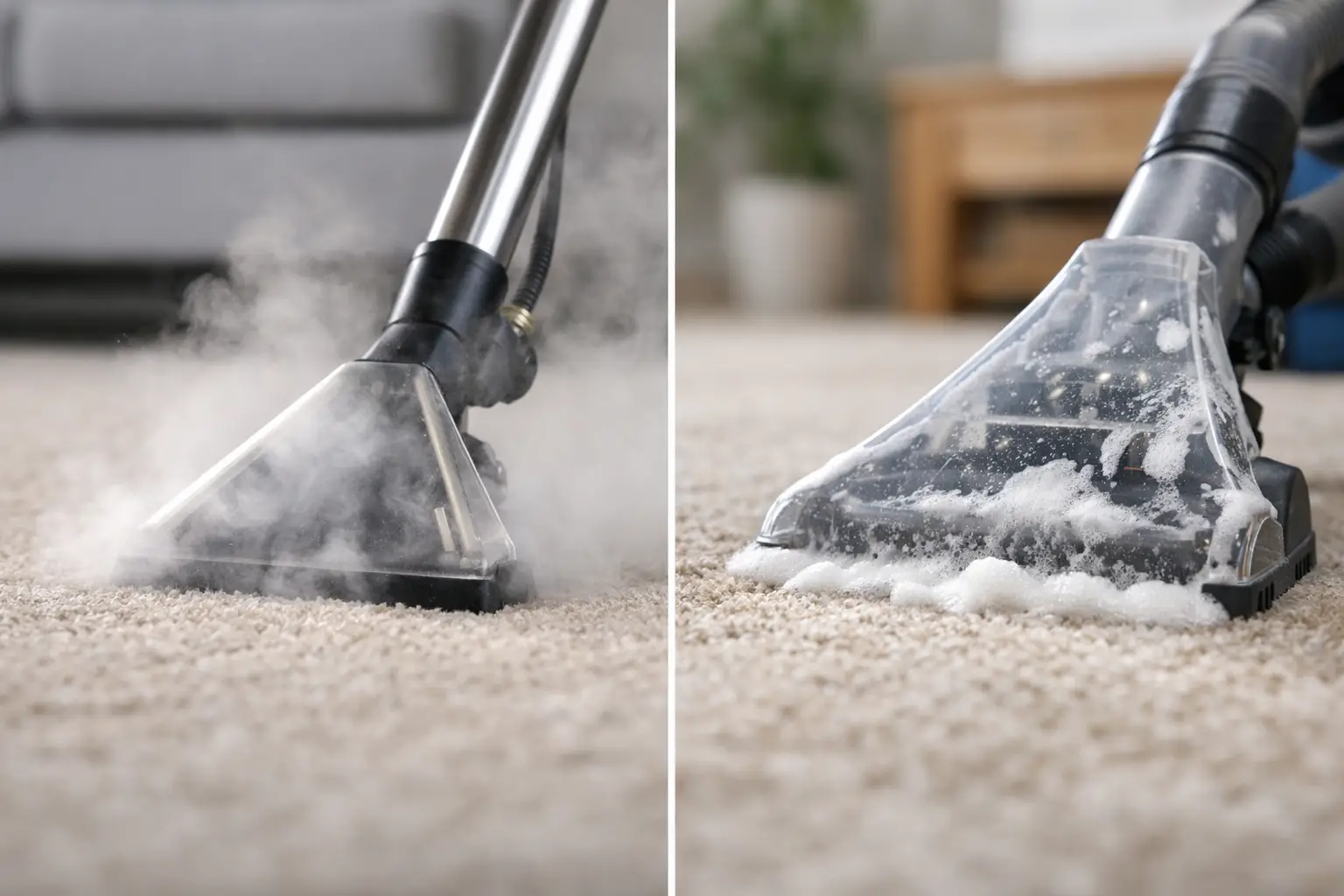
Shampooing is the older method many people picture when they think of carpet cleaning. A foamy detergent is worked into the carpet with a machine, brushes, or rotating equipment. The product loosens surface soils, and some of the material is then extracted. The problem is that shampooing often leaves behind detergent residue in the carpet. That sticky residue can keep attracting dirt after the job is done.
Steam cleaning, as the term is commonly used, usually refers to hot water extraction. This is the method professional cleaners rely on when the goal is deep, complete cleaning. Hot water and cleaning solution are applied into the carpet, then powerful extraction pulls the water, loosened dirt, allergens, and contaminants back out. With truckmounted hot water extraction, the process has far more suction and rinsing power than basic consumer equipment.
Despite the name, this method does not clean carpet with steam alone. The real advantage is hot water, proper chemistry, and strong extraction. That combination reaches deeper into the pile and removes more of what should not be there.
Why shampooing can leave carpets looking clean but not staying clean
Shampooing has one strength: it can improve appearance quickly, especially on heavily soiled traffic lanes. The agitation helps break up grime on the surface, and that can create a noticeable visual change.
But appearance is not the same as a thorough rinse. When too much detergent remains in the carpet, it acts almost like a magnet for new dirt. That is one reason carpets can start looking dirty again sooner than expected after a shampoo-based cleaning. In homes with kids, pets, or heavy foot traffic, that issue shows up fast.
There is also the question of moisture control. If carpet is overwet during shampooing and not extracted well, drying can take longer. Extra moisture left in the backing or pad is never something you want, especially in areas already dealing with spills, pet accidents, or humidity.
None of this means shampooing never has a place. On certain heavily impacted carpets, agitation can play a useful role as part of the cleaning process. But as a stand-alone approach, it is usually not the highest standard for deep soil removal.
Why hot water extraction is the professional standard
When the goal is a healthier, longer-lasting clean, hot water extraction is the method that consistently performs better. It does more than loosen dirt. It flushes and removes it.
That matters for households dealing with pet odors, seasonal mud, winter salt, food spills, or allergy concerns. Soil does not just sit on the tips of the fibers. It works its way down, and every step grinds it in further. A quality extraction process removes embedded grit that wears carpet down from the inside.
This is also why trained technicians and commercial-grade equipment matter. A machine from a hardware store may put down water, but it usually cannot recover enough of it. Professional truckmounted systems deliver stronger heat, stronger vacuum, and better rinse performance. That means less residue, better soil removal, and faster drying under proper conditions.
For homeowners and small businesses that care about results, that difference is not minor. It is the difference between cleaning the carpet and truly restoring it.
Steam cleaning vs shampooing for stains, odors, and pets
This is where the gap really widens. If you are dealing with pet accidents, food spills, tracked-in grime, or lingering odors, the carpet needs more than a surface treatment.
Shampooing can sometimes make a carpet smell cleaner at first because of the product used. But if odor-causing contamination remains down in the carpet or backing, the smell usually returns. The same is true with many spots. They may fade after cleaning, then wick back up as the carpet dries if the source was never fully removed.
Hot water extraction gives a cleaner a better shot at reaching below the surface and removing the source material. For pet issues, odor treatment often needs to be paired with targeted remediation. For stains, success depends on the stain type, how long it has been there, and whether previous attempts set it. But overall, extraction gives far better odds because it is built around removal, not just agitation and appearance.
If you have ever had a spot come back after a cleaning, that is not your imagination. It is usually a sign that the issue was treated cosmetically instead of thoroughly.
Which method is better for carpet life?
Carpet is an investment, and the cleaning method affects how long it holds up. Dirt particles are abrasive. As people walk across the carpet, those particles grind against the fibers and cause wear. The more completely you remove that embedded grit, the better your carpet can maintain its texture and appearance.
This is another area where hot water extraction has the edge. Since it removes more soil and leaves less residue behind, it helps carpet stay cleaner longer between appointments. That can reduce repeated buildup over time.
Shampoo residue, on the other hand, can lead to faster resoiling. More soil in the carpet means more abrasion. Over time, that can make traffic lanes look older and more worn than they should.
For businesses, that matters because appearance affects how customers see the space. For homeowners, it matters because replacing carpet is a lot more expensive and disruptive than maintaining it properly.
When it depends
There are few absolutes in carpet cleaning, and honest professionals should say that. Carpet fiber type, level of soiling, stain history, traffic patterns, and previous cleanings all affect what approach is best.
Agitation can absolutely help on heavily soiled carpets. Pre-treatment matters. Spotting matters. Rinsing matters. The best results often come from using the right combination of steps, not from treating every carpet exactly the same.
But if the question is which core method delivers the better deep clean, steam cleaning vs shampooing is not much of a contest. Hot water extraction is the stronger choice for thorough soil removal, lower residue, better odor reduction, and better long-term carpet performance.
That is especially true in real-world homes with pets, kids, guests, and year-round traffic. In southeastern Wisconsin, carpets take a beating from snow, salt, mud, and daily use. A cleaning method needs to do more than freshen things up. It needs to pull contamination out.
What to look for in a carpet cleaning company
The method matters, but so does the company using it. Not every carpet cleaner delivers the same standard of work, even if they use similar terms in their marketing.
Ask how the carpet is actually cleaned. Ask whether the company uses professional hot water extraction and whether the technicians are trained to handle stains, odor issues, and different carpet conditions. Ask about drying times, cleaning agents, and what happens if you have a concern after the appointment.
A quality-first company will not promise miracles on every stain, but it will explain the process clearly and set the job up the right way. It will also use products that are safe for homes with children and pets while still being strong enough to get real results.
That is the standard Lake Geneva Carpet Cleaning is built around. With over three decades of hands-on experience, trained technicians, eco-friendly and pet-safe cleaning agents, truckmounted hot water extraction, and a 10-day response window for concerns, the focus is simple: clean it right and stand behind the work. For an appointment or quote, call 262-581-6140.
If your carpet needs more than a quick cosmetic fix, choose the method that removes what is buried in the fibers, not the one that just stirs it around. Your carpet will look better, stay cleaner longer, and feel like it was actually cleaned.
Leave a Reply