
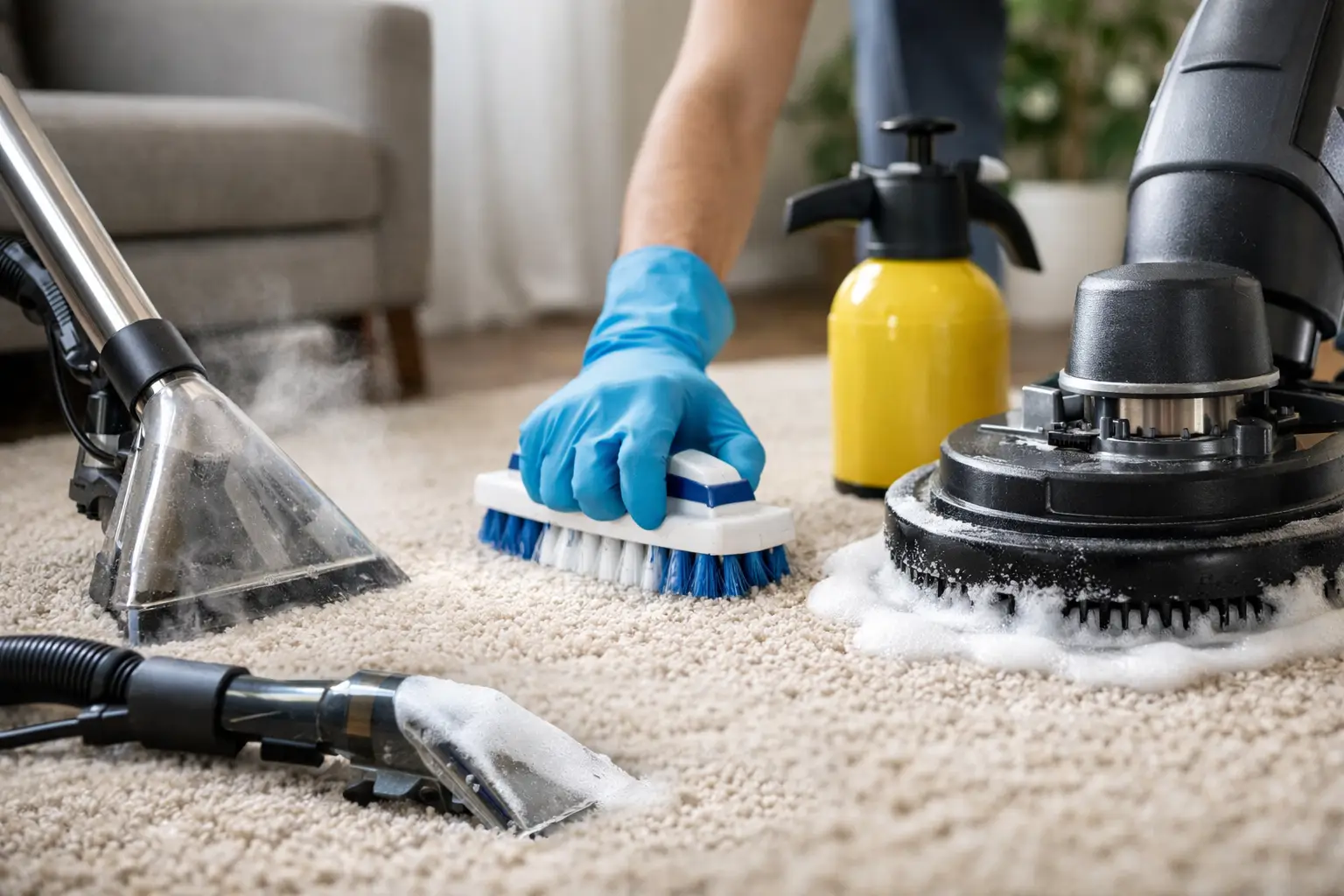
If your carpet still looks dingy after vacuuming, smells off when the room heats up, or keeps showing the same traffic lanes week after week, you are not dealing with a surface problem. You are dealing with buildup deep in the pile. That is exactly why homeowners and businesses ask about the best carpet cleaning methods – not just what looks good for a day, but what actually removes dirt, stains, allergens, and odor from the carpet itself.
The truth is, not every cleaning method does the same job. Some are fine for light maintenance. Some are better for spot issues. And some are the clear standard when you want a true deep clean. If you want your carpet cleaner, healthier, and longer lasting, the method matters as much as the technician using it.
What makes one carpet cleaning method better than another?
A good carpet cleaning method does more than brighten the top fibers. It needs to flush out the grit, residue, oils, allergens, and contaminants that settle lower in the carpet and backing. That is where a lot of the real wear comes from. Carpet acts like a filter, and once that filter gets overloaded, appearance and indoor air quality both start to suffer.
The best method also has to balance cleaning power with carpet safety. Too much moisture left behind can create problems. Too little actual extraction can leave soil in place. Aggressive brushing can fray fibers if done wrong. Strong chemicals may create residue or safety concerns if they are not selected and applied properly. Real carpet cleaning is not about one magic product. It is about using the right process for the condition of the carpet.
Best carpet cleaning methods for real-world results
When people compare carpet cleaning methods, they are usually trying to solve one of four problems: deep dirt, spots and spills, odor, or worn traffic areas. Here is how the main approaches stack up in practical terms.
Truckmounted hot water extraction
This is the method professional cleaners rely on when the goal is a true restorative clean. Hot water extraction uses heated water, professional cleaning agents, agitation when needed, and powerful vacuum extraction to rinse and recover embedded soil from deep in the carpet.
Done correctly, this method removes a lot more than what you can see. It is highly effective for tracked-in dirt, pet contamination, food spills, body oils, and common household allergens. It also does a better job of rinsing out cleaning solution, which matters because leftover residue can attract new soil fast.
This is the highest-standard method for most residential and commercial carpet cleaning. It is especially useful in homes with kids, pets, allergy concerns, or heavy foot traffic. In businesses, it helps restore a cleaner, more professional appearance while removing the grime that regular vacuuming cannot touch.
The trade-off is that this method needs proper equipment and trained handling. Not all extraction is equal. Portable units can help in some situations, but truckmounted hot water extraction generally delivers stronger heat, stronger suction, better flushing, and better overall results. That difference shows up in the final appearance and in how clean the carpet stays afterward.
Bonnet cleaning for appearance maintenance
Bonnet cleaning is more of a surface cleaning method. It can improve the look of carpet in commercial settings where appearance needs a quick boost, especially in low-pile carpet with moderate surface soil. A machine spins an absorbent pad over the top of the carpet to pick up some dirt.
The problem is that it mainly addresses the upper fibers. It does not reach deep contamination well, and it is not the best answer for odor, buildup, or restorative cleaning. If a carpet has embedded grime or pet issues, this method is not enough on its own.
Encapsulation for interim cleaning
Encapsulation uses cleaning solution that surrounds soil particles so they can be removed later through vacuuming. It can be useful as an interim maintenance option in commercial settings that need to stay presentable between deeper cleanings.
It has its place, but it is still not the same as a full extraction clean. If your carpet has sticky residue, odor, stains that have set, or years of packed-in soil, encapsulation is more of a maintenance step than a full solution.
Spot cleaning and stain treatment
Spot cleaning is necessary, but it is not a complete carpet cleaning method. It works best when paired with a deeper overall cleaning. Good spot treatment depends on identifying the stain correctly. Pet accidents, coffee, grease, ink, rust, and dye stains all behave differently.
This is where experience matters. The wrong treatment can set a stain, spread it, or damage the fiber. On the other hand, a trained technician can often improve or remove stains that homeowners assumed were permanent. Spot work is part chemistry, part technique, and part knowing when a stain has reached the carpet backing or pad.
Why hot water extraction stands above the rest
If the question is which method gives the most complete clean for most carpets, hot water extraction is the clear answer. That is why major carpet manufacturers and industry standards have long favored it for deep cleaning and maintenance.
The reason is simple. Carpet holds more than visible dirt. Fine particles, allergens, bacteria, oils, and odor sources work their way down into the fibers. Surface-only methods can improve appearance temporarily, but they do not fully remove what is trapped below. Extraction actually flushes and removes that material.
That matters even more in Wisconsin homes and businesses that deal with snow, road salt, spring mud, humidity, and year-round foot traffic. Those conditions load carpet with gritty debris that wears fibers down over time. A proper deep clean does not just make carpet look better. It helps protect the investment.
The best carpet cleaning method depends on the problem
There is no honest way to say one method fits every situation the same way. Carpet fiber type, age, level of soiling, past cleaning history, and the source of the problem all affect the best approach.
If you have general dullness and traffic lanes, hot water extraction is usually the right move. If you have a recent spill, quick spot treatment may prevent permanent staining. If you manage a business and need periodic appearance maintenance between deeper cleanings, encapsulation or bonnet work may play a role. But when the carpet needs to be truly cleaned, especially after pets, heavy use, or long neglect, extraction is the method that does the heavy lifting.
Odor issues are another good example. A light surface cleaning will not solve odor that has soaked into fibers or backing. Pet contamination often requires more than standard cleaning. It may need targeted treatment, flushing, and odor remediation based on how deep the source goes. That is why some odor jobs improve only when the right method is paired with the right diagnosis.
What homeowners should look for in a carpet cleaning service
The method matters, but so does the company performing it. A strong process in the wrong hands can still produce weak results. Homeowners and small business owners should look for trained technicians, high-powered equipment, safe cleaning solutions, and a company that takes time to identify problem areas instead of rushing through the job.
You also want a service that understands the difference between cleaning for appearance and cleaning for health, odor control, and long-term carpet care. That means pre-treatment where needed, real stain work, proper extraction, and attention to drying. Shortcuts usually show up later as wicking, recurring spots, crunchy residue, or carpet that gets dirty again too fast.
For customers in the Lake Geneva area, this is where a quality-first company stands apart. Lake Geneva Carpet Cleaning uses truckmounted hot water extraction, trained technicians, and pet-safe, eco-friendly cleaning agents because better equipment and better workmanship produce better results. That is not marketing talk. It is how deep cleaning is supposed to be done.
How often should carpet be professionally cleaned?
For many homes, every 12 months is a solid baseline. Homes with pets, kids, allergies, or heavy traffic usually need cleaning more often. Commercial spaces vary based on use, but waiting until carpet looks bad is rarely the best plan. By that point, soil has already settled in and wear has already started.
Routine professional cleaning helps carpet last longer, keeps rooms fresher, and makes day-to-day vacuuming more effective. It also gives technicians a chance to treat spots and small issues before they become permanent problems.
The best carpet cleaning methods are the ones that match the condition of the carpet and solve the actual problem, not just the visible one. For deep dirt, stains, odors, and real restoration, truckmounted hot water extraction remains the top standard. If your carpet has stopped responding to basic cleaning, that is usually a sign it needs more than a quick touch-up – it needs a method that truly cleans below the surface.
Leave a Reply