
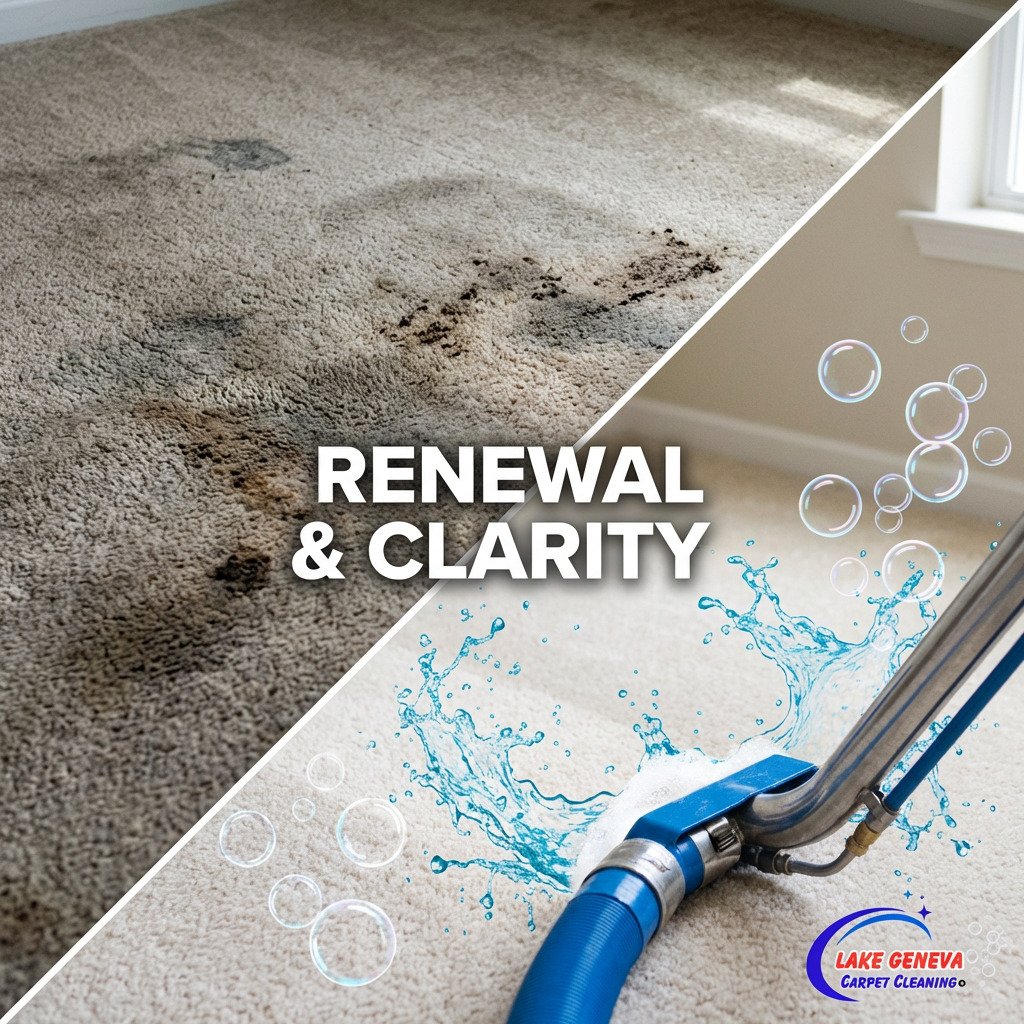
Discover the top benefits of truck mounted carpet cleaning—deeper extraction, faster drying, and better air quality. Get a quote from Lake Geneva.
Table of Contents
- Why the Benefits of Truck Mounted Carpet Cleaning Outperform Every Other Method
- How a Truck-Mounted System Actually Works
- What Gets Removed That Surface Cleaning Misses
- Truck Mounted vs Portable Carpet Cleaning: A Side-by-Side Comparison
- Pros and Cons of Truck-Mounted Systems
- Pros and Cons of Portable Units
- How Long Does Carpet Take to Dry After Truck Mount Cleaning?
- Factors That Speed Up or Slow Down Drying Time
- Carpet Material-Specific Benefits: Not All Fibers Are Cleaned the Same Way
- Hidden Costs of Low-Ball Coupons vs. Professional Truck-Mounted Service
- The Key Benefits of Truck Mounted Carpet Cleaning for Wisconsin Homeowners
- Indoor Air Quality and Allergen Removal
- Pet Dander, Odor Treatment, and Seasonal Contaminants
- Pre-Cleaning Preparation Checklist: How to Get the Most from Your Service
- Conclusion
Last Updated: May 18, 2026
The benefits of truck mounted carpet cleaning go far beyond what most homeowners expect from a routine service call. At Lake Geneva Carpet Cleaning, we’ve spent over 32 years watching the difference between a truck-mount job and everything else, and the gap is not subtle. A truck-mounted system delivers water temperatures and suction power that portable units simply cannot match, which means deeper extraction, faster drying, and results that last longer. Below, we’ll show you exactly how that difference plays out across carpet types, drying times, pricing, and indoor air quality, so you can make an informed decision before booking your next service.
Here’s what most guides get wrong: they treat carpet cleaning methods as roughly equivalent, with truck-mounting as just a premium upgrade. It isn’t. It’s a fundamentally different class of cleaning, and understanding why changes how you evaluate every quote you receive.
Why the Benefits of Truck Mounted Carpet Cleaning Outperform Every Other Method
A truck-mounted carpet cleaning system is a high-powered cleaning unit permanently installed in a service vehicle, drawing engine power to generate water temperatures and vacuum pressure that no portable machine can replicate indoors. The equipment stays outside while only the hoses and wand enter your home, which means exhaust, noise, and mechanical heat stay out of your living space.
The practical result: hotter water, stronger suction, and cleaner air inside your home during and after the service.
[IMAGE: A professional carpet cleaning technician in a branded uniform operating a truck-mounted hose and wand inside a bright residential living room, with a visible cleaning solution line running to a white service truck parked in the driveway outside, warm natural light streaming through large windows | section:Why the Benefits of Truck Mounted Carpet Cleaning Outperform Every Other Method]
Water temperature is the critical variable most homeowners never ask about. Hot water extraction at high temperatures dissolves oils, breaks down allergen proteins, and releases embedded debris from carpet fibers in ways that warm or cool water cannot. According to the Institute of Inspection Cleaning and Restoration Certification guidelines on hot water extraction, water temperature directly affects the efficiency of soil suspension and sanitization during carpet cleaning.
Truck-mounted systems also pull far more moisture back out of the carpet after cleaning. That stronger extraction is the single biggest reason truck-mount cleaning produces faster drying times and less risk of mold or mildew compared to portable alternatives.
How a Truck-Mounted System Actually Works
The cleaning process follows a straightforward sequence. The technician pre-treats high-traffic areas and stains with an appropriate cleaning solution, then passes a heated wand across the carpet surface. The wand simultaneously injects hot water and immediately vacuums it back out, carrying dissolved soils, allergens, pet dander, and debris with it, all routed to a waste tank in the truck.
The entire mechanical load: the pump, the heater, the vacuum motor, runs off the vehicle engine. That’s why the suction and temperature levels are incomparable to anything you can plug into a wall outlet.
What Gets Removed That Surface Cleaning Misses
Surface cleaning addresses visible soiling. Truck-mounted hot water extraction addresses what’s embedded in the carpet backing and padding beneath.
The difference matters most for:
- Pet dander and urine crystals embedded deep in synthetic carpet fibers
- Allergen proteins from dust mites, pollen, and mold spores
- Bacteria and germs that accumulate in high-traffic areas over months
- Oily residue from foot traffic that bonds to carpet fibers and attracts new soil
A common mistake homeowners make is scheduling surface-level cleaning for carpets that actually need restorative cleaning. If your carpet looks clean after a rinse but smells musty within days, the problem was never addressed at the fiber level.
Truck Mounted vs Portable Carpet Cleaning: A Side-by-Side Comparison
The truck mounted vs portable carpet cleaning debate comes down to one question: how much cleaning power do you actually need? The honest answer depends on your carpet’s condition, your home’s layout, and what you’re trying to remove. For light maintenance cleaning on low-traffic carpet, a portable unit can be adequate. For deep cleaning, allergen removal, pet odor treatment, or restorative work, portable units are outclassed in every measurable category.
Here’s the comparison most guides don’t give you, not just a feature list, but the mechanism behind each difference and the scenario where it actually matters.
| Feature | Truck-Mounted System | Portable Unit |
|---|---|---|
| Water temperature | 200-230°F typical | 50-100°F typical |
| Vacuum suction (water lift) | 14-16 inches Hg (engine-powered) | 6-10 inches Hg (electric motor) |
| Drying time | 2-6 hours typical | 6-24 hours typical |
| Allergen removal depth | Deep extraction into backing | Surface to mid-pile |
| Portability | Requires vehicle access | Works in any location |
| Best for | Restorative and deep cleaning | Spot cleaning, multi-story access |
| Noise/exhaust in home | None (equipment stays outside) | Present during operation |
| Consistent pressure over long runs | Maintained up to ~150 ft hose | Degrades with extension cords |
Why the Temperature Gap Is Larger Than It Looks
The 50°F difference between a truck-mounted system and a portable unit is not a minor upgrade, it represents a fundamentally different cleaning chemistry outcome. Water temperature affects cleaning in three compounding ways:
1. Soil suspension: Hotter water lowers the surface tension of cleaning solutions, allowing them to penetrate carpet fibers and lift oily, bonded soils more completely. Oily residue from foot traffic, the kind that makes carpet look gray in traffic lanes, requires heat to break its bond with synthetic fibers. At portable-unit temperatures, this residue softens but rarely releases fully.
2. Allergen protein denaturation: Dust mite allergens, pet dander proteins, and mold spore casings are partially broken down by sustained high heat. This doesn’t just move them, it structurally disrupts them, reducing their allergenic potential even before extraction removes them from the carpet.
3. Bacteria reduction: According to Institute of Inspection Cleaning and Restoration Certification guidelines on hot water extraction, sustained water temperatures above 212°F at the fiber level contribute meaningfully to bacterial load reduction. Portable units rarely sustain temperatures high enough at the wand tip to achieve this effect consistently.
Why Suction Power Is the Underrated Variable
Most homeowners focus on cleaning solution or water temperature when evaluating carpet cleaning. Suction power, measured in water lift (inches of mercury), is equally important and almost never discussed in consumer guides.
Here’s why it matters: the cleaning pass injects water and solution into the carpet pile. The extraction pass pulls it back out. If extraction is weak, you’re leaving behind not just moisture but dissolved soils, cleaning solution residue, and the allergens that were suspended in the water. That residue dries in the carpet and becomes a new soil magnet.
Truck-mounted systems generate vacuum pressure from the vehicle engine, producing water lift figures that electric-motor portable units cannot approach. The practical result is carpet that comes out drier, cleaner at the fiber level, and less prone to rapid re-soiling after the service.
Pros and Cons of Truck-Mounted Systems
Pros:
- Higher water temperatures for more effective deep cleaning and allergen disruption
- Superior suction removes more moisture, reducing drying time to 2-6 hours
- No equipment noise or exhaust inside the home
- Handles heavy soiling, pet odors, and allergen-laden carpet effectively
- Consistent performance regardless of job size, no degradation from extension cords or outlet amperage limits
- Waste water contained in truck tank, not your home’s plumbing
Cons:
- Requires vehicle access close to the home (long hose runs reduce pressure)
- Not suitable for high-rise buildings or locations without ground-floor access
- Higher service cost than basic portable cleaning
- Weather-dependent in extreme cold (hose management in sub-zero temperatures requires experienced operators)
:::tip
For homes in Lake Geneva with attached garages or long driveways, ask your technician about hose run length before booking. Most truck-mounted systems maintain effective pressure up to 150 feet from the truck. Beyond that, both water temperature at the wand tip and vacuum suction drop measurably. A professional operator will position the truck to minimize hose run, or advise you honestly if the layout creates a limitation.
:::
Pros and Cons of Portable Units
Pros:
- Access any floor of a building, the only viable option for condos, apartments, and upper floors without exterior access
- Lower upfront service cost
- Adequate for light maintenance cleaning on low-traffic, lightly soiled carpet
- Some high-end portable units (used by specialty restoration companies) close the gap on temperature, though not on suction
Cons:
- Lower water temperatures reduce cleaning effectiveness on oily soils and allergens
- Weaker suction leaves more moisture in the carpet, extending drying time to 8-24 hours
- Longer drying times increase mold and mildew risk, particularly in humid climates
- Less effective on embedded allergens and pet odors, moves the problem more than removes it
- Equipment noise and heat generated inside living space during operation
- Performance varies with outlet amperage and extension cord length
When a Portable Unit Is Actually the Right Call
This is the nuance most guides skip in favor of a clean “truck-mount wins” narrative. Portable units are genuinely the correct choice in specific scenarios:
- Multi-story buildings without ground-floor access: No truck-mounted system can reach a 4th-floor apartment. A high-quality portable unit operated by a skilled technician is the best available option.
- Light maintenance cleaning between deep cleans: If your carpet was professionally deep-cleaned 6 months ago and you need a refresh on one room, a portable unit may be cost-appropriate.
- Delicate area rugs requiring controlled conditions: Some specialty rug cleaning is better performed in a controlled shop environment than with any in-home system.
For the vast majority of whole-home residential carpet cleaning, especially in a climate like Lake Geneva’s with seasonal allergen loads, humidity fluctuations, and tracked-in road contaminants, truck-mounted hot water extraction is not a premium upgrade. It’s the baseline for results that actually last.
How Long Does Carpet Take to Dry After Truck Mount Cleaning?
Carpet drying time after truck mount cleaning typically ranges from 2 to 6 hours under normal conditions, significantly faster than portable unit cleaning which often requires 8 to 24 hours. The stronger extraction of a truck-mounted system removes substantially more water during the cleaning pass, which is the primary reason for this advantage.
Most homeowners can walk on cleaned carpet within 1-2 hours using clean socks, and furniture can typically return to normal placement within 4-6 hours.
Factors That Speed Up or Slow Down Drying Time
Several variables affect how quickly your carpet dries after truck mount cleaning:
Speeds up drying:
- Good indoor air circulation (open windows, ceiling fans running)
- Low indoor humidity (Wisconsin winters are ideal for fast drying)
- Thin or low-pile synthetic carpet
- Lighter soiling requiring fewer cleaning passes
Slows down drying:
- High indoor humidity (common in Lake Geneva summer months near the lake)
- Thick wool carpet or high-pile construction
- Heavily soiled carpet requiring multiple passes
- Limited airflow in rooms with closed windows and doors
:::warning
Avoid placing rubber-backed rugs or furniture with non-ventilated bases on freshly cleaned carpet before it’s fully dry. Trapping moisture against the carpet backing creates conditions for mold growth, which can permanently damage the carpet and affect indoor air quality.
:::
The practical recommendation: schedule truck-mount cleaning on a day when you can open windows or run HVAC, and plan for 4-6 hours before the room returns to full use.
Carpet Material-Specific Benefits: Not All Fibers Are Cleaned the Same Way
Hot water extraction through a truck-mounted system is the preferred cleaning method for most carpet types, but the approach should vary by fiber. This is something many general cleaning guides skip entirely, and it’s where inexperienced technicians cause damage.
Synthetic carpet (nylon, polyester, olefin): These fibers handle high-temperature hot water extraction well. The heat helps release oily soils that bond to synthetic fibers from foot traffic. High suction extraction is safe and effective for these materials.
Wool carpet: Wool requires lower water temperatures and pH-neutral cleaning solutions. Aggressive hot water extraction can cause shrinkage or fiber damage. A skilled technician adjusts temperature and solution chemistry accordingly, which is a key reason owner-operated services with decades of experience outperform franchise operations following rigid protocols.
Blended fibers: Many residential carpets combine synthetic and natural fibers. These require an assessment of the dominant fiber type before selecting water temperature and cleaning solution concentration.
Berber and loop-pile carpet: The loop construction is vulnerable to snags from aggressive wand pressure. Proper technique uses lighter wand pressure with multiple passes rather than a single heavy pass.
According to The Carpet and Rug Institute’s fiber care guidelines, cleaning method selection based on fiber type is one of the most important factors in preserving carpet warranty coverage and extending useful life.
Hidden Costs of Low-Ball Coupons vs. Professional Truck-Mounted Service
This is the section most guides skip because it’s uncomfortable for anyone in the industry to publish: the $25-$35-per-room coupon you see advertised is almost never what you pay. Understanding exactly how the pricing escalates, and what each upsell line item actually represents, is the most useful thing this article can give you before you pick up the phone.
How the Bait-and-Switch Model Works, Step by Step
The low-advertised-rate model in carpet cleaning follows a predictable sequence. Knowing the script in advance removes its leverage entirely.
Step 1, The anchor price. An advertised rate of $25-$35 per room (or a whole-house special of $99) creates a price expectation in the customer’s mind before any technician arrives. This rate is typically achievable only under conditions that almost no real home meets: rooms under 150-200 square feet, no furniture, no stains, no pet activity, and carpet that was professionally cleaned within the last year.
Step 2, The on-site assessment. Once the technician is in your home, the quote expands. Common upsell triggers include:
- “Heavily soiled area” surcharge: Applied to any traffic lane, entryway, or area that shows visible wear. In practice, this applies to most rooms in a home that hasn’t been professionally cleaned recently. Typical add-on: $15-$40 per room.
- Pre-treatment / deodorizer: Often described as necessary for any home with pets or children. Sometimes legitimately useful; often applied universally regardless of need. Typical add-on: $20-$50 per treatment area.
- Scotchgard or carpet protectant: Applied after cleaning to restore factory stain resistance. A legitimate service with real value, but frequently presented as mandatory rather than optional. Typical add-on: $20-$40 per room.
- Stain treatment: Specific stains (pet urine, red dye, grease) do legitimately require additional chemistry and time. However, in bait-and-switch operations, this category expands to cover any spot the technician points to. Typical add-on: $15-$30 per stain, or quoted as a flat “stain package.”
- Room size upcharge: The advertised rate applies to rooms under a stated square footage. Rooms exceeding that threshold, which includes most living rooms and master bedrooms, are charged at a higher rate or counted as multiple rooms. Typical add-on: $20-$50 per oversized room.
A home with three bedrooms, a living room, and a hallway, a completely standard cleaning job, can move from a $99 advertised special to $250-$350 after these line items are applied. The technician is often not acting in bad faith individually; the pricing structure is designed at the company level to make the upsell sequence routine.
As noted in the Federal Trade Commission’s consumer guidance on deceptive pricing, bait-and-switch pricing in service industries is a recognized consumer protection issue, and carpet cleaning is one of the sectors where it appears most frequently in consumer complaints.
What Legitimate Add-On Charges Actually Look Like
Not every additional charge is a red flag. Some services genuinely cost more because they require more time, more specialized chemistry, or more passes. The distinction is whether the add-on was disclosed before the technician arrived or only after.
Legitimate additional charges:
- Pet urine treatment with enzyme pre-treatment: Requires a separate enzyme application, dwell time, and additional extraction passes. This is a real cost difference from standard cleaning.
- Red dye or tannin stain treatment: Requires specific chemistry that standard cleaning solutions don’t include. Legitimate when the stain type is confirmed.
- Heavy furniture moving: Moving sofas, beds, and large case pieces is physical labor beyond the scope of standard cleaning. A reasonable additional charge is appropriate.
- Area rugs with fringe or delicate construction: These require different handling and sometimes different chemistry than wall-to-wall carpet.
Red-flag charges:
- Any surcharge applied universally to every room without inspection
- “Deodorizer” applied before the technician has assessed whether odor is actually present
- Protectant presented as required rather than optional
- A “minimum” charge that appears only after the technician is in your home
How to Audit Any Carpet Cleaning Quote Before You Book
The most effective consumer protection is a short list of questions asked before any technician enters your home. A professional operator answers all of these without hesitation. Evasive or vague answers are a signal worth acting on.
Questions to ask before booking:
- “Is the quoted price the final price for a standard room, or are there common add-ons I should expect?” A transparent operator will walk you through their pricing structure, including what triggers additional charges, before you commit.
- “What cleaning method and equipment will you use?” Truck-mounted hot water extraction should be stated explicitly. “Steam cleaning” is a marketing term that can describe anything from a truck-mount to a consumer-grade machine. Ask specifically whether the equipment is truck-mounted.
- “What is your definition of a standard room for pricing purposes?” Get the square footage threshold. If your living room is 300 square feet and the standard room rate applies to rooms under 200 square feet, you need to know that before the technician arrives.
- “Do you offer a satisfaction guarantee, and what does it cover?” A company confident in its results offers a defined guarantee. Vague answers here often reflect a business model that doesn’t expect repeat customers.
- “Can you provide a written estimate before the appointment?” Any professional operation can provide a written quote based on your room count and square footage. Resistance to this is a meaningful signal.
:::takeaway
The real comparison isn’t “$29 coupon vs. $150 professional service.” It’s “$29 coupon that becomes $200-$300 after on-site upsells, performed with portable equipment and no guarantee” versus “$150 transparent flat rate with truck-mounted equipment, disclosed pricing, and a satisfaction guarantee.” When you account for the full invoice, the price gap between low-ball and professional services is often smaller than it appears, and the results gap is not.
:::
A Note on Franchise vs. Owner-Operated Pricing Transparency
One pattern worth understanding: national franchise carpet cleaning operations frequently use the low-advertised-rate model because their business structure depends on volume and upsell margin. Owner-operated services, where the person quoting the job is also the person cleaning your carpet, have a different incentive structure. Their business depends on repeat customers and referrals, which means the final invoice needs to match the quoted price.
This isn’t a universal rule, but it’s a useful filter when evaluating quotes. Asking “Is this an owner-operated business?” is a reasonable question, and the answer often predicts how the pricing conversation will go once the technician is in your home.
The Key Benefits of Truck Mounted Carpet Cleaning for Wisconsin Homeowners
Wisconsin homeowners face a specific set of conditions that make truck-mounted deep cleaning more valuable than the national average would suggest. Lake Geneva sits near the lake, which drives seasonal humidity fluctuations. Winters bring tracked-in road salt and sand. Summers bring pollen, mold spores, and pet activity that accelerate allergen accumulation in carpet fibers.
The benefits of truck mounted carpet cleaning for this environment are directly tied to those conditions. Higher extraction temperatures kill mold spores and bacteria that thrive in humid conditions. Deep suction removes salt and grit that abrade carpet fibers from the base up. And thorough allergen removal matters more in a region with significant seasonal pollen loads.
Indoor Air Quality and Allergen Removal
Indoor air quality is a direct function of what’s living in your carpet. According to the Environmental Protection Agency’s indoor air quality resources, carpets can trap allergens, dust mites, pet dander, and mold spores, which are then re-released into the air through foot traffic and vacuuming.
Truck-mounted hot water extraction removes these contaminants at the fiber level rather than redistributing them. The result is measurably cleaner air in the days and weeks following a professional service, particularly for households with allergy sufferers, young children, or pets.
Portable units and dry cleaning methods address surface soiling but lack the extraction depth to pull allergen-laden debris from the carpet backing and padding where it accumulates most heavily.
Pet Dander, Odor Treatment, and Seasonal Contaminants
Pet odor treatment is where the gap between truck-mounted and portable cleaning is most obvious to homeowners. Urine crystals bind to carpet fibers and padding and require both heat and strong extraction to fully remove. A portable unit often moves the problem rather than eliminating it.
Effective pet odor treatment through truck-mounted hot water extraction involves:
- Enzyme-based pre-treatment applied to affected areas and allowed to dwell
- High-temperature extraction to break down and remove urine crystals
- Deodorizing rinse to neutralize remaining odor compounds
- Strong suction to remove all moisture and residue
Seasonal contaminants specific to the Lake Geneva area, including lake-area mold spores, grass pollen, and road treatment chemicals tracked in during winter, respond well to the same deep extraction process.
Pre-Cleaning Preparation Checklist: How to Get the Most from Your Service
Preparation directly affects results. A few straightforward steps before the technician arrives improve cleaning depth, protect your belongings, and reduce service time.
Before your truck-mounted carpet cleaning appointment:
- [ ] Vacuum the carpet thoroughly to remove loose surface debris and pet hair
- [ ] Move small and lightweight furniture (chairs, side tables, lamps) out of the cleaning area
- [ ] Identify and mark any specific stains for the technician, noting the stain source if known
- [ ] Remove fragile items, electronics, and valuables from the room
- [ ] Ensure clear vehicle access near the home for the service truck
- [ ] Secure pets in a separate area of the home
- [ ] Plan for 4-6 hours of limited room access after cleaning for drying
- [ ] Open windows or prepare to run fans or HVAC for airflow after the service
[IMAGE: A homeowner in casual clothing vacuuming a beige carpeted room with natural light coming through large windows, lightweight chairs and a small side table pushed against the wall, preparing the space for a professional carpet cleaning appointment | section:Pre-Cleaning Preparation Checklist: How to Get the Most from Your Service]
The one step most homeowners skip is pre-vacuuming. It matters more than it seems. Loose surface debris absorbs cleaning solution and reduces the concentration available for deep fiber cleaning. A thorough vacuum pass before the technician arrives translates directly to better deep-cleaning results.
What most guides miss is the stain identification step. Telling your technician “there’s a stain here from a red wine spill six months ago” allows them to select the right pre-treatment chemistry. Generic pre-treatment applied to an unknown stain type is less effective and occasionally makes certain stains harder to remove.
Dirty carpets in a Wisconsin home aren’t just an aesthetic problem; they’re an indoor air quality issue that compounds over time, especially in a climate with significant seasonal allergen and humidity cycles. Lake Geneva Carpet Cleaning has addressed exactly this challenge for over 32 years, using truck-mounted hot water extraction technology to remove embedded allergens, pet odors, and seasonal contaminants that surface cleaning leaves behind. With an owner-operated approach, eco-friendly cleaning methods, and a 10-day satisfaction guarantee, the service is built around results you can verify. Get started with Lake Geneva Carpet Cleaning and experience the difference that genuine deep extraction makes in your home’s air quality and carpet longevity.
Frequently Asked Questions
What is the difference between truck mounted and portable carpet cleaning?
Truck-mounted systems run from a powerful unit inside the service vehicle, delivering higher water temperature, stronger suction, and more consistent pressure than portable units. Portable carpet cleaning machines are self-contained and can access areas trucks cannot reach, such as high-rise apartments, but they generally produce lower heat and weaker extraction. For most residential deep cleaning needs, truck-mounted hot water extraction delivers significantly better soil removal, faster drying times, and more thorough allergen removal than portable alternatives.
Why is truck mounted carpet cleaning better for deep stains and high-traffic areas?
Truck-mounted systems generate higher water temperatures and stronger vacuum pressure than portable units or consumer rental machines. This combination allows the cleaning solution to penetrate deeper into carpet fibers, breaking down embedded soiling, pet dander, and stubborn stains that surface cleaning cannot reach. High-traffic areas accumulate compacted dirt over time, and only restorative cleaning with professional equipment can reliably extract it. The result is a more thorough deep cleaning that extends carpet life and improves indoor air quality.
How long does carpet take to dry after truck mount cleaning?
After truck-mounted carpet cleaning, most carpets dry within 4 to 8 hours under normal conditions. Because truck-mounted systems use powerful suction to extract the majority of moisture during the hot water extraction process, drying times are typically shorter than with portable units. Factors like carpet fiber type, soiling level, room ventilation, humidity, and whether furniture was moved all affect drying time. Running ceiling fans, opening windows, or using air conditioning can help carpets dry closer to the 4-hour end of the range.
Is truck mounted carpet cleaning safe for all carpet types, including wool and synthetic carpet?
Truck-mounted hot water extraction is safe for most synthetic carpet types, including nylon, polyester, and olefin. Wool carpet and certain delicate natural fibers require lower water temperatures and adjusted cleaning solutions to prevent shrinkage or fiber damage. A reputable professional will assess your carpet material before selecting the appropriate method and cleaning solution. Always inform your service provider of your carpet type when booking so they can tailor the approach, especially for area rugs or specialty fibers.
How do I get an accurate service estimate for truck-mounted carpet cleaning in Lake Geneva, Wisconsin?
To get an accurate service quote, measure the square footage of the rooms you need cleaned and note any high-traffic areas, pet stains, or odor treatment needs. Be upfront about soiling level and carpet fiber type, as these affect pricing. Ask whether the estimate includes furniture moving, stain removal, and any minimum service charge. Owner-operated businesses like Lake Geneva Carpet Cleaning typically provide transparent flat-rate or per-room pricing without the bait-and-switch fees common with low-ball coupon offers.
Frequently Asked Questions
undefined
Truck-mounted systems run from a powerful unit inside the service vehicle, delivering higher water temperature, stronger suction, and more consistent pressure than portable units. Portable carpet cleaning machines are self-contained and can access areas trucks cannot reach, such as high-rise apartments, but they generally produce lower heat and weaker extraction. For most residential deep cleaning needs, truck-mounted hot water extraction delivers significantly better soil removal, faster drying times, and more thorough allergen removal than portable alternatives.
undefined
Truck-mounted systems generate higher water temperatures and stronger vacuum pressure than portable units or consumer rental machines. This combination allows the cleaning solution to penetrate deeper into carpet fibers, breaking down embedded soiling, pet dander, and stubborn stains that surface cleaning cannot reach. High-traffic areas accumulate compacted dirt over time, and only restorative cleaning with professional equipment can reliably extract it. The result is a more thorough deep cleaning that extends carpet life and improves indoor air quality.
undefined
After truck-mounted carpet cleaning, most carpets dry within 4 to 8 hours under normal conditions. Because truck-mounted systems use powerful suction to extract the majority of moisture during the hot water extraction process, drying times are typically shorter than with portable units. Factors like carpet fiber type, soiling level, room ventilation, humidity, and whether furniture was moved all affect drying time. Running ceiling fans, opening windows, or using air conditioning can help carpets dry closer to the 4-hour end of the range.
undefined
Truck-mounted hot water extraction is safe for most synthetic carpet types, including nylon, polyester, and olefin. Wool carpet and certain delicate natural fibers require lower water temperatures and adjusted cleaning solutions to prevent shrinkage or fiber damage. A reputable professional will assess your carpet material before selecting the appropriate method and cleaning solution. Always inform your service provider of your carpet type when booking so they can tailor the approach, especially for area rugs or specialty fibers.
undefined
To get an accurate service quote, measure the square footage of the rooms you need cleaned and note any high-traffic areas, pet stains, or odor treatment needs. Be upfront about soiling level and carpet fiber type, as these affect pricing. Ask whether the estimate includes furniture moving, stain removal, and any minimum service charge. Owner-operated businesses like Lake Geneva Carpet Cleaning typically provide transparent flat-rate or per-room pricing without the bait-and-switch fees common with low-ball coupon offers.