
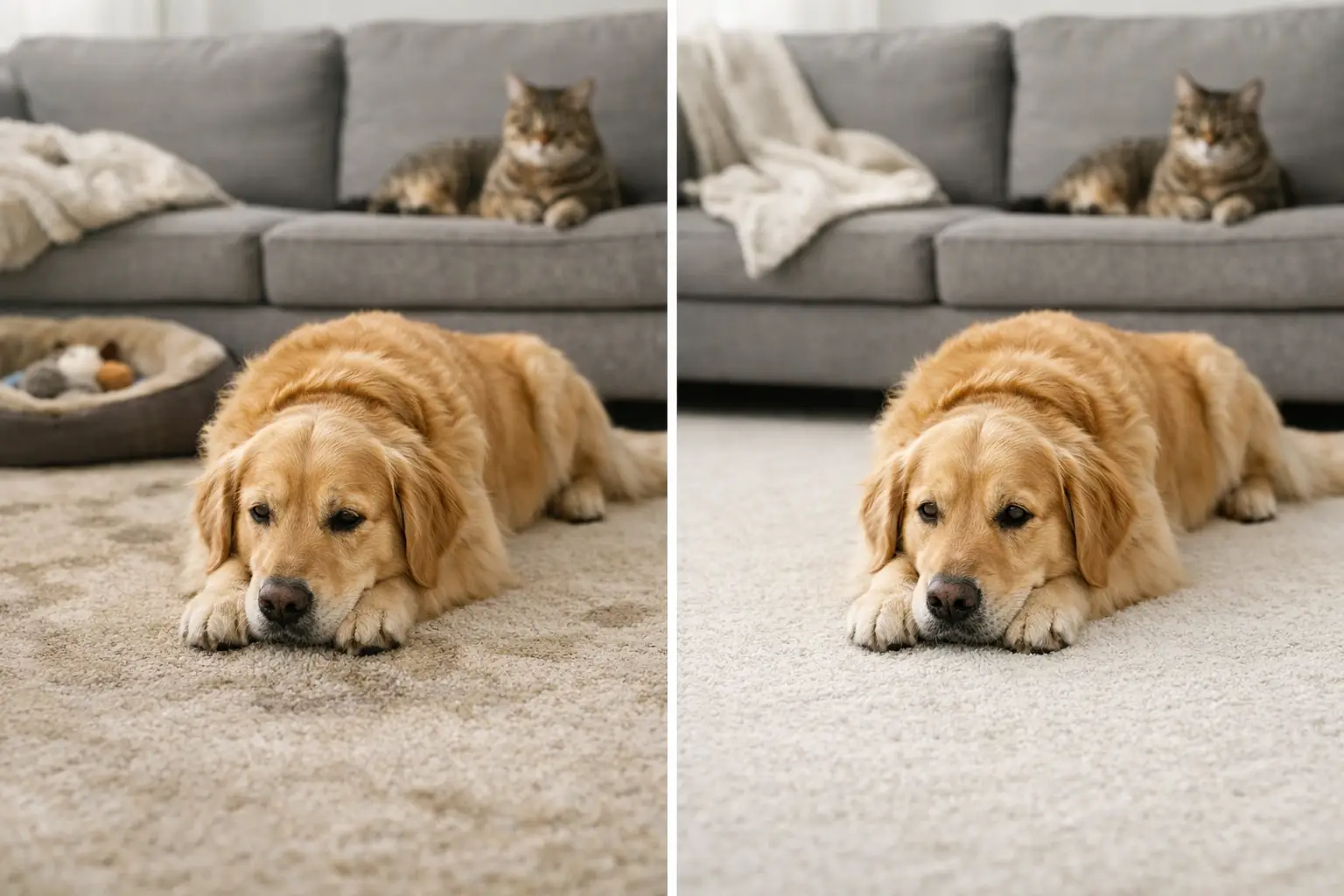
You know the moment. You walk into a room, and even after vacuuming, spot cleaning, and opening the windows, that pet smell is still hanging in the carpet. When people search for pet odor removal before and after results, what they really want to know is simple: can the smell actually be removed, or is it just going to be covered up for a few days?
That depends on how deep the problem goes and how it gets treated. Pet odors are not surface-level issues in most homes. Once urine or organic residue moves past the top of the carpet, it can soak into the backing, pad, and sometimes even the subfloor. At that point, deodorizer sprayed over the area is not a fix. It is a temporary cover.
What pet odor removal before and after should really mean
A true before and after is not just about whether the room smells better right after cleaning. Plenty of products can make a room smell better for an afternoon. Real results show up after the carpet dries, after the air settles, and after the house returns to normal use.
If the odor comes back the next day, the source was never fully removed. That is the difference between masking and remediation. A quality odor treatment targets the contamination itself, not just the smell floating above it.
This matters because pet odor is usually tied to oils, dander, bacteria, and urine crystals. Those materials can stay buried in carpet fibers and below them. As humidity rises, those residues can reactivate and release odor again. Homeowners often think the smell came back out of nowhere, but it was there the whole time.
Why some pet odor jobs fail
Most failed odor removal jobs come down to one problem: the treatment did not reach the source. That can happen with rental machines, over-the-counter sprays, and even basic cleaning services that do not specialize in odor remediation.
A carpet can look cleaner and still smell bad. Appearance and odor are not the same issue. Staining might be limited to one visible spot, while the odor has spread much farther underneath. In some homes, pets return to the same areas because they can still detect residual scent long after the homeowner thinks the problem is gone.
There is also the moisture problem. If too much water is used without proper extraction, the carpet can stay damp longer than it should. That creates a second issue – lingering moisture combined with organic matter can make odors worse instead of better.
The difference professional equipment makes
This is where method matters. High-standard truckmounted hot water extraction is effective because it does more than rinse the surface. It delivers the heat, flushing action, and powerful extraction needed to remove embedded contamination from the carpet fibers.
That does not mean every odor issue disappears with one standard cleaning. Some do. Some do not. A light pet odor from tracked-in dander, oils, and minor accidents may improve dramatically with deep extraction and proper treatment. A heavy urine problem that has soaked into the pad may need more targeted odor remediation.
The honest answer is that results depend on severity, age of the contamination, how often the area was re-soiled, and what was used on it before. If a homeowner has already treated the area repeatedly with store products, residue buildup can complicate the process.
What a real before and after looks like in the home
The best before and after changes are usually noticed in everyday moments. The room no longer has that sour smell when you first walk in. The air feels cleaner. You do not catch an odor when the furnace kicks on or when the windows have been closed all day. Guests stop noticing it. More importantly, you stop noticing it too.
On the visual side, pet treatment often improves the overall look of the carpet because the same process that addresses odor also removes embedded soil and staining residue. Matted traffic lanes can lift better, and the carpet can feel fresher underfoot. But the real test is after drying.
That is why experienced technicians do not make empty promises based only on what the room smells like while cleaning is underway. The true result shows after the fibers dry and the treated area stabilizes.
Pet odor removal before and after in mild vs severe cases
Not every pet odor problem is a disaster. In a mild case, maybe the issue is pet oils, tracked-in dirt, and one or two recent accidents caught quickly. In that situation, deep professional cleaning with pet-safe odor treatment can produce a major difference. The before is a stale, unpleasant room. The after is a carpet that smells neutral and clean once dry.
A moderate case is different. Maybe the pet has had repeat accidents in one area, or there are several problem spots that have been cleaned at home over time. Here, the before and after can still be strong, but the work has to be more deliberate. Spot-specific treatment matters. So does identifying whether the contamination has traveled below the carpet face.
In severe cases, honesty matters more than hype. If urine has repeatedly soaked through to the cushion or subfloor, the carpet itself may not be the only thing affected. You can still improve the environment significantly, but the right recommendation depends on what is found during inspection. Quality-first companies do not guess on this. They evaluate the depth of the issue and recommend the proper remedy.
Why pet-safe products matter
If you have children, pets, or anyone in the home with sensitivities, this part is not optional. Odor treatment should be effective without leaving behind harsh residues that create a new problem. That is one reason trained technicians matter. Using pet-safe, eco-friendly cleaning agents is not just a marketing line when it is done correctly. It is part of responsible workmanship.
A strong chemical smell after service does not mean the treatment worked better. In many cases, homeowners mistake perfume or fragrance for cleaning power. What you want is removal of the source and a properly cleaned carpet, not a stronger scent layered on top.
When DIY can help and when it usually falls short
If the accident is fresh and small, quick blotting and immediate attention can absolutely help. The faster you respond, the better your chances of limiting both stain and odor. But once odor has settled in, DIY methods are often hit or miss.
The reason is simple. Most homeowners can clean what they can see. They usually cannot extract what has moved deeper into the carpet system. Surface products may reduce odor for a short time, but they rarely match the flushing and recovery power of professional truckmounted equipment.
That is why people get frustrated. They do the work, use multiple products, and still end up with the same smell when the weather changes or the room stays closed up. At that point, the problem is no longer about effort. It is about having the right process.
What to expect from a quality-focused service
A serious pet odor job should start with inspection, not guesswork. The technician should assess the affected areas, explain what is likely causing the odor, and be honest about what kind of result is realistic. That is the mark of a company that cares about workmanship.
From there, the cleaning process should focus on deep extraction, proper odor treatment, and getting the carpet as thoroughly recovered as possible. Good service is not rushed. It is methodical.
At Lake Geneva Carpet Cleaning, that standard means using trained technicians, truckmounted hot water extraction, and pet-safe solutions to go after the real source of odor. That is how you get results that hold up after the carpet dries, not just while the equipment is still in the house.
The result homeowners actually want
Most people are not looking for a perfume fix. They want their home back. They want to sit in the family room without catching that odor from across the space. They want their carpet to feel clean, smell clean, and stay that way.
That is the real value in pet odor removal before and after results. It is not about a dramatic sales pitch. It is about whether the work solved the problem at the level where the problem lived.
If your carpet still smells no matter how many times you have cleaned it, that is usually a sign the odor is deeper than the surface. The good news is that deeper problems can often be improved with the right treatment, the right equipment, and technicians who know the difference between covering an odor and removing it. When that happens, the whole room changes, and so does the way your home feels.
Leave a Reply