
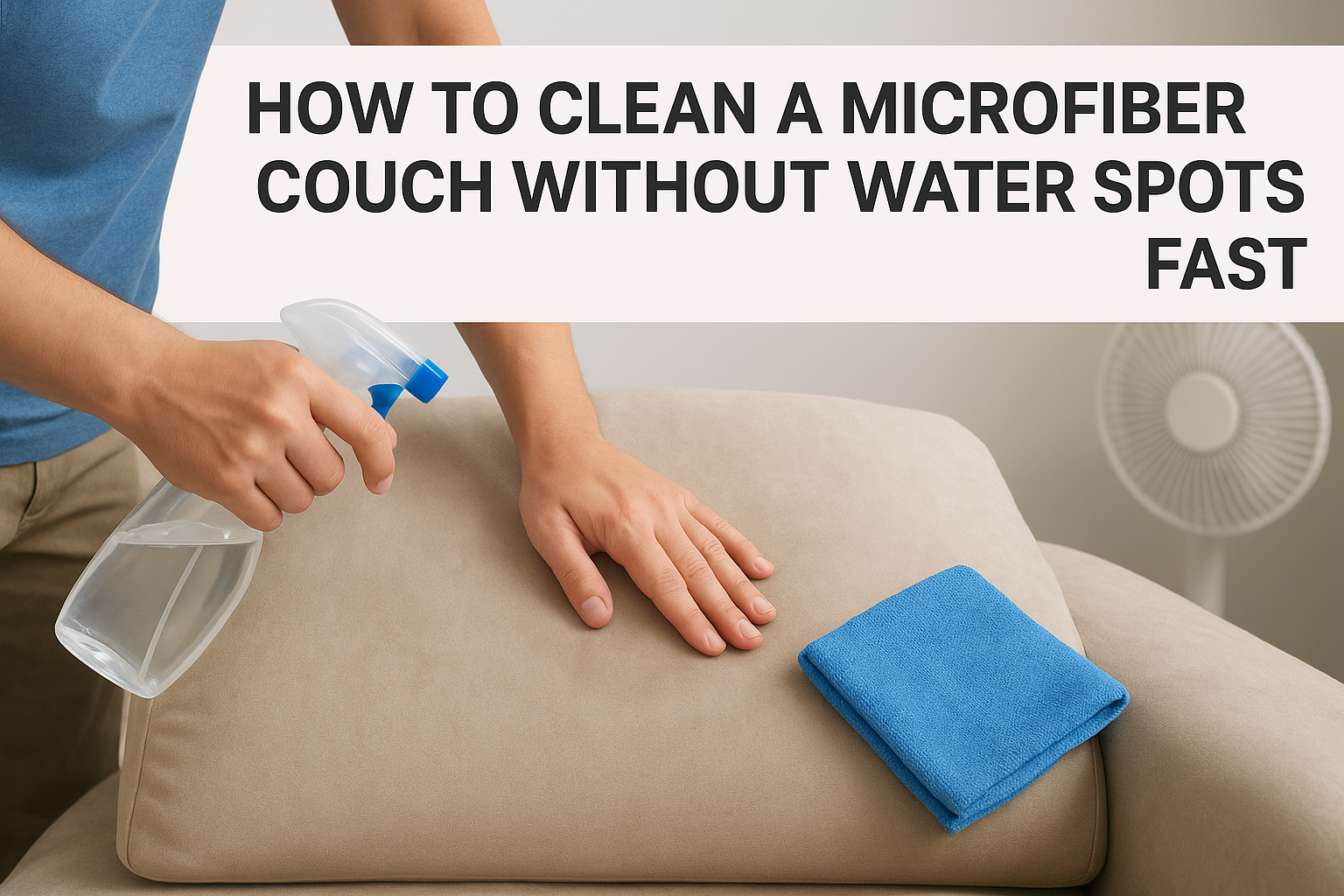
Your microfiber couch looked perfect in the showroom. Now you’re searching how to clean microfiber couch stains without making things worse. You’ve probably heard that water can ruin this fabric, leaving ugly rings and spots that look more noticeable than the original mess. That fear keeps many homeowners from tackling the job at all.
Here’s the reality: cleaning microfiber safely is simpler than you think, and you don’t need expensive products to do it right. At Lake Geneva Carpet Cleaning, we’ve spent over 30 years helping Wisconsin families maintain their carpets, rugs, and upholstered furniture. We know which methods actually work, and which ones cause lasting damage.
This guide covers everything from identifying your couch’s cleaning code to removing tough stains fast. You’ll learn the right solutions to use, the techniques that prevent water spots, and how to restore your microfiber’s soft texture without professional help.
Before you start: find the cleaning code and prep
The wrong cleaning method can permanently damage microfiber in minutes. Before you touch your couch with any solution, you need to check one specific detail that manufacturers hide on every piece of upholstered furniture. This single letter determines whether water will ruin your fabric or clean it safely.
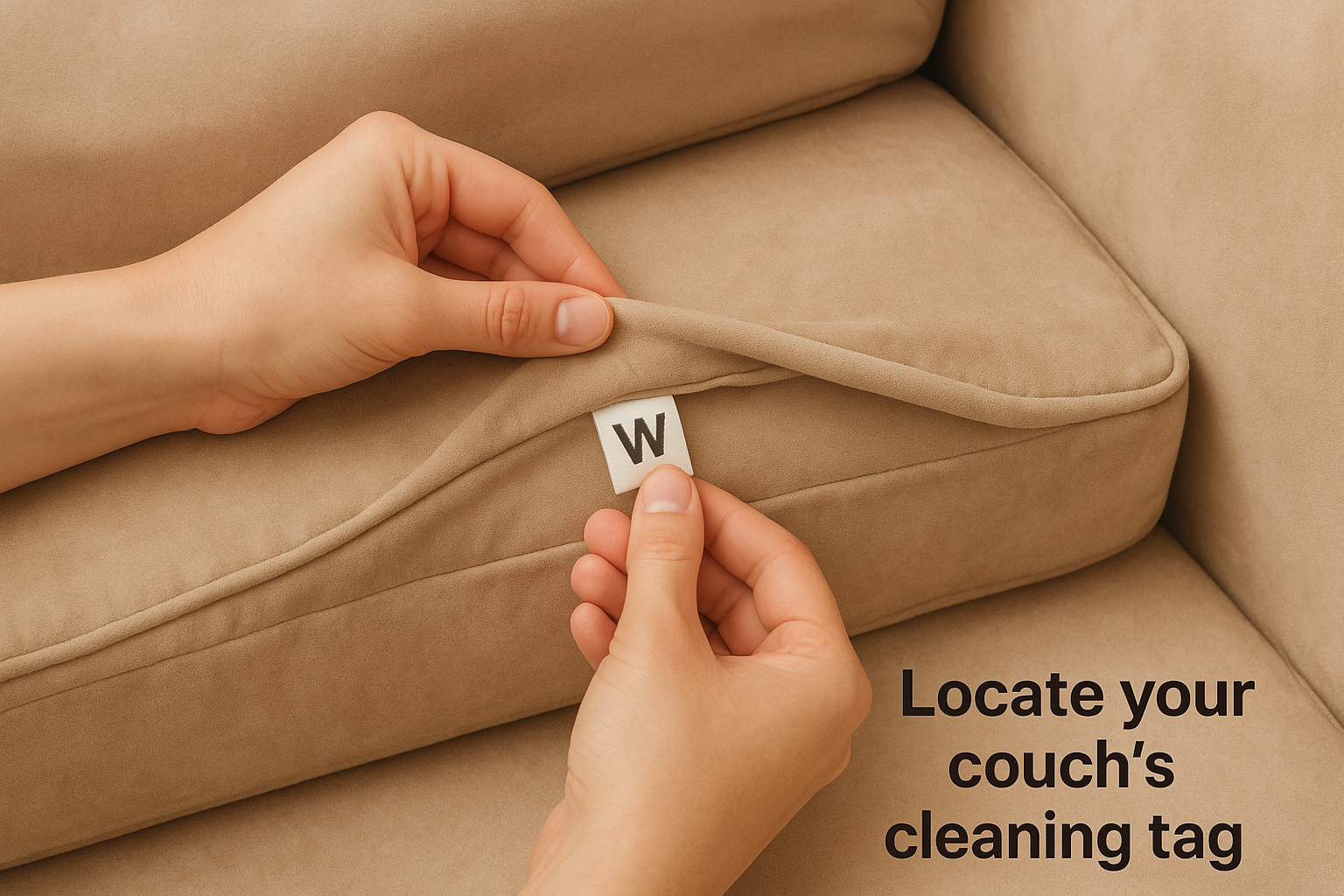
Locate your couch’s cleaning tag
Check underneath the cushions, along the bottom edge of the frame, or inside the zipper panels. You’re looking for a small white or beige tag with a single letter code printed clearly. “W” means water-based cleaners are safe. “S” means you must use solvent-based products only (like rubbing alcohol). “W-S” indicates either method works. “X” means vacuum only, no wet cleaning allowed.
If you can’t find a tag or the code has faded, test any cleaning solution on a hidden area first to check for discoloration or water rings.
Dry clean first to avoid turning dirt into rings
Wet cleaning dirty microfiber is the fastest way to create permanent stains. When water hits dust, crumbs, or pet hair on fabric, it turns loose particles into muddy rings that spread across your couch. This step takes five minutes and prevents hours of damage control later.
Remove loose debris with vacuum
Attach your vacuum’s upholstery tool and work in overlapping strokes across each cushion. Pay extra attention to crevices where armrests meet the seat and the gaps along the backrest. You’re pulling out surface dirt, pet hair, and food particles that would otherwise dissolve into the fabric when wet.
Skipping this step is the main reason most people struggle when they learn how to clean microfiber couch stains at home.
Brush away embedded particles
Take your soft-bristle brush and gently scrub in circular motions across all surfaces. The brush loosens dirt trapped deep in the microfiber’s tiny synthetic fibers. You’ll see dust clouds rise as you work, which confirms you’re reaching material your vacuum missed. Focus on high-traffic areas like armrests and seat edges where body oils and grime collect. Run the vacuum over these spots one final time to capture everything the brush dislodged.
Clean W and W-S microfiber with minimal moisture
W and W-S codes mean your microfiber can handle water-based cleaners, but that doesn’t give you permission to soak the fabric. Too much moisture still causes water spots, and excess liquid seeps into the cushion foam where it breeds mold. Learning how to clean microfiber couch fabric with these codes requires controlled dampness, not saturation.
Remove water spots, odors, and restore the nap
Water spots appear when one section dries faster than surrounding fabric, leaving visible rings that scream “I tried to clean this myself.” Lingering odors happen when moisture stays trapped in the cushion foam. Matted, flat texture develops when microfiber’s synthetic fibers dry in compressed positions. This final step fixes all three problems and makes your couch look professionally cleaned.
Fix water spots with uniform dampness
Lightly spray distilled water across the entire couch surface, not just the spotted areas. You’re evening out the moisture level so everything dries at the same rate. The fabric should feel barely damp to your hand. Use a hair dryer on the cool setting while brushing the fabric with your soft-bristle brush in the direction of the nap. This method prevents new rings from forming as you work.
Moving air is more important than heat when drying microfiber, so point a fan at the couch after you finish to speed evaporation.
Keep it looking new
Regular maintenance prevents the deep stains that make you search how to clean microfiber couch tutorials in the first place. Vacuum your couch weekly using the upholstery attachment to remove surface dirt before it embeds into the fibers. Brush high-traffic areas like armrests and seat cushions every two weeks with your soft-bristle brush to restore the nap and prevent matting. Address spills immediately with your appropriate cleaning method (alcohol for S-code, minimal moisture for W-code) before they set into permanent stains.
Professional deep cleaning extends your microfiber’s lifespan when DIY methods stop working. Lake Geneva Carpet Cleaning uses truck-mounted hot water extraction equipment that removes embedded dirt and allergens without the water spot risks of home cleaning. Our eco-friendly process is safe for your family and pets, and we back every job with a satisfaction guarantee. Contact us for a free quote and see why Wisconsin homeowners have trusted our expertise for over 32 years. Call 262-581-6140
Leave a Reply