
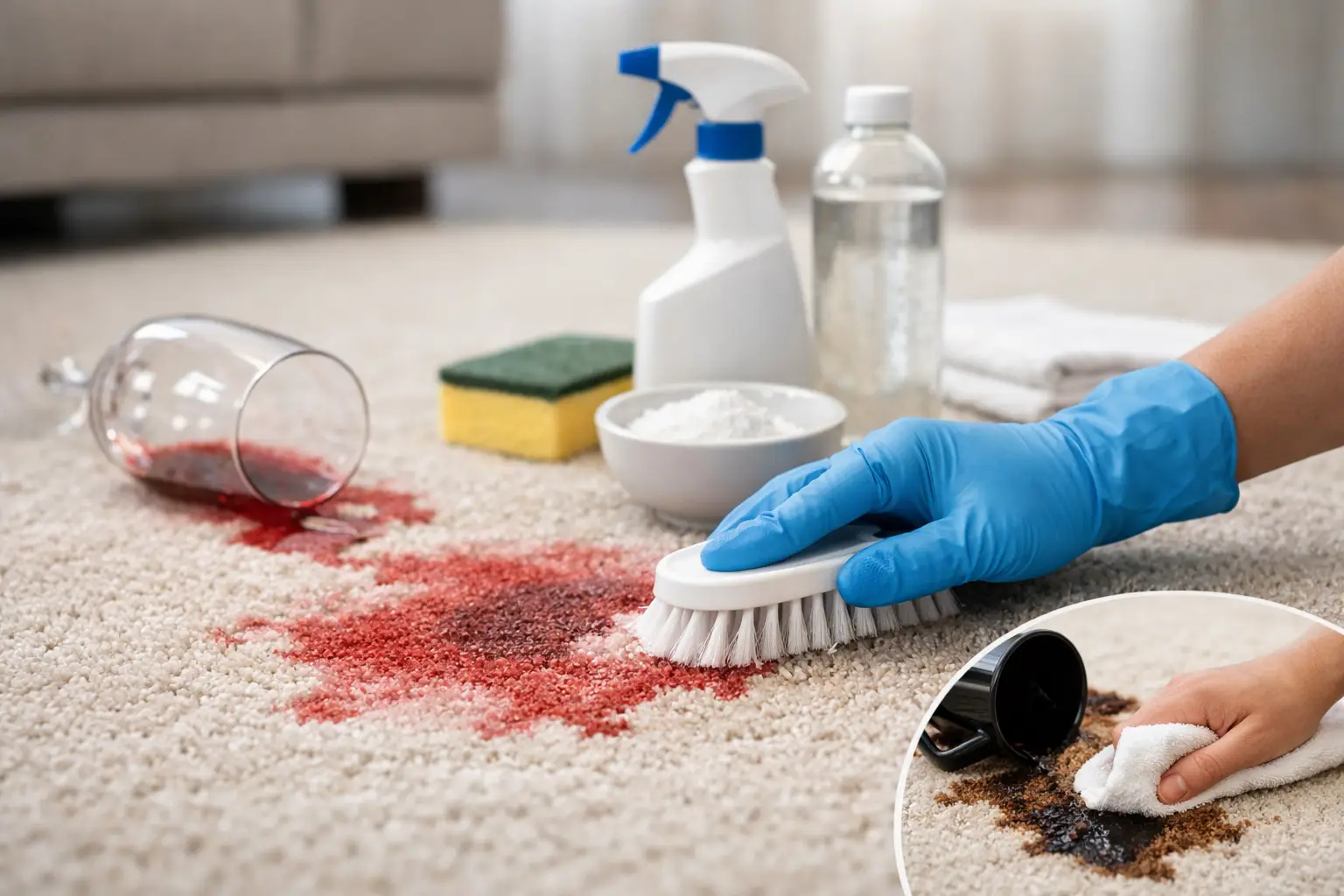
That coffee spill looked small until it spread, dried, and turned into the first thing you notice when you walk into the room. That is how most carpet stains go. A good guide to carpet stain removal is not just about what product to grab. It is about acting fast, using the right method for the right stain, and knowing when a spot has moved beyond home cleanup and needs professional work.
Carpet is tough, but it is not indestructible. The wrong cleaner, too much water, or aggressive scrubbing can do more damage than the original spill. If you want the best possible outcome, the goal is simple: remove the stain without distorting the carpet fibers, setting the stain deeper, or leaving behind residue that attracts more soil.
A practical guide to carpet stain removal starts with speed
The first few minutes matter. The longer a spill sits, the more time it has to soak into the carpet backing and padding. That is when a simple spot becomes a lingering stain, and in some cases, an odor problem too.
Start by blotting, not scrubbing. Use a clean white towel or paper towel and press firmly to absorb as much liquid as possible. If you scrub, you spread the spill and grind it into the fibers. You can also fuzz the carpet surface, which makes the spot look worn even after the stain is gone.
After blotting, remove solids carefully with a spoon or dull edge. Do not mash them down into the carpet. Once the excess is gone, treat the stain based on what caused it. That part matters more than most people realize. Grease, protein, dye, tannin, and pet accidents do not respond the same way.
The biggest mistakes homeowners make
A lot of carpet damage happens during cleanup, not during the accident itself. Store-bought spotters can help in some situations, but only if they are used correctly and only if they are right for the fiber and stain type.
Too much cleaner is a common problem. When product is poured straight onto the carpet, it often soaks below the surface. Even if the visible stain improves, the leftover residue can pull in dirt and create a gray or sticky spot later. Over-wetting is another issue. Carpet backing and padding are not meant to stay saturated, and moisture that lingers can lead to odor and recurring wicking.
Heat is also risky. Hot water can set certain stains, especially protein-based stains like blood or some food spills. And mixing random household cleaners is never a smart move. That can cause bleaching, discoloration, or chemical reactions that make the stain worse.
How to treat common carpet stains
The right approach depends on what hit the carpet in the first place. There is no one-size-fits-all fix.
Coffee, tea, and wine
These stains are notorious because they carry strong color. Blot first, then use a mild cleaning solution on a clean white cloth. Work from the outside toward the center so you do not spread the stain outward. Rinse lightly with clean water and blot again. If color remains after that, the stain may have bonded more deeply than surface cleaning can reach.
Food spills and sauces
Pick up solids first. Then blot the area and use a gentle spot-cleaning approach. Sauces often contain oils, dyes, and acids all at once, which makes them trickier than they look. Red sauces are especially stubborn. If the stain leaves a tinted shadow after cleaning, that usually means some of the dye remains in the fiber.
Grease and oil
Greasy spots need more than water. Water alone tends to smear them around. A proper treatment breaks down the oily residue so it can be lifted from the carpet instead of spread deeper. This is one area where aggressive home scrubbing often backfires and leaves a darkened patch.
Mud and tracked-in soil
Let mud dry first, then vacuum up as much loose soil as possible before applying any moisture. If you wet muddy carpet too soon, you create a larger mess and drive the soil deeper into the pile. In Wisconsin, seasonal mud, salt, and slush can build up fast near entryways, and repeated spot cleaning often cannot fully remove what has settled below the surface.
Pet accidents
Pet urine is not just a stain problem. It is also a contamination and odor problem. Blot immediately and remove as much moisture as possible. But if the accident has reached the pad, surface treatment is rarely enough. The odor can return on humid days, and pets often go back to the same spot if scent remains. That is why pet stain and odor work often calls for professional treatment designed to reach below the fiber level.
Blood and other protein stains
Use cold water, not hot. Hot water can set protein into the carpet. Blot gently and avoid overworking the area. If the stain has dried, it usually takes more patience and a more specialized process to fully remove it.
When home stain removal is enough and when it is not
Some fresh spills come out well with prompt blotting and careful spot treatment. If the stain is small, recent, and limited to the surface fibers, you may be able to handle it yourself.
But there are clear signs the job needs more than household cleanup. If the stain keeps reappearing after it dries, that is often wicking from deeper in the carpet. If there is odor, especially from pets, the problem may be below the surface. If the carpet looks dull around the stain after cleaning, residue may be left behind. And if the spill involved strong dye, grease, or heavy contamination, you may need professional stain removal backed by the right equipment and training.
That is where method matters. High-standard truckmounted hot water extraction is built to flush out embedded soil, contaminants, and residues that basic spot cleaning cannot reach. It is not just about appearance. It is about removing what is trapped down in the carpet and helping restore a cleaner, healthier result.
Why professional stain removal gets better results
A true guide to carpet stain removal has to be honest about limits. Not every stain can be fixed with a towel and a bottle from the store. Some need fiber-safe chemistry, controlled agitation, proper rinsing, and powerful extraction.
Professional cleaning also reduces the risk of doing permanent damage. Different carpet fibers react differently to moisture, pH, and stain treatments. An experienced technician knows how to identify the material, test safely, and choose a treatment that targets the stain without harming the carpet.
There is also the issue of what you cannot see. A stain may seem gone until traffic patterns bring the spot back, or odors rise again after a few days. Deep extraction helps remove the material that keeps causing the problem. That is one reason quality-focused companies do not treat stain removal like a quick spray-and-go service. The work has to be thorough.
For homeowners and businesses that care about results, that difference shows up in how the carpet looks, smells, and wears over time. Clean fibers last longer. Residue-free carpet stays cleaner longer. And when safe, pet-friendly cleaning agents are paired with skilled technicians, you get a better outcome without taking chances inside your home or workplace.
How to protect carpet after a stain is removed
Once the stain is out, the next step is preventing the area from becoming a repeat problem. Make sure the carpet dries fully. Limit foot traffic until it does. If the spot was in a high-use area, consider a maintenance cleaning schedule so traffic lanes, tracked-in soil, and minor spills do not build into a bigger issue.
It also helps to keep expectations realistic. Some stains do not just sit on the carpet. They chemically change the fiber or transfer dye permanently. In those cases, a professional may be able to improve the appearance significantly, but complete removal depends on the stain, the carpet type, and how long the material sat untreated.
That is not bad news. It is just the truth. Good carpet care is about making smart decisions early, using the right process, and not guessing your way through a problem that needs trained hands.
If you are dealing with stubborn spots, pet accidents, recurring odors, or stains that keep coming back after you clean them, it is time to bring in someone who does this work at a high level every day. Lake Geneva Carpet Cleaning provides expert stain removal and deep truckmounted hot water extraction for homes and businesses that want the job done right. Call 262-581-6140 or visit https://lakegenevacarpetcleaningwi.com. A fast response and the right method can save a carpet that looked headed for replacement.
Leave a Reply