
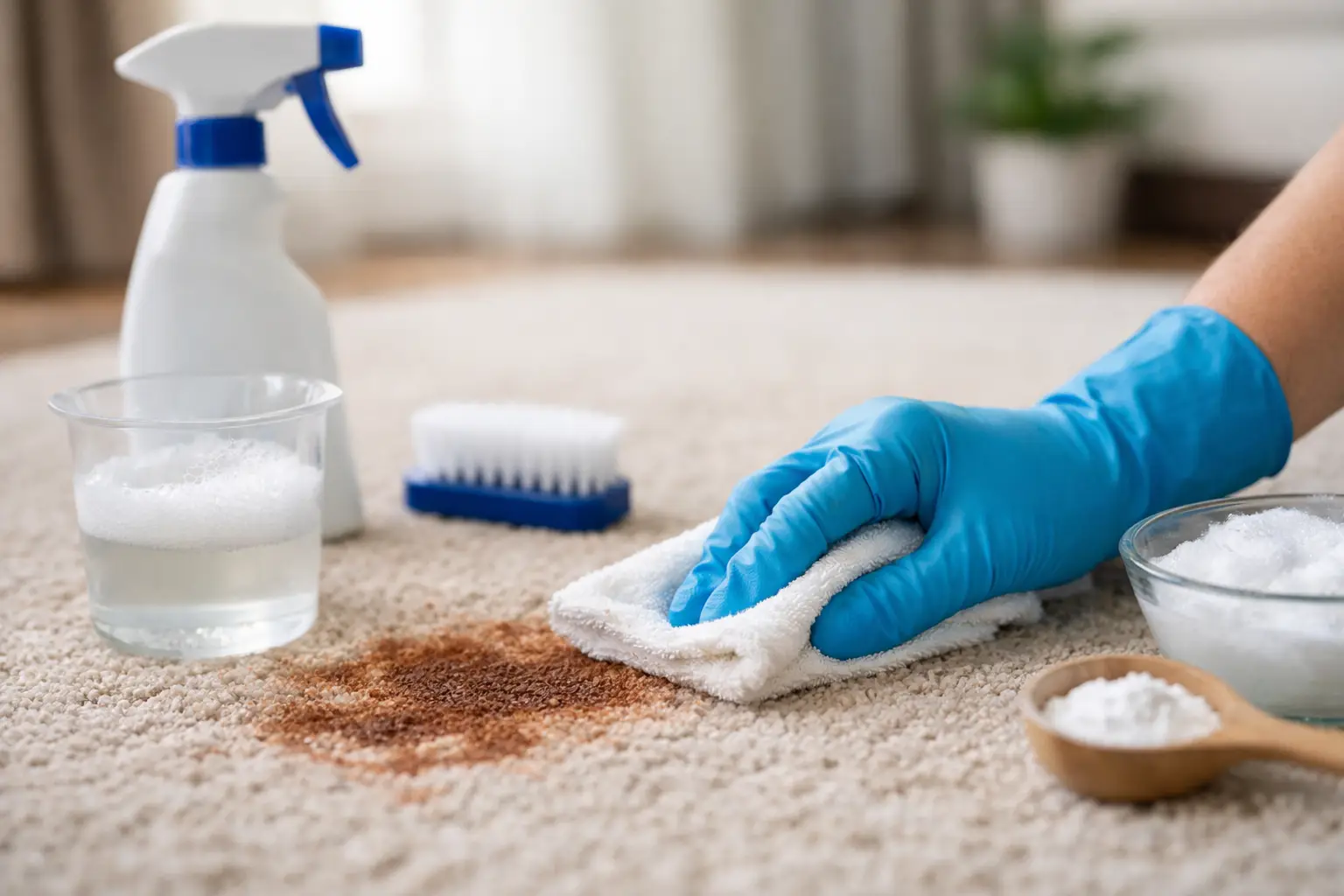
A fresh spill on carpet gives you a short window to do the right thing – or make the stain worse. The best ways to remove carpet stains are not usually aggressive scrubbing or pouring on random cleaners from under the sink. Good stain removal comes down to speed, using the right method for the material, and knowing when a spot has moved past DIY territory.
That matters in real homes and businesses. In Wisconsin, carpets take a beating from tracked-in mud, winter slush, pet accidents, coffee, food grease, and the general wear that comes with daily foot traffic. Some spots sit on the surface. Others soak deep into the backing and pad, where odor and discoloration keep coming back unless the problem is treated correctly.
The best ways to remove carpet stains start with the first 5 minutes
When something hits the carpet, your first move should be blotting, not scrubbing. Use a clean white towel or plain paper towels and press firmly to lift as much liquid as possible. Scrubbing spreads the stain, roughs up carpet fibers, and can push the spill deeper.
Work from the outside edge toward the center so the spot does not grow. If there are solids, lift them gently with a spoon or dull tool before you blot. Keep switching to a clean section of towel so you are not putting the mess back into the carpet.
Temperature matters too. Cold water is safer for many common spills, especially anything protein-based like blood or dairy. Hot water can set some stains and lock them into the fibers. If you are not sure, start mild and controlled instead of going strong right away.
Match the cleaning method to the stain
Not all carpet stains behave the same way. A muddy footprint, a pet accident, and a red wine spill each need a different approach. This is where a lot of homeowners get frustrated. They try one all-purpose cleaner, the stain lightens a little, and then it returns.
Food and drink stains
For coffee, juice, soda, and many food spills, blot first, then apply a small amount of mild dish soap mixed with water. Use very little soap. Too much leaves residue behind, and residue attracts dirt fast. Blot with the cleaning solution, then blot again with plain water to rinse.
If color remains, a vinegar and water mix can sometimes help with acidic drink stains. The key is moderation. Flooding the area can create a bigger problem in the backing and pad, especially if the carpet is over wood subfloor or installed in a high-humidity area.
Mud and dirt
Mud is one of the easiest stains to make worse because people attack it while it is still wet. Let mud dry first. Once it dries, vacuum thoroughly to remove as much loose soil as possible. Then treat what remains with a light cleaning solution and blot carefully.
This is especially important after winter and rainy weather, when carpets collect not just dirt but salt and fine grit. Those particles grind into fibers and dull the carpet even if the obvious stain is gone.
Grease and oily spots
Grease takes more patience. Blot first, then use a cleaner designed for oily residue if you have one that is carpet-safe. If not, a tiny amount of dish soap in water may help break down the spot. Do not oversaturate, and do not keep rubbing if the stain is smearing.
Oil can wick back from below the surface, which is why some grease stains seem to disappear and then reappear after drying. That is usually a sign the contamination went deeper than the face fibers.
Pet stains and odors
Pet accidents are in a category of their own. Surface cleanup is only part of the job. Urine often travels through the carpet into the pad and sometimes the subfloor. If you only clean the visible spot, the odor source may still be there, and pets may return to the same area.
Blot up as much as possible first. Then use an enzyme-based pet treatment made for carpet. Enzymes help break down the organic matter that causes odor. Standard household cleaners may mask the smell for a while, but they often do not solve the real issue.
If the accident is older, if the odor is strong, or if the stain keeps coming back, professional treatment is usually the better call. Deep contamination needs more than a quick surface spray.
Best ways to remove carpet stains without damaging carpet
A lot of stain damage comes from the cleaning attempt, not the original spill. Bleach, harsh degreasers, colored towels, and over-the-counter products used too heavily can permanently affect carpet color and texture.
Always test any cleaner in a small, less visible area first. Use white towels only. Colored cloths can transfer dye into damp carpet. Apply cleaner to the towel or use a light mist rather than dumping solution directly onto the stain.
It also helps to avoid over-wetting the area. Excess moisture can lead to browning, lingering odor, and soil wicking from below. Carpet is not just a surface. Once a spill reaches the backing or pad, removal gets harder and the risk of odor goes up.
When spot cleaning is enough – and when it is not
Some stains respond well to quick, careful spot treatment. A recent coffee spill on a well-maintained carpet may come out cleanly. A small mud spot near the door might be no big deal once it dries and gets treated properly.
But there are times when the stain you see is only part of the problem. That is common with pet urine, repeated spills in the same area, dark traffic lanes, and spots that have already been treated multiple times with store products. In those cases, the carpet often needs a full flushing and extraction process to remove what is trapped deep in the fibers.
That is where professional hot water extraction stands apart. It does more than clean the surface. It reaches into the carpet pile to remove embedded soils, residues, allergens, and stain contamination that ordinary spot cleaning leaves behind. For homes with pets, kids, or heavy use, that deeper cleaning is often what finally resets the carpet.
Common mistakes that make stains permanent
The first mistake is waiting too long. The longer a spill sits, the more time it has to bond with the fibers or soak below the carpet. Speed matters.
The second mistake is scrubbing hard. People want to feel like they are doing something aggressive, but carpet does not reward that approach. Scrubbing frays fibers and spreads the stain.
The third mistake is using too much product. Soap residue is a magnet for dirt. A spot may look clean right after treatment, then turn dark again because residue pulled in new soil.
Another problem is layering products. Mixing stain removers, deodorizing sprays, and household chemicals can create discoloration or leave behind a sticky mess that is harder to fix later. If a basic method is not working, that is usually the point to stop experimenting.
Why professional stain removal often gets better results
There is a big difference between treating a spot and fully removing the source of the stain. Professional equipment has the power to rinse and extract contamination instead of just pushing it around. That matters for deep spills, recurring spots, and odor issues that have worked their way into the carpet system.
Experienced technicians also know how to identify the type of stain, the carpet fiber involved, and the safest treatment path. That avoids the guesswork that leads to set stains and fiber damage. In many cases, the right professional process can improve spots that homeowners were told would never come out.
For families and business owners who care about appearance, indoor air quality, and carpet life, that higher standard is worth it. Lake Geneva Carpet Cleaning uses truckmounted hot water extraction and safe cleaning agents to remove deep soil, tough stains, and odor at the source. If a stain has gone beyond simple blotting and spot treatment, professional service is often the smarter fix.
Keeping stains from becoming long-term problems
Good maintenance buys you time. Vacuuming regularly removes dry soil before it gets ground into the carpet. Entry mats cut down on mud, salt, and grit. Routine professional cleaning also helps because a cleaner carpet responds better to spot treatment than one already loaded with residue and embedded dirt.
If you have pets or high-traffic areas, it pays to act fast on every accident and schedule deeper cleaning before buildup becomes obvious. The longer contamination stays in the carpet, the harder it is to remove completely.
A carpet stain does not always need a major rescue, but it always needs the right response. Handle it quickly, use the least aggressive method that fits the stain, and if the spot keeps coming back or the odor lingers, trust your instincts. That is usually your carpet telling you it needs a professional cleaning, not another round of guesswork.
Leave a Reply