
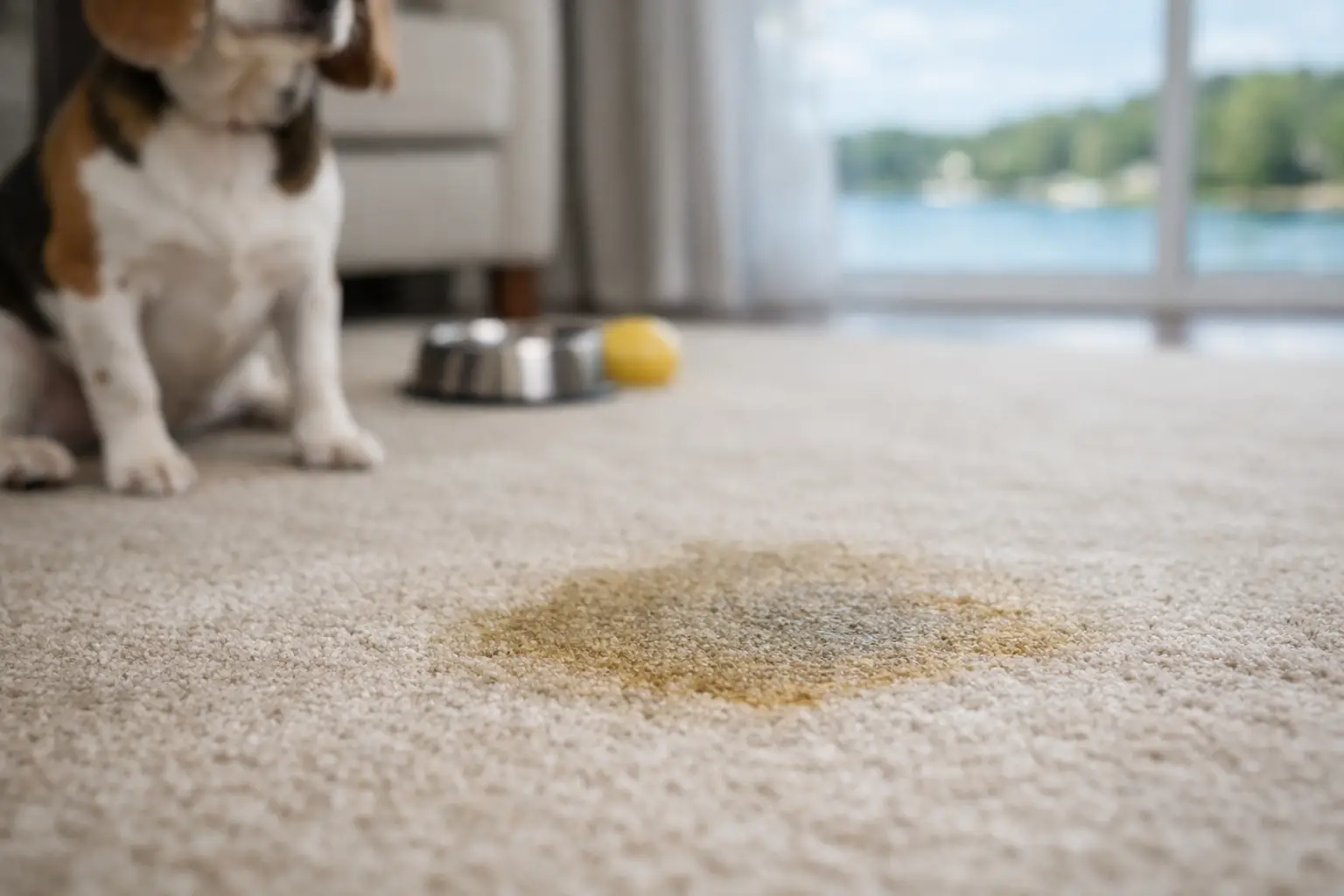
A pet accident can look minor at first – a small yellow spot, a damp patch, maybe a smell you think will fade by morning. Then a few days later, the stain is darker, the odor is stronger, and the same area keeps drawing your pet back. If you’ve been asking why does pet urine stain carpet in Lake Geneva WI, the short answer is this: urine does not just sit on the surface. It sinks, spreads, reacts with carpet fibers, and leaves behind residue that keeps causing trouble if it is not treated the right way.
Why does pet urine stain carpet in Lake Geneva WI homes?
Pet urine stains carpet because it is more than water with a little color. It contains urea, uric acid, salts, hormones, bacteria, and other waste compounds. Once it hits carpet, it begins moving through the fibers, into the backing, and often into the pad below. That is where the real damage starts.
At first, a fresh accident may not look severe. But as the moisture evaporates, concentrated urine deposits stay behind. Those deposits can discolor fibers, create a stiff or crusty texture, and hold odor-producing material deep in the carpet system. In some cases, the visible spot is only a small part of the actual contamination.
In Lake Geneva area homes, weather and daily foot traffic can make matters worse. Wet boots, indoor humidity swings, and tracked-in soil can all interact with that residue. A urine spot that was not fully removed can keep attracting dirt, which is one reason old pet stains often look darker over time.
What in pet urine actually causes the stain?
The main culprits are uric acid crystals, salts, and the natural pigments in the urine itself. When urine dries, those materials do not simply disappear. They remain in the carpet and can bond with fibers or settle into the backing and pad.
Uric acid is especially stubborn. It is not highly water-soluble once it dries, which is why a quick scrub with household cleaner often fails. You might remove some surface color and leave the deeper contamination untouched. Then, when moisture returns from humidity, a spill, or even routine cleaning, the odor and staining can reappear.
There is also a chemical side to the problem. As urine breaks down, bacteria feed on it and release ammonia-like odors. On some carpet types, the chemistry of urine can shift the dye structure or leave behind a bleaching effect. That means some spots are true removable stains, while others are permanent damage to the carpet color. That difference matters.
Why some stains get worse after you clean them yourself
This is where many homeowners get frustrated. They blot the area, spray a store product, scrub hard, and expect the spot to be gone. Instead, the stain spreads, the smell returns, or the carpet looks rougher than before.
The reason is simple. Surface cleaning does not reach deep contamination, and over-wetting can push urine farther down. If too much liquid is used, the stain can wick back up from the pad as the carpet dries. That is why a spot may seem gone at night and be back the next day.
Scrubbing also works against you. It can distort carpet fibers, wear down the pile, and drive residue deeper. Some off-the-shelf cleaners leave behind soap or fragrance residue that temporarily masks the odor but attracts more soil later. In a high-use room, that area starts looking dirty faster than the rest of the carpet.
Why odor and stain usually travel together
A lot of people think they have two separate problems – a stain they can see and an odor they can smell. Most of the time, they are coming from the same source. The visible spot is only the surface evidence. The odor is usually proof that contamination has moved below.
If urine reached the pad, you may notice the smell more on humid days or when the room is closed up. That happens because the residue reactivates with moisture in the air. In some homes, pet odor becomes strongest when the heat kicks on or when windows stay shut for longer periods.
This is also why pets return to the same place. Their nose picks up what people miss. If the odor source remains in the carpet or pad, that area still reads like a bathroom spot to the animal.
The carpet itself makes a difference
Not every carpet reacts the same way to pet urine. Some synthetic fibers resist staining better than natural materials, but that does not mean they resist odor or residue. Wool, for example, can be especially vulnerable because it is an absorbent natural fiber. Even on synthetic carpet, the backing, pad, and subfloor may still absorb urine.
The age and condition of the carpet matter too. Older carpet with wear in the traffic lanes often has less protective coating left on the fibers. That makes it easier for urine and soil to grab hold. If a carpet has been cleaned improperly in the past and has buildup from leftover detergents, pet accidents can stick even more aggressively.
This is one of those it-depends situations. Two homes can have the same pet accident and get very different results based on carpet type, how quickly the accident was found, and whether it soaked through.
Why professional treatment works better
A true pet urine problem needs more than a quick surface rinse. It needs inspection, proper identification of the affected area, and treatment that addresses both stain and odor at the source. That means working beyond the carpet face fibers when necessary.
Professional hot water extraction is effective because it flushes out embedded contamination rather than just smearing it around. When paired with the right pet-safe treatment products, it helps break down urine residues, remove odor-causing material, and improve the overall condition of the carpet. The key is using the right amount of solution, the right dwell time, and strong extraction with trained judgment. That is where experience counts.
A quality-first company is not guessing. It is evaluating whether the urine is fresh or old, whether the pad is involved, whether staining is still removable, and whether there may be permanent dye damage. Homeowners deserve straight answers on that. Some spots can be corrected fully. Some can be improved. Some have crossed the line into permanent discoloration.
When a pet urine stain becomes permanent
Not every pet stain can be reversed, and any honest carpet cleaner should say so. If urine has sat too long, changed the carpet dye, or damaged the backing, cleaning may remove the contamination and odor while leaving some visible color change behind.
That does not mean the cleaning failed. It means the carpet suffered chemical damage before treatment started. The good news is that proper remediation can still stop the odor issue, improve hygiene, and keep the spot from getting worse.
The biggest mistake is waiting too long because the stain seems manageable. The longer urine stays in carpet, the more likely it is to set, spread, and create a deeper odor problem.
What homeowners should do right away
If the accident is fresh, blot it with clean white towels and apply firm pressure. Do not scrub. Do not soak the area with random cleaners. And do not assume a pleasant scent means the problem is gone.
If the spot is older, smells strong, or keeps returning, it is time for a professional evaluation. That is especially true if the stain is in a bedroom, family room, hallway, or any area where people spend a lot of time. Deep contamination affects more than appearance. It affects indoor air quality and the cleanliness of the whole room.
For homeowners who want the job done to a higher standard, Lake Geneva Carpet Cleaning uses truckmounted hot water extraction and experienced stain-removal methods designed to tackle the source of pet urine issues, not just the symptom. You can learn more at https://lakegenevacarpetcleaningwi.com or call 262-581-6140.
Why fast action protects your carpet
The longer pet urine sits, the harder it is to correct. That is the practical truth. Fast action gives you the best chance of removing both the stain and the odor before they settle deeper into the carpet system.
A good carpet is not cheap to replace, and a pet accident does not have to ruin it. But it does need to be handled correctly. If a spot keeps coming back, your carpet is telling you the problem is deeper than the surface, and that is the moment to treat it like a real cleaning issue instead of a quick household fix.
Leave a Reply