If you have ever looked at a carpet after a cleaning and thought, that looks better but still does not feel truly clean, the equipment was probably part of the story. In the debate over truckmounted extraction vs portable equipment, the difference usually comes down to power, heat, recovery, and how much soil can actually be pulled out of the carpet instead of left behind.
That matters more than most homeowners and business owners realize. Carpets hold gritty soil, pet residue, spills, pollen, and tracked-in moisture deep in the pile. A machine can put water into carpet pretty easily. The real test is whether it can rinse thoroughly and recover that contamination fast enough to leave the carpet clean, fresh, and on a proper path to drying.
Truckmounted extraction vs portable equipment: what is the real difference?
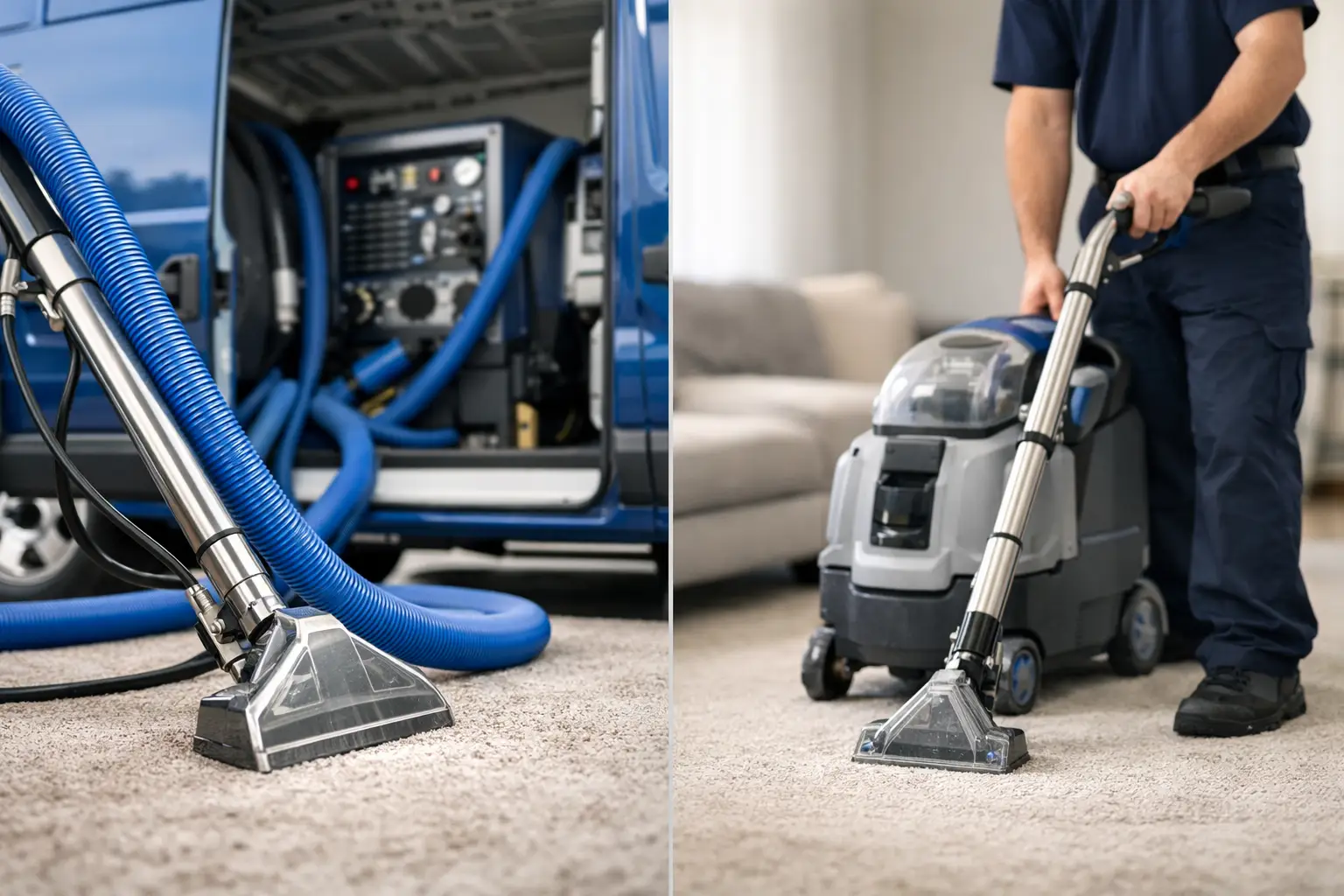
Both systems are used for hot water extraction, but they are not built the same and they do not perform the same. A portable machine is brought inside the building and works from there. A truckmounted system is installed in a service vehicle and runs with much stronger vacuum, more consistent heat, and greater flushing power.
On paper, both can be called carpet cleaning equipment. In real-world use, they serve very different standards of cleaning. Portable equipment can help in certain limited situations, especially where access is tight or a small isolated area needs attention. But when the goal is deep cleaning across larger carpeted areas, better soil removal, and shorter drying times, truckmounted extraction has a clear advantage.
Why truckmounted extraction cleans deeper
The biggest difference is not marketing language. It is mechanical performance. Stronger vacuum means more suspended soil and moisture get recovered from the carpet instead of staying in the backing and pad. Higher and more consistent heat helps break down oily residues, tracked-in grime, and stubborn buildup in traffic lanes. Better water pressure improves the rinse, which is critical when you want to remove contamination rather than just make the fibers look temporarily brighter.
This is where many people confuse appearance with cleanliness. A carpet can look improved after surface-level cleaning, yet still hold residue, odors, and dampness below. That leftover material attracts more soil and can keep problem areas coming back. A properly run truckmounted system gives technicians the power to flush and extract at a much higher level.
For homes with pets, kids, heavy foot traffic, or recurring spots, that added performance matters. It also matters in commercial settings where carpet takes a beating from daily use and has to look professional without staying wet for too long.
Heat, vacuum, and rinse all work together
These three factors are not separate issues. They work as a team. Heat helps loosen soils. Water flow helps rinse them. Vacuum removes them. If one part of that chain is weak, the overall result suffers.
Portable equipment can sometimes handle light cleaning needs, but it often has less vacuum strength and less sustained heat. That can mean more moisture left behind and less complete soil recovery. In a room that already has years of buildup, pet contamination, or winter grime tracked in from Wisconsin weather, that gap becomes very noticeable.
Where portable equipment has a place
Portable equipment is not useless. There are cases where it makes sense. High-rise buildings, interior spaces with limited access, or isolated jobs where a truckmount cannot practically reach may call for portable use. Some specialty situations require flexibility more than maximum power.
But that does not make the two methods equal. It just means there are practical exceptions. If you are comparing the best method for deep cleaning most residential and small commercial carpeted spaces, truckmounted extraction is generally the higher standard.
That is especially true when the goal is not just appearance, but removal of embedded dirt, allergens, stains, and odors. For that kind of work, stronger extraction is not a small upgrade. It is the foundation of a better result.
Truckmounted extraction vs portable equipment for drying time
Customers often focus on how the carpet looks right after cleaning. A smarter question is how it dries. Faster drying is not just about convenience. It helps reduce the chance of odors, wicking, and that damp feeling nobody wants lingering in a room.
Truckmounted systems typically leave carpets drier because they recover more water during the cleaning process. That stronger vacuum makes a real difference. When more moisture is removed at the source, the carpet can return to normal use sooner and with fewer issues.
Portable equipment often leaves more moisture behind, especially if the operator is trying to compensate for lower performance by making extra wet passes. More water without equally strong recovery can create problems. That does not mean every portable job will be overwet, but the margin for error is generally higher.
For families, pet owners, and business operators, shorter drying times are a practical benefit that ties directly to cleaning quality.
What this means for stains, odors, and traffic lanes
Some carpet problems sit on the surface. Many do not. Pet accidents can soak below the face fibers. High-traffic lanes collect oily residue and packed-in soil. Spill areas can leave sticky material that grabs new dirt fast. Odors often come from what is trapped beneath what you can see.
A stronger extraction system gives trained technicians a better shot at thoroughly rinsing and recovering that material. It will not make every permanent stain disappear, because some fibers are permanently altered by dye loss, bleaching, or age. But when a stain or odor problem is tied to contamination that can still be removed, more power and better recovery improve the odds.
That is why workmanship matters too. Equipment alone does not clean carpet. The technician has to know how to inspect fibers, treat problem areas, control moisture, and use the right cleaning agents safely. The best results come from both: professional judgment and professional-grade equipment.
Why quality-first companies prefer truckmounted systems
A quality-first company does not choose equipment based on what is easiest to move around. It chooses based on results. If the goal is superior cleaning, safer moisture control, and a better finished product, truckmounted extraction is the method that supports that standard.
That fits the kind of customers who are not looking for a quick cosmetic pass. Homeowners who care about indoor cleanliness, pet odor removal, and extending carpet life want soil removed, not just disturbed. Small businesses want carpets that look clean, smell clean, and dry properly so the space is ready for normal use.
At Lake Geneva Carpet Cleaning, that is exactly why we emphasize truckmounted hot water extraction. It is the high-standard method for deep cleaning carpet fibers and pulling out the embedded material that lesser systems often leave behind. With trained technicians, safe cleaning solutions, and decades of hands-on experience, the goal is simple: deliver the level of cleaning the carpet actually needs.
The trade-offs homeowners should understand
There is no reason to pretend every cleaning situation is identical. Access can affect setup. Building layout can affect hose runs. Extremely confined or hard-to-reach spaces may create conditions where a portable machine is the practical option.
Still, practical limitations are not the same as performance advantages. When access is normal and the job calls for deep restorative cleaning, truckmounted extraction remains the stronger choice. It provides more consistent heat, stronger recovery, and better overall cleaning capability.
That is the trade-off in plain terms. Portable equipment may be useful when conditions force it. Truckmounted extraction is preferred when quality is the priority.
How to choose the right method for your carpet
If your carpet has light soil and a small isolated issue, multiple methods may seem acceptable at first glance. If your carpet has pet odors, heavy traffic lanes, seasonal mud and salt, recurring spots, or years of buildup, the equipment choice becomes far more important.
Ask what system is being used and why. Ask how the company handles moisture control and soil recovery. Ask whether the goal is surface improvement or true deep cleaning. Those questions tell you a lot about the standard of service you are getting.
For most homeowners and business owners, the answer is straightforward. If you want a deeper clean, stronger extraction, and better drying performance, truckmounted hot water extraction is the better method.
A carpet cleaning appointment should leave you with more than a temporary visual boost. It should leave the carpet cleaner, fresher, and healthier underfoot. If you want that higher standard for your home or business, call 262-581-6140 and ask for service that is built around results, not shortcuts. Or check out our podcast at https://lakegenevacarpetcleaningwi.com/podcast/top-podcast-tips-on-carpet-cleaning-in-lake-geneva-wi/
Leave a Reply