
You can usually tell when a carpet has only been cleaned on the surface. The spots may look lighter for a day or two, but the traffic lanes still feel gritty, the pet odor creeps back, and the whole room never quite feels fresh. That is exactly why homeowners and business owners ask how truckmounted carpet cleaning works – because they want to know what actually removes the soil buried deep in the carpet, not just what makes it look better for a weekend.
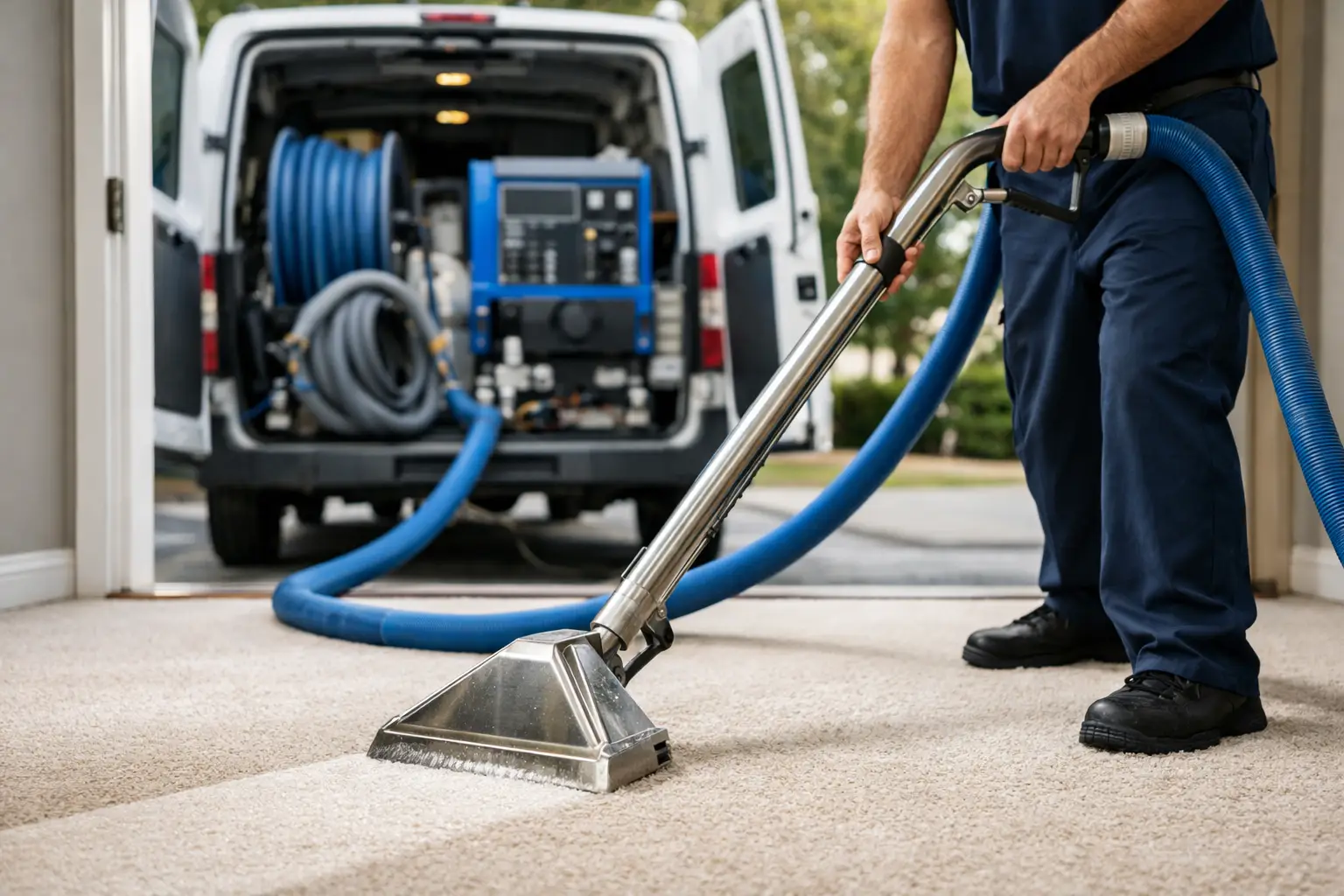
Truckmounted carpet cleaning is the professional hot water extraction method performed with powerful equipment installed in a service vehicle. Instead of relying on a small portable machine, the cleaning system stays mounted in the truck or van and sends solution and vacuum through long hoses into the building. That setup matters because it gives the technician far more heat, stronger vacuum, and more consistent cleaning power. Those three things are what separate a true deep cleaning from a light surface rinse.
How truckmounted carpet cleaning works step by step
At its core, the process is straightforward. A trained technician inspects the carpet, identifies trouble spots, applies the right pre-treatment, agitates where needed, then uses hot water extraction to flush out soil, allergens, spills, and residue. The machine sprays heated cleaning solution into the carpet fibers and immediately recovers it with strong vacuum suction.
That may sound simple, but the real difference is in how much force and control a truckmounted system brings to the job. High heat helps break down oily soil and sticky residue. Proper water pressure helps rinse the fibers thoroughly. Strong vacuum pulls out the dirty water instead of leaving it behind in the carpet backing. When those three parts are balanced correctly, the carpet is not just cleaner on top – it is cleaner all the way through the pile.
Inspection and pre-treatment come first
Before the main cleaning starts, a quality-minded technician does not just start spraying. The carpet has to be evaluated for fiber type, soiling level, heavy traffic areas, spotting issues, and any odor concerns. Pet accidents, food spills, tracked-in salt, and dark traffic lanes all behave differently. If the technician skips this step, the results are never as good as they should be.
Pre-treatment is where a lot of the cleaning work really begins. Professional cleaning agents are applied to loosen embedded dirt, break down grease, and start separating contaminants from the fibers. In homes with kids or pets, this matters even more because soils are usually a mix of dry particles, body oils, outdoor grime, and spills. In commercial spaces, it is often ground-in traffic soil near entrances, hallways, and workstations.
Agitation helps loosen deep soil
Once the pre-spray is applied, agitation may be used to work the solution deeper into the carpet. This can be done with grooming tools or specialized equipment depending on the condition of the carpet. Agitation is especially helpful in high-traffic areas where dirt has been packed into the fibers over time.
This is one of those details that separates careful workmanship from rushed work. If soil is bonded deep in the carpet, heat and chemical action alone may not be enough. Proper agitation gives the cleaning solution a better chance to do its job before extraction begins.
The truckmounted system does the heavy lifting
The reason truckmounted hot water extraction is considered the highest standard by many professionals comes down to performance. The machine generates and maintains strong heat, controlled pressure, and serious vacuum power throughout the job. That allows the technician to rinse thoroughly and recover more soil and moisture than lower-powered equipment typically can.
Heat is a big part of the equation. Hot water is better at cutting through oily residues and breaking down the grime that builds up from foot traffic, cooking vapors, pets, and daily living. Not every carpet needs maximum heat, and experienced technicians adjust for the material and condition, but in general, consistent heat improves cleaning results.
Vacuum power is just as important. If the water goes in but does not come back out effectively, the carpet can stay wetter longer and leftover soil can wick back to the surface. A truckmounted system is built to extract aggressively, which helps carpets dry faster and feel cleaner after the job is done.
Why stronger extraction matters
A lot of people focus on the spray side of carpet cleaning, but extraction is where results are won or lost. Strong extraction removes suspended dirt, spent cleaning solution, allergens, and odor-causing contamination. It also reduces the amount of moisture left in the carpet.
That means better cleaning and a better drying process. Faster drying reduces the chance of musty smells and helps the carpet get back into service sooner. For busy households and small businesses, that is a practical benefit, not just a technical one.
What gets removed from the carpet
When truckmounted carpet cleaning is done correctly, it removes far more than visible dirt. Carpets trap fine dust, pollen, dander, food particles, soil from shoes, and residues from spills. In homes with pets, there may also be urine contamination and odor issues that require targeted treatment before and during extraction.
This is one reason regular vacuuming, while necessary, is not enough by itself. Vacuuming removes loose dry soil near the surface. It does not flush out the sticky, embedded contamination that clings to fibers and settles lower in the carpet. Hot water extraction is designed to rinse that material out.
For health-conscious households, this can make a noticeable difference in freshness and indoor air quality. For business owners, it helps restore a cleaner appearance in high-visibility areas where first impressions matter.
It is not just the machine – it is the technician
A truckmounted machine is a powerful tool, but the equipment alone does not guarantee a quality result. The technician has to know how to balance pressure, heat, dwell time, extraction passes, and spot treatment without over-wetting the carpet or damaging delicate areas.
That is where experience shows. Some stains need specialty treatment. Some odors need deeper remediation. Some heavily soiled traffic lanes need multiple passes or additional agitation. And some carpets require a lighter touch because of fiber type, age, or installation condition. There is no one-button setting for all of that.
This is also why bargain cleaning often disappoints. If the job is rushed, pre-treatment is weak, spotting is skipped, or extraction is incomplete, the carpet may look improved at first but not stay that way. Real carpet cleaning is part chemistry, part mechanics, and part workmanship.
How long does it take to dry?
Dry time depends on several factors, including carpet thickness, humidity, airflow, and how heavily soiled the carpet was in the first place. But one of the advantages of truckmounted cleaning is better moisture recovery, which usually means faster drying than weaker extraction methods.
Good technique matters here too. Multiple dry passes, controlled water flow, and proper setup all help reduce drying time. In many cases, carpets are dry enough for light use relatively quickly, though complete drying can still take longer depending on conditions in the home or building.
If a carpet has severe pet contamination or very heavy buildup, more intensive treatment may be needed, and that can affect the timeline. That is not a drawback – it is just the reality of doing the job thoroughly instead of cutting corners.
When truckmounted carpet cleaning makes the biggest difference
This method shines in homes with pets, kids, allergies, or heavy foot traffic. It is also a strong fit for offices, retail spaces, and other commercial settings where carpet takes a daily beating. If the carpet feels dull, smells stale, or shows dark wear patterns that vacuuming cannot fix, deep extraction is usually the right move.
Seasonal conditions in Wisconsin can make the need even more obvious. Mud, slush, salt, and moisture tracked indoors do not just sit on top of the carpet. They work down into the fibers and backing over time. A surface-level cleaning will not fully deal with that kind of buildup.
For property owners who care about maintaining the life of their carpet, this is not just about appearance. Removing abrasive soil helps reduce wear. Cleaner carpet fibers hold up better than fibers that stay packed with grit and residue.
Why quality standards matter
The phrase truckmounted carpet cleaning can get used loosely, but the real value comes from how the work is performed. Quality equipment, trained technicians, safe cleaning agents, and a methodical process all matter. When those pieces come together, you get cleaner carpet, better odor control, improved appearance, and a more complete result overall.
That is the standard Lake Geneva Carpet Cleaning is built around. With more than three decades of hands-on experience, truckmounted hot water extraction, and a strong focus on safe, high-standard workmanship, the company is built for customers who want the job done right. If you need dependable carpet cleaning for a home or business, call 262-581-6140 or visit https://lakegenevacarpetcleaningwi.com.
The short version is this: truckmounted carpet cleaning works because it combines heat, pressure, extraction, and skilled technique to remove what ordinary cleaning leaves behind. If your carpet still looks tired, feels gritty, or smells off after basic cleaning, the problem is probably deeper than the surface – and that is exactly where this method earns its reputation.
Leave a Reply