
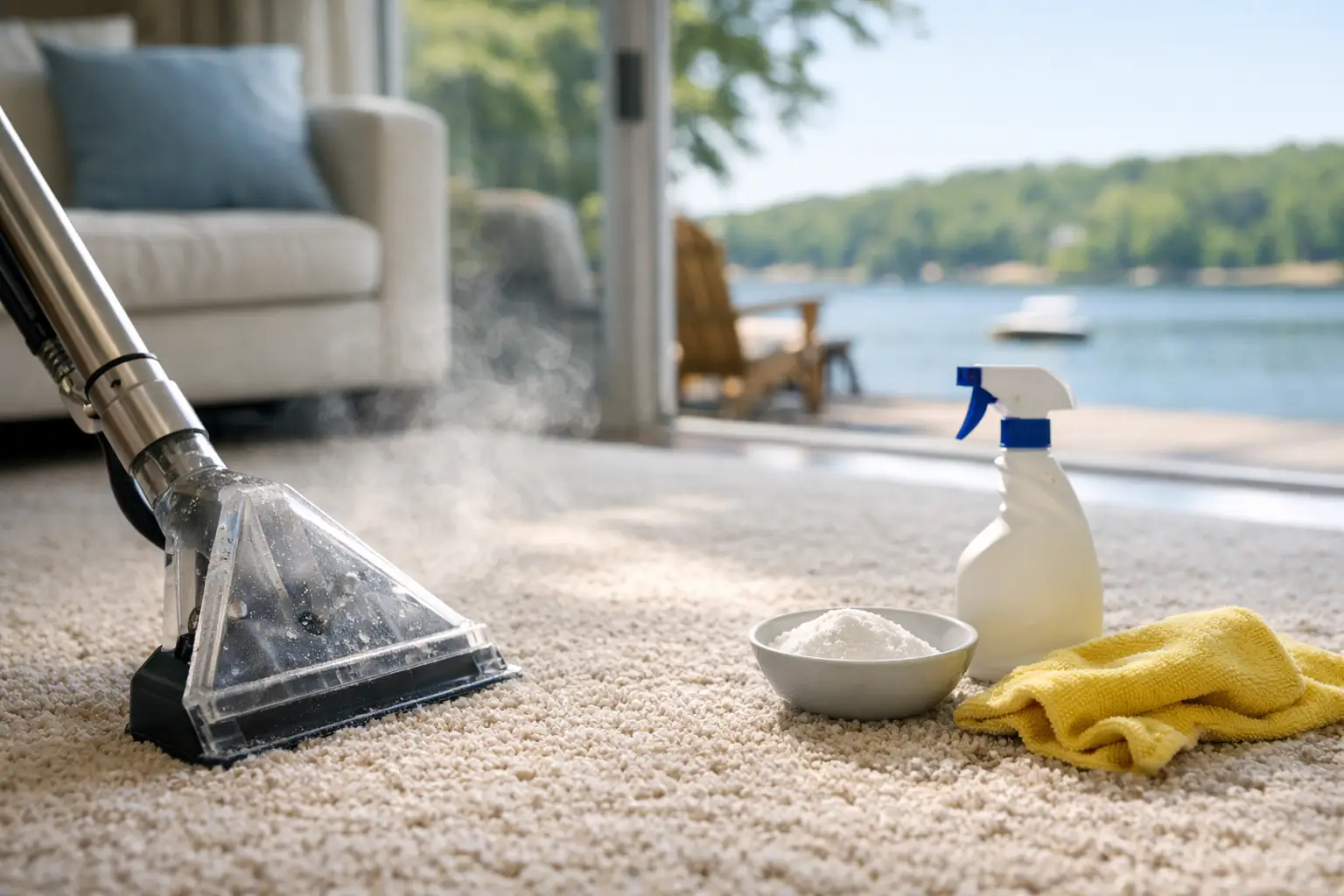
If your carpet smells fine right after you spray something on it, then starts stinking again a day later, the odor was never gone. It was covered up. That is the mistake most people make when they try to figure out how to remove carpet odors permanently.
Permanent odor removal is not about fragrance. It is about finding the source, breaking it down completely, and flushing it out of the carpet system – not just the top fibers, but also the backing, pad, and sometimes even the subfloor underneath. If that source stays in place, the smell comes back, especially when humidity rises or the room heats up.
That is why some odors are easy to fix and some require real corrective cleaning. The difference comes down to what caused the smell, how deep it traveled, and how long it has been sitting there.
Why carpet odors keep coming back
Carpet holds odor because it traps material deep in the pile. Dirt, food residue, pet accidents, moisture, body oils, smoke particles, and bacteria can all settle below the surface. Vacuuming helps with dry debris, but it does not remove the greasy, sticky, or contaminated material that actually creates the smell.
Store-bought deodorizers usually do one of two things. They add perfume, or they leave behind powder that sits in the carpet and makes the room smell different for a while. That might buy you a little time, but it does not solve the problem. In some cases, those products create buildup that makes professional cleaning harder later.
The main reason odors return is simple: the contamination is still there. If urine soaked through to the pad, if moisture fed mildew in the backing, or if oily residue keeps holding smoke odor, the carpet needs more than a surface treatment.
How to remove carpet odors permanently starts with the source
There is no single fix for every carpet smell. A pet accident is different from smoke. Mildew is different from food spills. General mustiness from years of traffic is different from one severe contamination spot. If you want a permanent result, the first job is identifying what is actually causing the odor.
Pet odor is the most common issue, and it is also the one people underestimate most. Urine does not stay where you see the stain. It spreads. It soaks down. Once it dries, crystals remain in the carpet and pad. Every time humidity rises, those crystals can reactivate and release odor again.
Moisture-related odor is another major problem. If carpet stayed damp too long from spills, leaks, or improper cleaning, bacteria and mildew can develop. That musty smell is a warning sign, not just a nuisance. The longer moisture stays trapped, the deeper the issue can go.
Smoke odor is a different animal. It clings to fibers, but also to dust, oils, and residue throughout the room. The carpet often acts like a filter, holding that smell and releasing it back into the space.
Then there is plain old embedded soil. High-traffic carpet can smell dirty because it is dirty. Years of tracked-in grime, pet dander, spills, and organic residue build up until the carpet starts holding a stale odor all the time.
What you can do yourself before calling a professional
If the odor is light and the source is recent, there are a few things worth trying. First, vacuum slowly and thoroughly using a machine with strong suction. A quick once-over does not do much. Go over the area in multiple directions and pay attention to edges and traffic lanes.
If the smell came from a fresh spill or pet accident, blot it immediately with clean towels. Press down firmly. Do not scrub, because that can spread the contamination and push it deeper. After that, use an enzyme-based product made specifically for organic odor sources. Follow the label exactly. Most people use too little product or do not give it enough dwell time to work.
Baking soda can help reduce mild surface odor, but it is limited. It does not permanently remove deep contamination. It can also become a headache if too much gets worked into the carpet and vacuumed poorly. For a light general odor, it may help. For recurring odor, it is not the answer.
Airflow matters too. Run fans, open windows when weather allows, and keep indoor humidity under control. That will not remove the source, but it can prevent odors from intensifying.
When DIY methods are not enough
If the odor keeps returning, the carpet needs deeper correction. This is especially true for pet urine, heavy traffic soil, long-term mustiness, and any odor tied to moisture or contamination below the surface.
The problem with rental equipment and basic spot cleaners is that they often do not extract enough. They may wet the carpet without fully flushing and recovering the contamination. That can leave residue behind or even make the problem worse by driving material deeper and extending dry time.
This is where method matters. Truckmounted hot water extraction remains the highest-standard process for deep carpet cleaning because it combines heat, pressure, cleaning solution, and serious vacuum recovery. Done correctly by trained technicians, it removes embedded soil, residue, and odor-causing material at a level that consumer equipment simply cannot match.
For permanent odor removal, cleaning alone may not be enough. Some situations call for targeted odor treatment, subsurface flushing, or treatment of the pad and backing. In severe pet contamination cases, sections of pad may need to be replaced. That is not overkill. That is what real correction looks like when the odor has penetrated past the carpet face fibers.
How professionals remove carpet odors permanently
A proper professional approach starts with inspection, not guessing. The technician needs to determine whether the odor is broad and general or concentrated in specific areas. They also need to know whether the problem is at the surface, in the backing, in the pad, or beyond.
From there, the treatment should match the contamination. Organic odors often require specialized treatment that breaks down the source before or during extraction. General dirty-carpet odor may respond well to a full deep cleaning with the right pre-treatment and rinse. Moisture-related odors may require not only cleaning but also correcting the underlying moisture issue.
The extraction step is critical. This is where deep soil, residues, and dissolved contaminants are flushed out and recovered. If that step is weak, the odor source often remains. If it is done with commercial-grade equipment and experience, the difference is obvious.
There is also a practical reality homeowners should know: not every carpet can be saved with cleaning alone. If contamination has been neglected for a long time, or if the pad and subfloor are heavily affected, the permanent solution may involve partial replacement and treatment underneath. A trustworthy company will tell you that plainly instead of pretending every problem has an easy answer.
Common odor problems and what actually works
Pet odors need the most aggressive approach because urine spreads and reactivates. Surface cleaning rarely solves it. The fix often involves locating all affected areas, treating them specifically, and extracting the contamination thoroughly.
Musty odors usually point to trapped moisture. If the carpet has been wet repeatedly or dried too slowly in the past, the source may be deeper than the surface. The carpet has to be cleaned properly, but the moisture problem also has to stop or the smell will return.
Smoke odors can improve significantly with deep carpet cleaning, especially when the carpet has been holding the residue for a long time. But if the entire room still contains smoke residue on upholstery, walls, and air pathways, the carpet cannot solve the whole issue by itself.
General stale odor from age and traffic is often the most rewarding to correct. In many cases, a true deep cleaning removes the buildup that has been sitting in the carpet for years and the room smells cleaner immediately.
The best way to keep odors from coming back
Once the odor is gone, maintenance matters. Vacuuming consistently keeps dry soil from building up. Quick response to spills and accidents prevents deep contamination. Managing humidity helps stop musty smells before they start. And regular professional cleaning keeps residue from accumulating to the point where the carpet starts holding odor again.
For homes with pets, kids, or heavy foot traffic, waiting until the carpet smells bad is waiting too long. The better approach is preventive maintenance. Clean it before contamination settles in and becomes a much bigger problem.
That is the standard at Lake Geneva Carpet Cleaning. Our technicians use truckmounted hot water extraction, safe and effective cleaning agents, and targeted odor treatment when needed to address the real source of the problem. If you are dealing with recurring carpet odor in your home or business, call 262-581-6140 or visit https://lakegenevacarpetcleaningwi.com to schedule service.
A carpet that smells clean for two days is easy. A carpet that stays clean is the real job.
Leave a Reply