
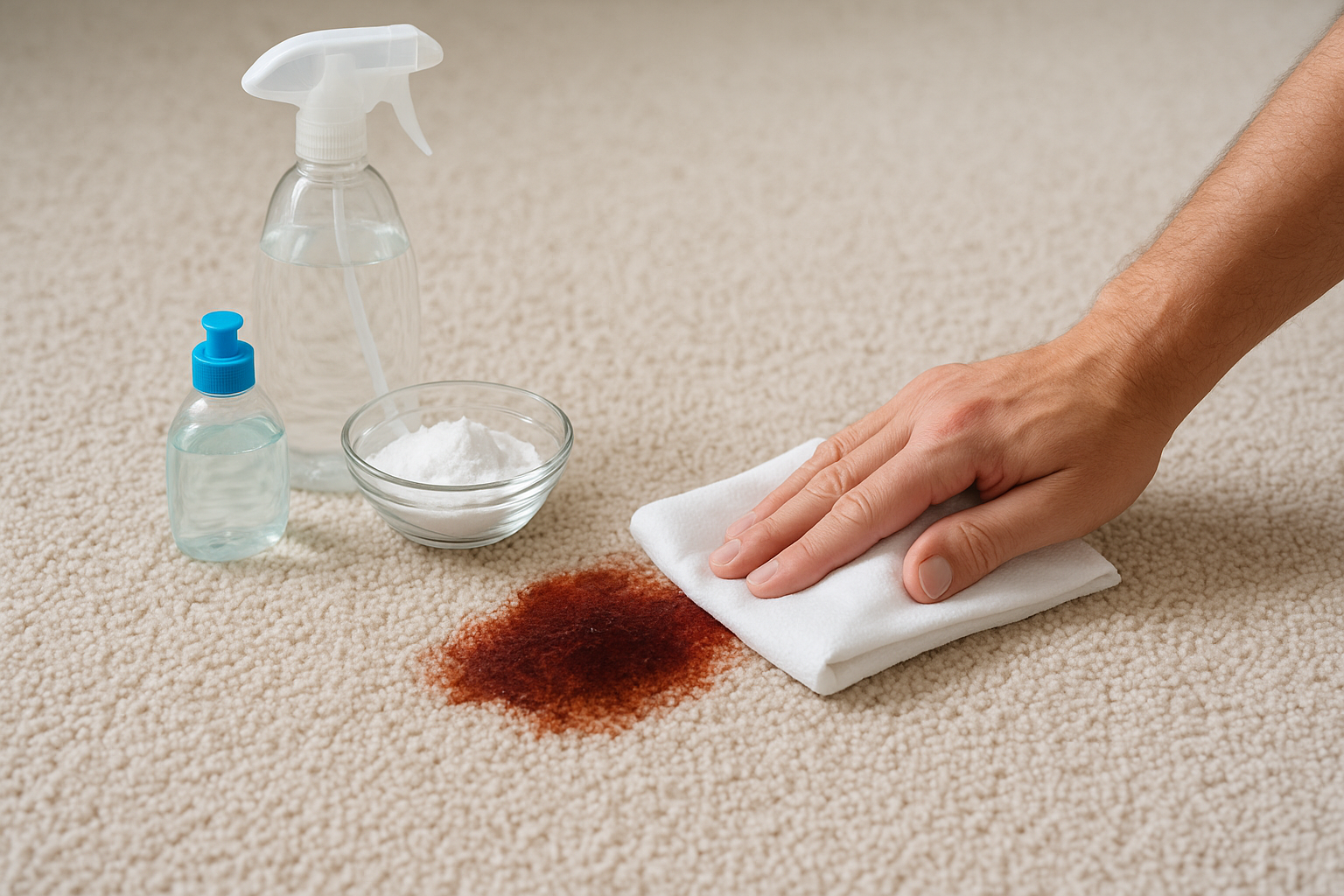
A glass of red wine tips over. Your dog tracks mud across the living room. Coffee splashes during a morning rush. Knowing how to get stains out of carpet quickly becomes urgent, and the first few minutes matter most.
At Lake Geneva Carpet Cleaning, we’ve spent over 30 years removing every type of stain imaginable from Wisconsin homes and businesses. That experience taught us something valuable: quick action with the right technique can save your carpet from permanent damage, and sometimes save you a service call. Caution: if you try to remove the stain and cannot, it will make it much harder for a professional to remove it. You may set it permanently. Don’t use any of the below tips on wool. You will ruin the wool carpet!
This guide covers practical, step-by-step methods using common household items like baking soda, vinegar, and dish soap. You’ll learn which techniques work best for fresh spills versus old, set-in stains, when commercial products make sense, and how to avoid mistakes that could make things worse. Whether you’re dealing with a pet accident or a stubborn coffee ring, these proven methods will help you tackle carpet stains with confidence.
What to do before you treat a stain
Your preparation matters as much as the cleaning itself. Before you reach for any cleaning solution, taking three quick steps will help you avoid common mistakes that can spread the stain, damage carpet fibers, or set the spot permanently. These prep steps take less than five minutes but can make the difference between a successful removal and a ruined carpet.
Most people skip preparation and jump straight to scrubbing, which often pushes stains deeper into the carpet padding. Understanding how to get stains out of carpet starts with proper setup, and that means having the right tools ready, protecting your carpet from harsh chemicals, and knowing what you’re dealing with.
Gather your supplies first
You need everything within arm’s reach before you start. Running around looking for paper towels while a stain spreads defeats the purpose of quick action. Keep a basic stain removal kit in a accessible spot, preferably under your kitchen sink or in a bathroom cabinet.
Your essential supplies include:
- White terry cloth towels or microfiber cloths (colored towels can transfer dye)
- Clean spray bottles for applying solutions
- Baking soda for absorption and odor control
- White vinegar for acidic stain treatment
- Dish soap (clear or white, no dyes)
- Cold water in a bowl or pitcher
- Spoon or dull knife for scraping solids
- Vacuum cleaner ready to use
Having clean white towels specifically for carpet stains prevents cross-contamination and ensures you’re not introducing new dirt or dyes into your carpet fibers.
Test your cleaner in a hidden spot
Your carpet might react badly to certain cleaners, even gentle ones like vinegar. Before you apply anything to the visible stain, test the solution on a hidden area like inside a closet or under a piece of furniture. Apply a small amount, wait five to ten minutes, then blot with a white cloth.
Check for three warning signs: color transfer to your cloth, changes in carpet texture, or color fading in the test spot. If you see any of these reactions, that cleaning method isn’t safe for your carpet type. This quick test takes less than fifteen minutes and can save you from creating a bigger problem than the original stain.
Identify what caused the stain
Different stains require different treatments, and using the wrong approach wastes time. Water-based stains like juice or coffee need different handling than oil-based stains like grease or makeup. Protein-based stains such as blood or pet accidents require cold water, never hot, which can cook the proteins and set them permanently.
Take a moment to consider what spilled. If you’re not sure, treat it as a water-based stain first since that’s the most common type and the safest starting point. You can always adjust your approach if the first method doesn’t work, but starting aggressive with the wrong cleaner can make stains permanent.
Step 1. Blot fast and stop the stain from spreading
Speed determines success when learning how to get stains out of carpet. The moment liquid hits your carpet, it starts soaking down through fibers into the backing and padding below. You have roughly two to three minutes before surface stains become deep stains that require professional extraction.
Your immediate response should focus on absorption, not removal. Many people make the mistake of trying to clean the stain right away when the priority is stopping it from spreading and preventing deeper penetration. Blotting removes the bulk of the liquid quickly, which gives you time to treat what remains without fighting against a saturated carpet.
The blotting technique that works
Press a clean white cloth or stack of paper towels firmly onto the stain. Apply steady downward pressure for ten to fifteen seconds, then lift straight up. You’re trying to pull liquid up into the towel, not push it sideways or deeper into carpet padding.
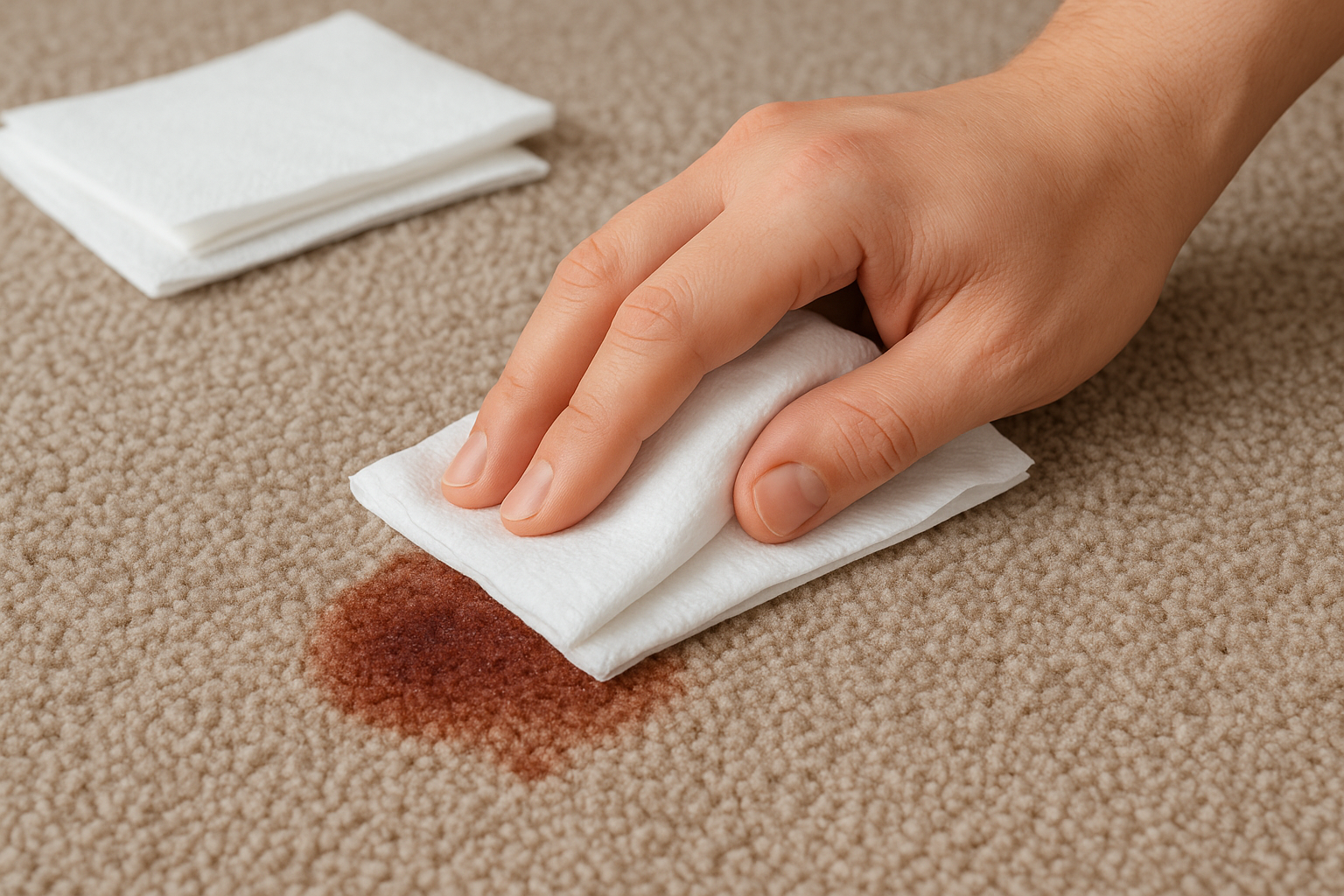
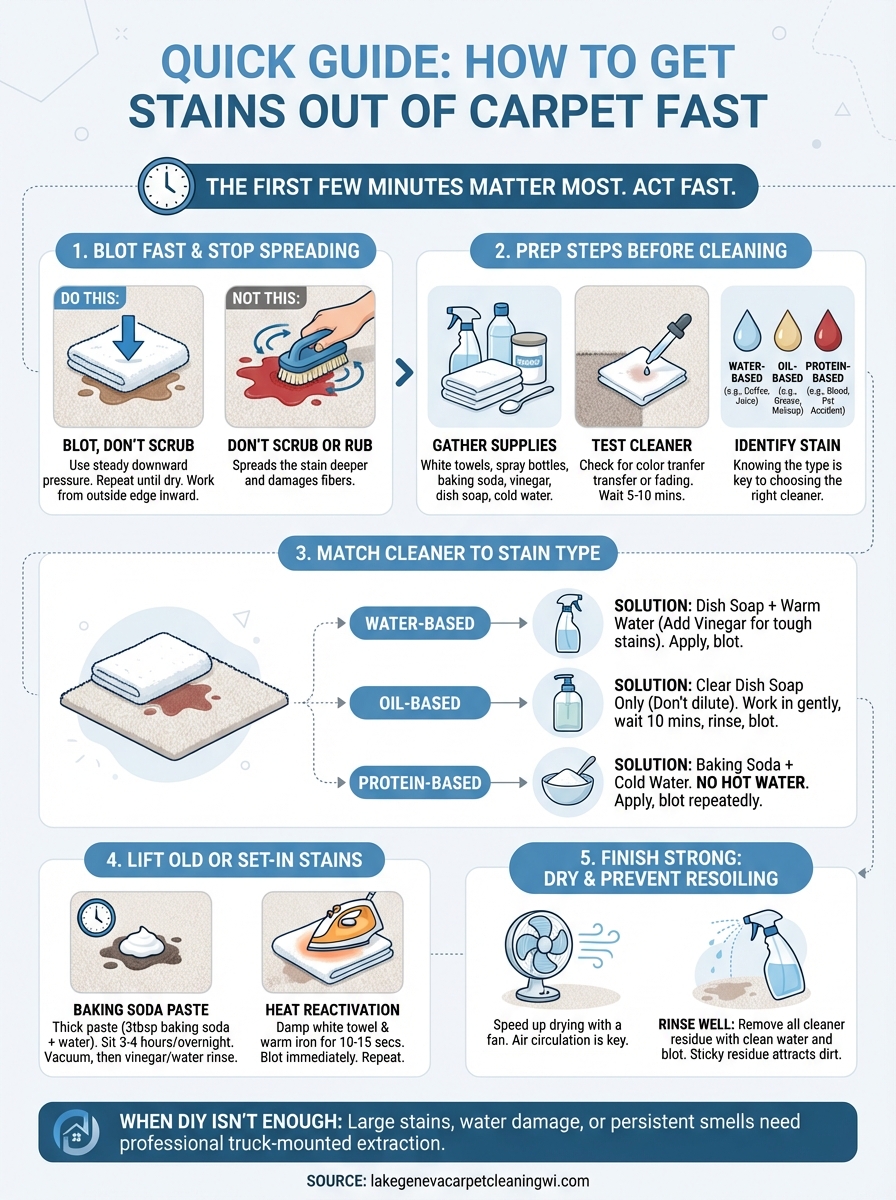
Repeat this process with fresh sections of your cloth or new paper towels until you stop seeing liquid transfer. You’ll typically need to blot five to eight times for small spills. Never rub, scrub, or wipe in circular motions, which spreads the stain outward and damages carpet fibers. The lifting motion is what pulls liquid up.
Blotting removes up to 90% of a fresh spill, which means less stain to treat and better odds of complete removal.
Work from the outside edge inward
Start blotting at the outer edge of the stain and move toward the center. This containment method prevents the liquid from spreading to clean carpet areas. If you start in the middle, you push moisture outward and create a larger affected area.
For spills larger than a dinner plate, place dry towels around the perimeter first to create a barrier. These absorb any liquid trying to spread while you work on the center. This simple step can cut your cleaning area in half.
Step 2. Match the cleaner to the stain type
Understanding how to get stains out of carpet effectively depends on matching your cleaning method to what spilled. Using the wrong cleaner wastes time and can actually set the stain permanently or damage your carpet. The three main stain categories require different approaches, and applying the correct one first saves you from multiple cleaning attempts.
After you’ve blotted up the excess liquid, you need to choose your cleaning solution based on what caused the stain. This decision point determines whether you’ll remove the stain completely or turn it into a permanent mark. The good news: most household stains fall into predictable categories, and you likely have the right cleaner already in your kitchen or bathroom.
Water-based stains need basic solutions
Coffee, juice, soda, wine, and most food spills are water-based. These stains respond well to a simple mixture of one teaspoon clear dish soap and one cup warm water. Mix this in a spray bottle, apply lightly to the stain, and blot with a clean white cloth.
For tougher water-based stains like red wine or berry juice, add one tablespoon white vinegar to the dish soap mixture. The vinegar’s acidity helps break down color pigments. Apply the solution, let it sit for three to five minutes, then blot thoroughly.
Oil-based stains require dish soap
Grease, makeup, lotion, and cooking oil need a different approach. These stains repel water, so dish soap alone works best because it’s designed to cut through oil. Apply a small amount of clear dish soap directly to the stain without diluting it.
Work the soap gently into the carpet fibers with your fingers, let it sit for ten minutes, then rinse with cold water and blot dry. You may need to repeat this process twice for heavy grease stains.
Dish soap breaks the molecular bond between oil and carpet fibers, which allows the stain to lift instead of spreading.
Protein stains demand cold water only
Blood, vomit, urine, and other protein-based stains require cold water exclusively. Hot or warm water cooks the proteins and bonds them permanently to carpet fibers. Mix two tablespoons baking soda with one cup cold water for these stains.
Apply this solution to the affected area and blot repeatedly. The baking soda neutralizes odors while the cold water prevents protein bonding.
Step 3. Lift old, set-in, and mystery stains
Old stains present a different challenge because they’ve already bonded to carpet fibers and may have oxidized or darkened over time. When you discover a dried stain of unknown origin, you need a method that works on multiple stain types without causing damage. Learning how to get stains out of carpet after they’ve set requires patience and a combination of techniques that break down the bond between the stain and your carpet.
These methods work because they rehydrate dried stains and lift them gradually rather than attacking them aggressively. You’ll need to repeat the process several times, but the step-by-step approach prevents carpet damage while removing even years-old discoloration.
The baking soda paste method
Mix three tablespoons baking soda with enough water to create a thick paste, similar to toothpaste consistency. Apply this paste directly to the dried stain, covering it completely with a layer about one-quarter inch thick. The paste needs to stay moist to work effectively.
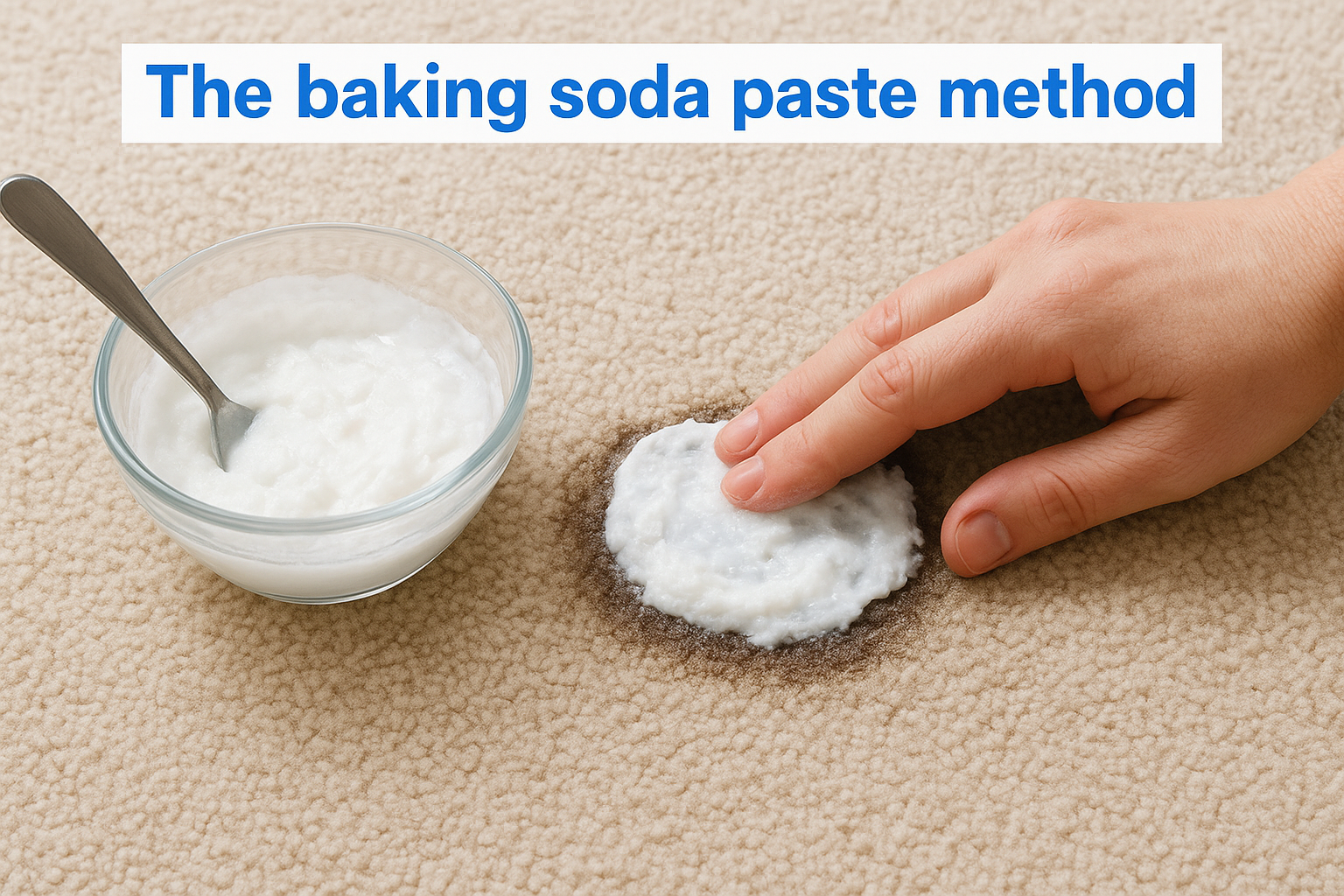
Let the paste sit for three to four hours or overnight for extremely stubborn stains. The baking soda draws the stain out of the carpet fibers while neutralizing odors. After the waiting period, vacuum up the dried paste thoroughly, then spray the area with a mixture of equal parts white vinegar and water. Blot with a clean cloth and repeat if you still see discoloration.
Baking soda paste works through absorption and oxidation, pulling stain molecules up into the paste where they can be vacuumed away instead of remaining trapped in carpet fibers.
Dry it right, prevent resoiling, and know when to call
Proper drying completes the stain removal process and prevents new problems from developing. A carpet that stays damp for more than 24 hours risks mold growth, while carpet that dries with cleaning solution residue left behind actually attracts dirt faster than before you cleaned it. Understanding these final steps separates successful stain removal from creating new headaches.
Even when you’ve successfully lifted the stain, your work isn’t finished until the carpet dries completely and you’ve removed all cleaning solution residue. This final phase determines whether your carpet stays clean or develops a magnet spot that resoils within days.
Speed up drying time safely
Point a floor fan or box fan directly at the cleaned area to increase air circulation. The moving air pulls moisture up from the carpet padding and speeds evaporation by four to six times compared to still air. Open windows if weather permits, which adds natural ventilation and reduces humidity in the room.
Avoid using direct heat sources like hair dryers or space heaters on carpet. High heat can shrink carpet fibers, damage backing materials, and set any remaining stain residue permanently. Room temperature air movement works better and safer than forced heat.
Stop dirt from resettling
Cleaning solutions left in carpet fibers create a sticky residue that acts like a dirt magnet. After treating any stain, spray the area with clean cold water and blot thoroughly to rinse away soap or vinegar residue. You need to blot at least three times with clean water to remove cleaning agents completely.
Test for residue by pressing a white cloth against the dried area. If you see any color transfer or if the cloth sticks slightly, residue remains. Rinse and blot again until your test cloth comes away clean and dry.
Cleaning solution residue causes rapid resoiling, which makes your carpet look dirty again within 24 to 48 hours even though the original stain is gone.
Recognize when professionals matter
Some situations exceed what household methods can handle safely. Large stains covering more than two square feet, water damage from flooding or leaks, and stains that return after multiple removal attempts all signal you need professional truck-mounted extraction. These systems remove stains and moisture from deep in carpet padding where DIY methods can’t reach.
At Lake Geneva Carpet Cleaning, we handle stains that resist home treatment and provide the deep cleaning your carpet needs twice yearly. Our truck-mounted hot water extraction removes embedded dirt and allergens while restoring your carpet’s appearance. Contact us for a free quote when knowing how to get stains out of carpet yourself isn’t enough.
A clean carpet feels better
You now know how to get stains out of carpet using methods that work quickly and protect your investment. These techniques handle most household spills effectively when you act fast, choose the right cleaner, and follow proper drying procedures. Fresh stains come out easily with immediate blotting and basic household ingredients, while older spots require patience and repeated treatments.
Your carpet represents a significant investment in your home’s comfort and appearance. Regular maintenance beyond spot cleaning keeps fibers healthy and extends carpet life. When you face stains that resist home treatment or need a deeper clean that removes embedded dirt and allergens, professional truck-mounted extraction makes a measurable difference.
Lake Geneva Carpet Cleaning has served Wisconsin homeowners for over 32 years with proven stain removal expertise. Contact us for a free quote and let our truck-mounted hot water extraction restore your carpet’s appearance while eliminating odors and allergens that DIY methods leave behind. Call us at 262-581-6140
Always call a professional first before trying any of the above tips for professional advice on the type of stain it is. One last thing is, it takes years of experience to learn how to remove stains without ruining the carpet. Our specialty is stain and odor removal.
Leave a Reply