A front entry carpet can tell customers a lot before anyone says a word. If it looks dingy, smells musty, or has traffic lanes worn into it, the whole space feels neglected. A solid commercial carpet care guide helps business owners stay ahead of that problem and protect one of the hardest-working surfaces in the building.
Commercial carpet takes a beating. Snow, salt, mud, spilled coffee, grease from parking lots, and everyday foot traffic all get ground into the fibers. In an office, retail shop, clinic, or hospitality setting, those soils do not just sit on top. They work their way down into the carpet backing, where vacuuming alone cannot reach them.
Why commercial carpet care matters more than most businesses realize
A lot of owners look at carpet cleaning as a cosmetic service. It is that, but not only that. Clean carpet supports the overall image of your business, helps control odors, reduces embedded grit that wears fibers down, and contributes to a healthier indoor environment.
The biggest mistake is waiting until the carpet looks obviously dirty. By then, the damage is already underway. Grit acts like sandpaper under shoes and chair casters. Traffic lanes flatten out, colors lose their clarity, and stains become harder to remove. Regular maintenance is what keeps carpet serviceable, not last-minute rescue work.
There is also a practical operations side to this. If your carpet stays cleaner, your business looks more professional day after day. Employees notice it. Customers notice it. In some settings, especially medical, professional, and client-facing businesses, that visual standard matters.
A practical commercial carpet care guide for busy businesses
The right maintenance plan depends on how the building is used. A small office with light weekday traffic needs a different schedule than a busy storefront, church, restaurant lobby, or apartment common area. The goal is not to clean everything the same way all the time. The goal is to match the level of care to the level of abuse.
Start with traffic patterns, not square footage
Most carpet wear happens in predictable areas. Entryways, reception areas, hallways, break rooms, and paths between desks get hit hardest. Those are the places that need the most attention.
A smart plan focuses on those zones first. If you only think in terms of total square footage, you can end up under-maintaining the areas that actually shape first impressions. It is better to stay on top of the worst spots than to let them degrade while cleaner areas get equal attention they do not need.
Vacuuming is the first line of defense
Routine vacuuming removes dry soil before it gets packed deep into the carpet. That matters because a large share of what damages commercial carpet is dry particulate soil, not just stains.
Frequency depends on use. High-traffic entry areas may need daily vacuuming. Moderate-use office space may need several passes a week. Lower-traffic rooms may need less. What matters is consistency and proper technique. Quick passes with a worn-out vacuum do not count as a maintenance program.
For businesses, this is where good intentions often fall apart. Staff is busy, cleaning gets rushed, and corners get missed. Once that happens, soil buildup starts to outpace your routine care.
Entry control does more than people think
If you want cleaner carpet, stop more dirt at the door. Entry mats help capture moisture, grit, and salt before they get tracked across the building. In Wisconsin, that matters even more during wet seasons and winter months.
Mats need care too. If they stay overloaded with soil, they stop doing their job. Businesses that treat entry matting as part of their carpet strategy usually get better long-term results because they reduce the amount of debris reaching the carpet in the first place.
Spot treatment needs speed and the right method
Spills are not all the same. Coffee, ink, food oils, tracked-in grease, and restroom-related contamination each behave differently. The longer they sit, the more likely they are to wick, stain permanently, or leave behind odor.
The first rule is speed. Blot up excess material right away and keep people from walking through it. The second rule is restraint. Overwetting a spot or using the wrong retail product can make it worse, spread the stain, or leave a sticky residue that attracts more soil.
This is one area where businesses often create bigger problems trying to save a step. A stain that could have been professionally treated may become harder to correct after aggressive scrubbing or repeated chemical use.
Professional cleaning is where deep restoration happens
Even with regular vacuuming and spot treatment, commercial carpet still needs periodic professional cleaning. That is what removes embedded soil, allergens, residue, and contaminants from deep in the pile.
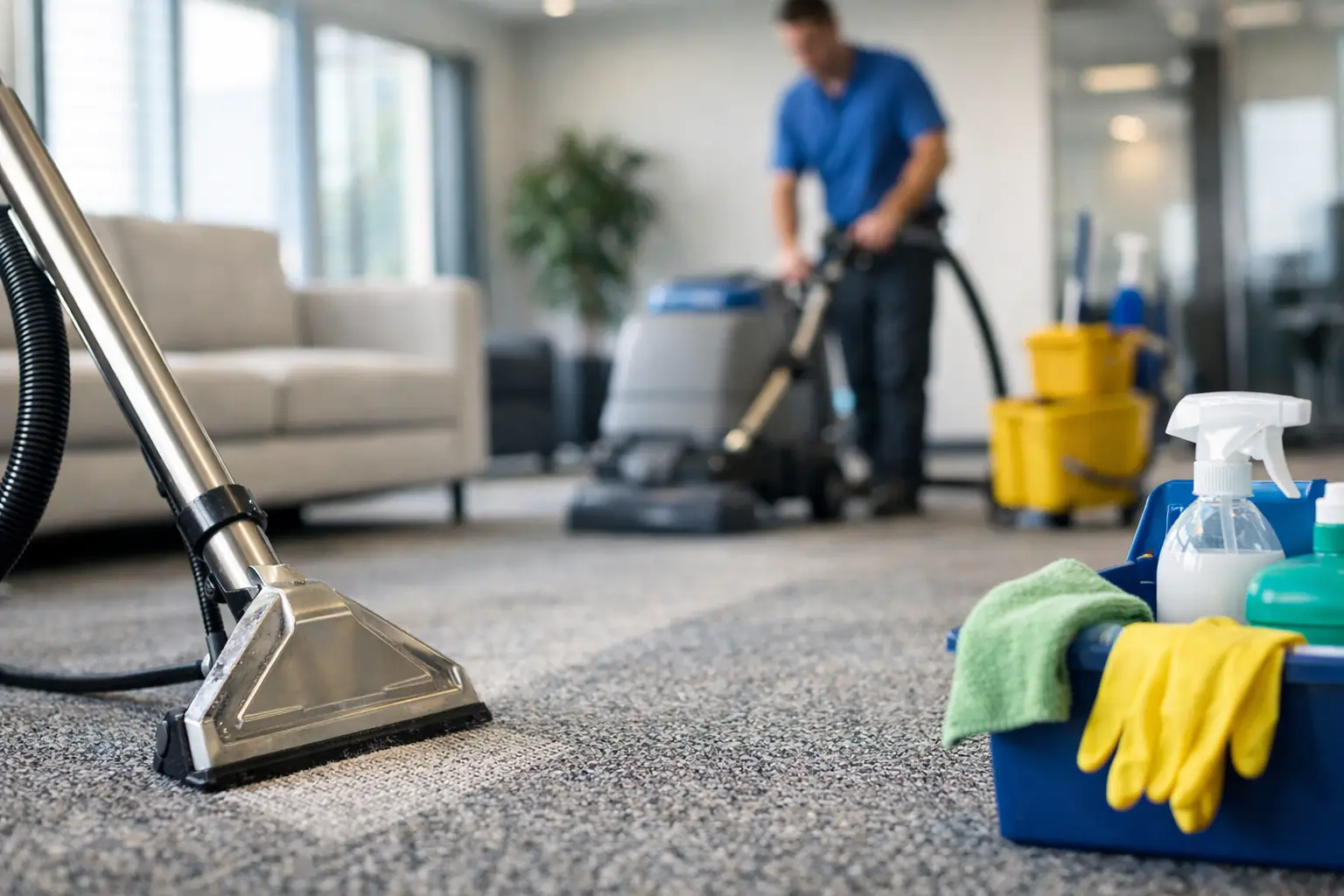
Truckmounted hot water extraction remains the high-standard method for true deep cleaning. It flushes out the material that routine upkeep leaves behind and gives carpet a cleaner, fresher reset. For businesses that care about appearance, cleanliness, and carpet life, that deeper level of cleaning is not optional. It is part of proper maintenance.
Why method matters in commercial carpet care
Not every cleaning approach produces the same result. Some methods mainly address surface appearance. That may give a short-term visual improvement, but it does not always remove the deeper soil load causing wear and odor issues.
Hot water extraction is effective because it reaches beyond the top layer. When performed by trained technicians with the right equipment, it removes embedded contaminants while helping preserve the carpet’s condition. That matters in commercial settings where carpet is expected to hold up under repeated use.
There is a trade-off here. Deep cleaning needs to be done correctly, with professional equipment and proper technique, or drying and residue issues can follow. That is why experience matters. Strong equipment alone is not enough.
How often should commercial carpet be cleaned?
There is no honest one-size-fits-all answer. It depends on foot traffic, the type of business, the time of year, and what gets tracked in from outside.
A professional office may need maintenance cleaning on a different rhythm than a retail space or a building with public access all day. Winter and spring can also increase the need for service in places like Lake Geneva, where snow, salt, slush, and mud can get worked into the carpet fast.
The best schedule is based on condition, use, and problem areas. If traffic lanes stay dark even after vacuuming, if odors are sticking around, or if the carpet feels matted and tired, the building is telling you the current routine is not enough.
Common mistakes that shorten carpet life
One of the most common problems is neglecting the carpet until it becomes a visible issue. Another is treating all areas the same, even though the wear is not the same. Businesses also get into trouble when they rely too heavily on janitorial touch-ups and assume that replaces periodic deep cleaning.
Using too much spotter, scrubbing stains aggressively, and allowing spills to sit are also frequent mistakes. So is ignoring odor problems. If carpet smells off, there is usually something in the fibers or backing that needs proper treatment, not just masking.
Furniture management matters too. If heavy furniture stays in place year after year with no attention to traffic redirection, some areas crush and wear prematurely while others hold up fine. A little planning goes a long way.
When to bring in a professional carpet cleaning company
If your carpet has visible traffic lanes, recurring spots, odor issues, or a generally dull appearance, it is time. The same goes for businesses preparing for inspections, hosting events, reopening seasonal spaces, or trying to improve the look of a customer-facing interior.
A professional should also be called when health and safety matter more than basic appearance alone. Embedded soil, allergens, and contamination from heavy foot traffic do not come out with vacuuming. That requires deep cleaning performed with the right equipment and trained judgment.
For businesses that want dependable results, this is not the place to gamble on low-standard work. Quality carpet care protects the carpet, supports a cleaner workplace, and helps your building present itself the way it should. That is exactly why companies across the area turn to Lake Geneva Carpet Cleaning for commercial floor care done to a higher standard. If your facility needs real results, call 262-581-6140 or visit https://lakegenevacarpetcleaningwi.com.
The best commercial carpet care guide is the one you actually follow
Perfect plans are not the goal. Consistent maintenance is. When your business stays ahead of soil, moisture, stains, and traffic wear, carpet lasts longer and looks better doing its job. Clean floors are not a small detail. They are part of how your business shows up every single day.
Leave a Reply