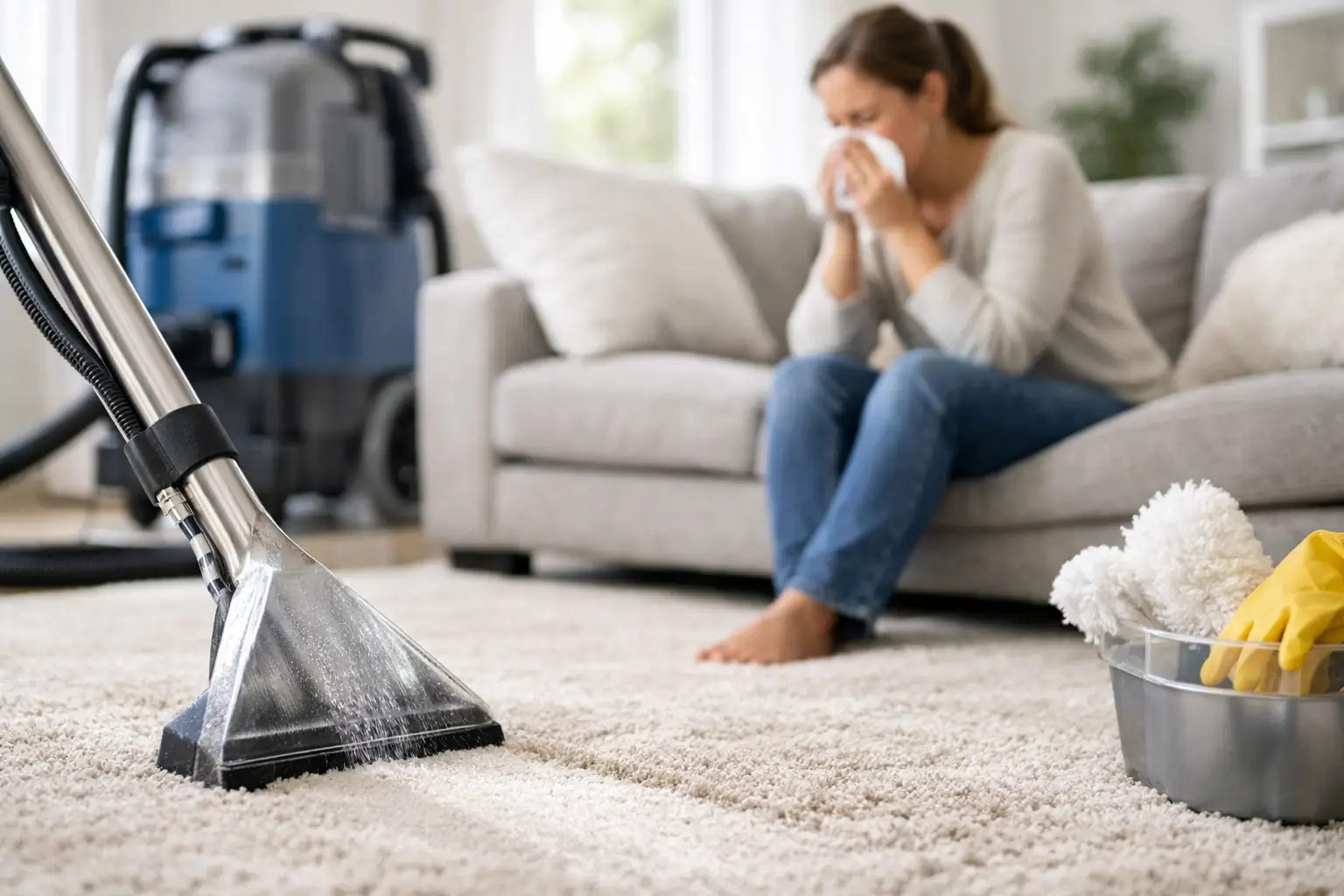
If your carpet looks fine but your nose says otherwise, that is usually the real story. For many homes, carpet acts like a filter – catching dust, pollen, pet dander, and other particles that would otherwise stay in the air. The problem is that once that buildup settles deep into the fibers and backing, carpet cleaning for allergy sufferers has to do more than freshen the room. It has to remove what is trapped below the surface.
That is where a lot of homeowners get frustrated. They vacuum regularly, maybe even use a rental machine once in a while, and still deal with sneezing, congestion, itchy eyes, or that stale indoor smell that never really goes away. The reason is simple. Surface cleaning and real extraction are not the same thing.
Why carpet can make allergies worse
Carpet is soft underfoot, quiet, and comfortable, but it also holds onto contaminants better than many people realize. Every day, people track in outdoor particles like pollen, mold spores, and fine dirt. Inside the home, skin flakes, pet dander, hair, lint, and food debris settle into the pile. If humidity is high or spills were not fully removed, that buildup can become even more of a problem.
Some of that material stays buried until foot traffic stirs it up again. That means the carpet can keep releasing irritants back into the room long after they first entered the house. In homes with kids, pets, or heavy use, the cycle happens faster.
This does not mean carpet is automatically bad for allergy sufferers. It does mean the carpet has to be maintained at a high standard. If it is neglected, it stops acting like a filter and starts acting like a reservoir.
Carpet cleaning for allergy sufferers starts with the right method
Not all cleaning methods do the same job. If your goal is allergen reduction, you need a process that reaches deep into the carpet and removes what has settled below the visible surface. That is why truckmounted hot water extraction remains the top standard for serious carpet cleaning.
Done properly, hot water extraction flushes out embedded soil, dander, residue, and contaminants from deep within the carpet fibers. More importantly, it removes them from the home instead of just shifting them around. That matters for allergy control. Loosening debris is not enough. It has to be extracted.
This is also where equipment quality and technician skill matter. A weak machine can leave behind too much moisture and too much soil. An inexperienced cleaner can over-wet the carpet, miss high-buildup areas, or fail to treat problem spots correctly. For allergy-sensitive households, mediocre work is not just disappointing. It defeats the whole point.
What vacuuming does well – and where it falls short
Regular vacuuming still matters. In fact, it is one of the best habits for keeping allergen levels lower between professional cleanings. It removes loose debris before it gets ground deeper into the carpet, and it helps slow buildup in high-traffic areas.
But vacuuming has limits. It works best on dry soil near the top of the pile. It cannot fully remove oily residues, old spills, pet contamination, or compacted material that has settled into the base of the carpet. If the carpet has been exposed to months of foot traffic, seasonal pollen, or pet use, vacuuming alone will not reset it.
That is why homeowners often notice temporary relief after vacuuming but better overall air quality after a true deep cleaning. One manages the surface. The other addresses the source.
Signs your carpet may be affecting indoor air quality
Sometimes the warning signs are obvious. Other times, they build slowly enough that people get used to them. If symptoms seem worse at home than elsewhere, the carpet may be part of the problem.
A few common clues include more sneezing when the heat or air conditioning runs, lingering pet odor, rooms that feel dusty soon after cleaning, or allergy symptoms that flare up after people walk through the space. Dark traffic lanes, matted fibers, and recurring spots are also signs that the carpet is holding more than it should.
In commercial spaces, the pattern can show up as stale-smelling offices, dingy entry areas, or carpet that never really looks clean even after routine maintenance. When appearance and air quality both start slipping, deep extraction is usually overdue.
Carpet cleaning for allergy sufferers in homes with pets
Pets make a home better. They also make carpet work harder. Dander, hair, tracked-in dirt, and the occasional accident all add to the allergen load. Even well-kept homes can end up with contamination deep in the carpet, especially in favorite sleeping areas and along traffic paths.
For allergy sufferers, pet issues are not just about what you can see. Dander particles are tiny, and they settle into upholstery, rugs, and carpet quickly. Odor-causing contamination from accidents can also soak below the surface if it is not treated correctly.
This is where a professional cleaning company with real stain and odor experience brings value. A proper process targets both the visible mess and the hidden residue underneath. That is especially important if a room still smells off after spot cleaning or if symptoms seem worse in certain areas of the home.
Safe products matter, but extraction matters more
A lot of people ask about cleaning solutions first, and that is fair. If someone in the home is sensitive, you do not want harsh products left behind in the carpet. Eco-friendly and pet-safe cleaning agents are the right choice.
At the same time, the product alone is not the main issue. Even a good solution will not help much if the soil and allergen load are left in place. The real goal is a clean rinse and strong extraction, so residues and contaminants are removed rather than left sitting in the fibers.
That balance matters. Safe chemistry is part of quality carpet cleaning. Thorough removal is what makes the biggest difference.
How often should allergy sufferers clean carpet?
It depends on the home. A low-traffic house with no pets may do well with professional cleaning on a regular maintenance schedule. A busy family home with pets, kids, or heavy seasonal pollen may need more frequent service.
The better question is whether the carpet is being maintained before buildup gets out of hand. Waiting until it looks dirty is not the right standard for allergy control. By that point, the carpet is often holding a lot more than it shows.
For many households, the best approach is consistent vacuuming, prompt attention to spills and pet accidents, and professional deep cleaning before symptoms and odors start building. In Wisconsin, that can be especially helpful after winter tracking and during heavy pollen seasons.
What to expect from a quality-first professional cleaning
A high-standard cleaning should be more than a quick pass over the carpet. The process should focus on inspection, attention to traffic areas and problem spots, proper use of professional-grade equipment, and thorough extraction that leaves the carpet clean without unnecessary residue.
Experience matters here. Different carpet fibers, different stain conditions, and different levels of soil all require judgment. A trained technician knows when to pre-treat, how to handle pet issues, and how to clean for results without cutting corners.
That is the difference between a company focused on workmanship and one focused on speed. Allergy-sensitive homes benefit from the company that takes the carpet seriously.
Lake Geneva Carpet Cleaning uses truckmounted hot water extraction because it is the highest standard for removing embedded dirt, allergens, stains, and odors from carpet fibers. For homeowners and businesses that care about indoor air quality, clean appearance, and dependable results, that standard matters.
A cleaner carpet should feel different, not just look different
When carpet cleaning is done right, the result is not only visual. Rooms feel fresher. Odors back off. Dust seems less constant. For allergy sufferers, that can mean a more comfortable space with fewer irritants sitting underfoot.
No carpet cleaning can promise to solve every allergy issue on its own. Air filters, humidity control, and routine housekeeping all play a role. But if your carpet is loaded with dust, dander, and tracked-in debris, ignoring it is a mistake.
A healthy home is built on basics done well. Clean the carpet deeply, clean it safely, and clean it before buildup becomes the standard you live with.
Lake Geneva Carpet Cleaning 262-581-6140
https://lakegenevacarpetcleaningwi.com
Leave a Reply