
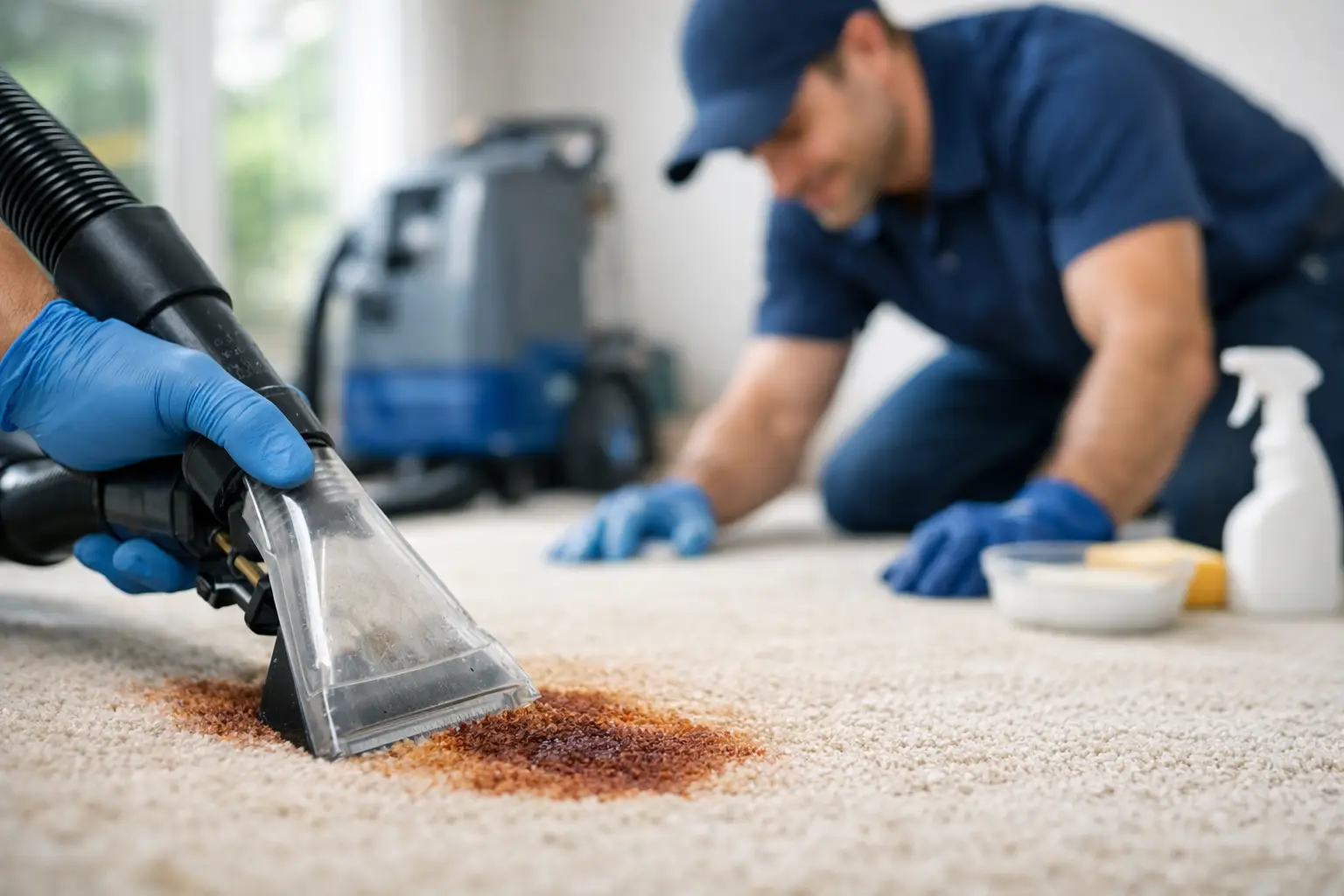
That dark spot in the hallway is usually not just a spot. It is ground-in soil, old residue, foot traffic, and in some cases a spill that has had weeks or months to settle into the carpet. That is why store-bought sprays often disappoint. They may lighten the surface for a while, but they rarely deal with what is buried deep in the fibers and backing.
So, can professional carpet cleaning remove stains? In many cases, yes. Professional cleaning can remove a wide range of carpet stains, and it often improves spots that homeowners thought were permanent. But the honest answer is not that every stain disappears every time. It depends on what caused the stain, how long it has been there, what the carpet is made of, and whether the fibers have been permanently damaged or dyed.
That is where experience matters. A trained technician knows the difference between a removable stain, a recurring spot, and permanent discoloration. Those are not the same problem, and they do not get the same treatment.
Can Professional Carpet Cleaning Remove Stains From Any Carpet?
Not from any carpet and not from every stain, but from many of them, yes. Professional cleaning has a much better chance than household products because it combines the right chemistry, the right temperature, proper agitation, and strong extraction. That matters more than most people realize.
A lot of stains are not just sitting on top of the carpet. They have soaked into the fibers, bonded to them, or left behind sticky residue that keeps attracting more soil. A technician using truckmounted hot water extraction can flush out contamination that consumer machines and spot cleaners simply do not reach. That process is especially effective on common household staining from tracked-in dirt, food spills, drink spills, pet accidents, and general traffic lane buildup.
Still, there are limits. If a stain has changed the carpet dye, bleached the fibers, or chemically damaged the material, no cleaning method can reverse that. Cleaning removes foreign matter. It cannot always undo fiber damage.
What Makes a Stain Removable or Permanent?
This is where people get frustrated, because two stains can look similar and behave completely differently.
The first big factor is the stain source. Protein-based stains, oily soils, tannin stains from coffee or tea, pet accidents, ink, rust, cosmetics, and tracked-in grime all respond differently. Some release with the right pre-treatment and hot water extraction. Others need specialty spotting agents. A few may improve only partially.
The second factor is time. Fresh spills are always easier to remove than old ones. Once a spill dries, oxidizes, or gets walked on repeatedly, it bonds more firmly to the carpet. Pet urine is a good example. The longer it sits, the more likely it is to soak into the backing and pad, which makes full correction much more involved.
The third factor is what has already been used on it. Many carpets are made harder to clean because someone scrubbed the spot aggressively or poured in the wrong cleaner. Some over-the-counter products leave residue behind. That residue grabs dirt and can turn a small spot into a larger, darker area over time. In other cases, harsh cleaners can set the stain or affect the carpet color.
Then there is the carpet itself. Synthetic carpet and wool do not react the same way. Different fiber types hold and release stains differently, and they also have different tolerances for heat, moisture, and chemistry. A professional should be treating the stain and the carpet, not just throwing a one-size-fits-all product at the problem.
How Professional Stain Removal Actually Works
Good stain removal is not guesswork. It is inspection first, treatment second, extraction third, and then evaluation.
A qualified technician starts by identifying what is likely causing the spot. That helps determine whether the stain needs a solvent, an acid-side treatment, an alkaline pre-spray, enzyme treatment, or specialized spotting chemistry. Using the wrong product can waste time or make the stain harder to remove.
Next comes controlled agitation and dwell time. That means giving the treatment enough contact time to break down the stain without overworking the carpet. Then the area is rinsed and extracted thoroughly. This is where truckmounted hot water extraction stands apart. It does not just move the soil around. It pulls out loosened contamination, residues, and moisture with far more power than basic rental equipment.
That strong extraction is a major reason professional cleaning gets better stain removal results. It also helps reduce the chance of wicking, which is when a stain seems gone while wet but reappears as the carpet dries because deeper residue rises back to the surface.
For tougher cases, the technician may need repeated treatments, specialty stain removal steps, or odor treatment if the stain source has penetrated below the face fibers.
The Stains Professionals Remove Most Often
Some stains respond very well to professional treatment. Food spills, tracked-in mud, beverage spills, grease transfer, body oils, and many pet-related spots are common service calls because they often can be improved dramatically or removed completely when handled with the right method.
Traffic lane darkening is another one people often mistake for permanent wear. Sometimes it is wear, but often it is heavy soil loading mixed with oily residue. In that case, professional hot water extraction can make a major difference.
Pet stains are more complicated. Surface spotting may come out well, but if urine has soaked into the pad or subfloor, the issue is no longer just a visible stain. It is also an odor and contamination problem. That takes targeted treatment, not just a quick cleaning pass.
When Carpet Cleaning Cannot Fully Remove the Stain
There are times when the best technician, the best equipment, and the right chemistry still cannot restore the carpet to like-new condition. That is not a failure of the cleaning process. It is the reality of what the carpet has been through.
Bleach spots are a clear example. Bleach does not leave a stain in the normal sense. It removes color. The same goes for certain acne medications, toilet bowl cleaners, plant food, and strong chemicals that affect carpet dye. Burn marks, severe wear, and fiber distortion also cannot be cleaned away.
Some old stains become permanent because they have oxidized or altered the carpet fibers over time. Rust can be difficult. Certain dyes, inks, and paints may only improve partially depending on how deep they penetrated and how long they have been there.
A trustworthy company will tell you that upfront. Real professionals do not promise miracles. They tell you what is likely, what is possible, and what may be permanent.
Why DIY Spot Cleaning Often Falls Short
Most homeowners are not short on effort. They are short on the tools and process needed to get full removal.
Blotting a fresh spill quickly is smart. Scrubbing it with a random cleaner from under the sink usually is not. Too much product, too much water, or too much rubbing can spread the stain, damage the fibers, or leave behind residue that turns into a dirt magnet. Rental machines also tend to leave carpets wetter and less thoroughly rinsed than professional truckmounted systems.
The result is a carpet that may look better for a day or two, then develops recurring spots, dingy traffic areas, or lingering odor. That is one reason experienced homeowners and business owners stop experimenting and call a trained technician when the stain matters.
Why the Cleaning Method Matters So Much
If the goal is real stain removal, method matters. A low-moisture surface cleaning may improve appearance, but deep stain and soil removal usually requires a process that reaches down into the pile and extracts what is there. That is why truckmounted hot water extraction is widely considered the top standard for deep carpet cleaning.
It uses heat, pressure, cleaning agents, and high-powered vacuum recovery to flush and remove contaminants from the carpet. When done by trained professionals, it is highly effective on embedded dirt, allergens, odor sources, and a long list of common stains.
For homes with kids, pets, or heavy traffic, that deeper cleaning is not just cosmetic. It helps improve cleanliness, indoor air quality, and the overall life of the carpet.
What to Expect From a Professional Visit
A solid carpet cleaning company should inspect the stained areas, explain what they see, and give you a realistic expectation before they begin. Some stains may come out fully. Some may improve significantly. A few may remain because the issue is permanent discoloration or damage rather than removable soil.
That honesty matters. It saves you from false expectations and tells you you are dealing with people who understand the work.
For homeowners and businesses that want the best chance at stain removal, the right move is choosing a company that uses high-standard equipment, safe cleaning agents, and experienced technicians who know stain chemistry. That is exactly how Lake Geneva Carpet Cleaning approaches the job, with deep cleaning methods built for results rather than surface-level improvement.
If a stain has been bothering you for months, do not assume it is permanent just because a store product failed. A lot of stains need professional treatment, not more guesswork. The right cleaning can make a bigger difference than you think.
For a professional carpet cleaner with over 32 years experience and owner-operated feel free to call us for a free no obligation quote at 262-581-6140!
Leave a Reply