
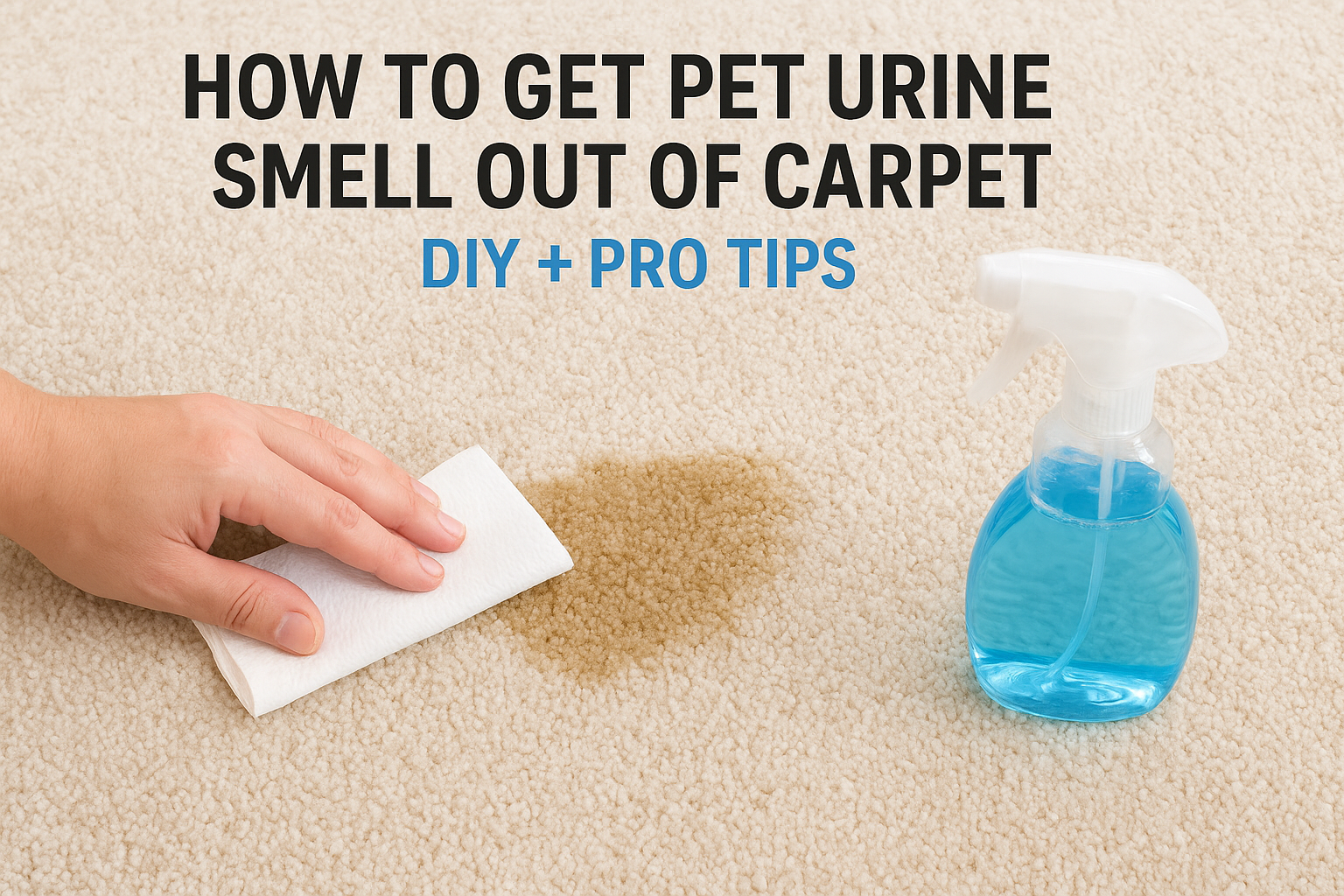
Pet accidents happen. Whether you have a new puppy still learning the ropes or an older cat with occasional mishaps, that lingering ammonia smell can make your whole house feel unclean. If you’re wondering how to get pet urine smell out of carpet, you’re not alone, it’s one of the most common carpet problems homeowners face.
The good news? You can tackle fresh accidents and even stubborn, set-in odors with the right approach. At Lake Geneva Carpet Cleaning, we’ve spent over 30 years helping Wisconsin families restore their carpets after pet incidents of all sizes. We’ve seen what works, what doesn’t, and when it’s time to call in professional help.
This guide covers practical DIY solutions you can try today, from enzymatic cleaners to the classic vinegar-and-baking-soda method, plus insider tips on when home remedies fall short and professional truckmounted extraction becomes necessary.
Why pet urine smell lingers in carpet
Pet urine doesn’t just sit on top of your carpet. When your dog or cat has an accident, the liquid soaks through multiple layers of carpet fiber, padding, and sometimes even into the subfloor beneath. You might think you’ve cleaned up the visible wet spot, but that ammonia smell keeps coming back because the source runs deeper than what you can see or reach with a towel.
The three-part chemistry of urine
Pet urine contains three main components that create odor problems. Urea breaks down quickly and causes that immediate sharp smell. Urochrome gives the yellow staining you see on light-colored carpets. But the real troublemaker is uric acid, which forms microscopic crystals that bond tightly to carpet fibers. These crystals don’t dissolve in water, and they reactivate whenever humidity rises or you apply moisture during cleaning attempts. That’s why you might smell nothing for days, then suddenly notice the odor again after mopping nearby floors or on a humid summer afternoon.
Standard household cleaners can’t break down uric acid crystals, which is why the smell returns even after you think you’ve cleaned the area.
How carpet absorbs and traps odor
Your carpet acts like a multi-layer sponge system. The top fibers catch some urine, but gravity pulls most of the liquid straight down into the padding underneath. Carpet padding is designed to be absorbent and cushioning, which means it holds onto pet urine like a reservoir. When you clean from the top, you’re only addressing a fraction of the contaminated material.

Bacteria multiply rapidly in this warm, moist environment trapped in your padding. These bacteria feed on the organic compounds in urine and produce their own waste gases, adding a musty, sour layer to the existing ammonia smell. This bacterial activity continues for weeks or months, creating an odor problem that gets worse over time rather than fading naturally. The combination of uric acid crystals in the fibers and bacterial growth in the padding explains why figuring out how to get pet urine smell out of carpet requires more than surface-level cleaning.
Step 1. Act fast on fresh accidents
Speed makes all the difference when you catch your pet in the act. The longer urine sits on your carpet, the deeper it soaks into the padding and the harder it becomes to eliminate the smell completely. You have a narrow window of 10-15 minutes before the liquid penetrates multiple layers, so immediate action prevents the majority of odor problems before they start.
Blot the area thoroughly
Grab clean white towels or paper towels and press firmly on the wet spot. Don’t rub or scrub the area because that pushes urine deeper into carpet fibers and spreads the stain outward. Stand on the towels to apply your full body weight, which forces your carpet to release absorbed liquid back into the towel material. You’ll need to replace saturated towels multiple times until they come up nearly dry.
The more liquid you extract in the first few minutes, the less odor-causing bacteria can establish in your carpet padding.
Dilute what remains
After you’ve removed as much liquid as possible, pour cold water directly onto the affected area. This dilutes the urine concentration in the carpet fibers and padding. Use about two cups of water for a typical accident, then repeat the blotting process with fresh towels. Professional carpet cleaners use this dilution and extraction technique as the foundation for learning how to get pet urine smell out of carpet because it reduces the organic material available for bacteria to feed on later.
Skip household cleaners at this stage. Products with ammonia actually attract pets back to the same spot because they mimic the smell of urine. Stick with plain water for now and save chemical treatments for the next steps.
Step 2. Use an enzymatic cleaner the right way
Enzymatic cleaners contain live bacteria and proteins specifically designed to break down the uric acid crystals that standard cleaners leave behind. These biological solutions literally digest the organic compounds in pet urine, which eliminates odor at the molecular level instead of just masking it. You can find enzymatic cleaners at most pet stores, but understanding how to get pet urine smell out of carpet means knowing proper application matters as much as product selection.
Choose a pet-specific enzyme formula
Look for products labeled "enzymatic" or "bio-enzymatic" rather than simple odor neutralizers. The ingredient list should include specific enzymes like protease, amylase, or lipase. Generic household cleaners won’t work because they lack the biological components needed to dissolve uric acid crystals. Pet-specific formulas target the exact chemistry of animal waste, making them far more effective than all-purpose carpet cleaners.
Enzymatic cleaners need time and moisture to work because the bacteria must remain active long enough to consume all the urine compounds.
Apply and let it work
Saturate the affected area completely with enzymatic cleaner. Pour enough product to reach the carpet padding where most of the urine has collected. The solution should feel wet to the touch. Cover the spot with plastic wrap or a damp towel to prevent rapid evaporation, because the enzymes stop working once the area dries out.

Leave the treatment in place for 24 to 48 hours depending on the product instructions. Don’t walk on the area or attempt to speed up drying with fans or heaters. After the wait period, blot up excess moisture with clean towels and let the carpet air dry naturally.
Step 3. Remove old smells trapped in padding
Old urine stains present a tougher challenge because the odor has had time to settle into your carpet padding and potentially the subfloor beneath. You’ve probably tried surface cleaning multiple times, only to have the smell return as soon as humidity increases or someone walks across that section of carpet. Learning how to get pet urine smell out of carpet in these situations requires penetrating below the visible surface to reach contaminated padding material.
Identify heavily soaked areas
Check problem areas when lighting conditions change throughout the day. UV blacklight flashlights reveal dried urine that’s invisible to the naked eye, showing you exactly which sections need deep treatment. Mark these spots with masking tape or chalk so you can focus your cleaning efforts where they matter most.
Press firmly on suspected areas with clean paper towels. If the towels pick up yellow or brown discoloration even though the carpet appears dry, you’re dealing with padding contamination. The worse the staining on your test towels, the deeper the urine has penetrated into the underlayment.
Extract from deep layers
Rent a carpet cleaning machine with strong suction power from a hardware store if you want to attempt this yourself. Mix white vinegar and water in equal parts, then saturate the affected area completely. The solution needs to reach through the carpet fibers into the padding where bacteria have established colonies.
Professional truckmounted systems provide 10 times more extraction power than rental machines, which makes them far more effective at removing contamination from padding layers.
Run the extraction machine over treated areas repeatedly until the water tank shows clear liquid instead of discolored waste. This process can take 6 to 8 passes for heavily contaminated spots.
Step 4. Stop repeat marking and prevent odors
Once you’ve learned how to get pet urine smell out of carpet, you need to prevent your pet from targeting the same spots again. Dogs and cats have scent memory that’s 10,000 times stronger than yours, which means even the faintest trace of old urine tells them "this is the bathroom." Breaking this cycle requires both physical deterrents and addressing the root causes of inappropriate elimination.
Block access to problem areas
Cover cleaned sections with aluminum foil or plastic carpet runners (nub side up) for at least two weeks after treatment. Pets dislike the texture and sound of these materials, which discourages them from approaching previously soiled areas. You can also reposition furniture temporarily to create physical barriers that redirect your pet’s movement patterns away from problem zones.
Close doors to rooms where accidents have occurred repeatedly. This simple step gives enzymatic cleaners time to work completely and prevents new accidents during the critical drying period when residual odors might still attract your pet.
Apply natural deterrents
Spray white vinegar diluted with water (1:1 ratio) around the perimeter of cleaned areas after the carpet has dried completely. Most pets find the sharp acidic scent unpleasant and will avoid treated zones. Reapply every three to four days for the first two weeks.
Citrus-based sprays work well because cats and dogs naturally dislike citrus smells, but test any product on a hidden carpet section first to check for discoloration.
Address the root cause
Schedule a veterinary checkup if accidents increase suddenly or your house-trained pet starts having regular incidents. Urinary tract infections, kidney disease, and diabetes all cause increased urination and reduced bladder control in pets. Medical issues require treatment beyond carpet cleaning.
Behavioral marking often stems from stress, territorial anxiety, or changes in household routine. Adding more litter boxes for cats or increasing outdoor bathroom breaks for dogs can eliminate the underlying trigger.

Fresh carpet, fewer headaches
You now have a complete toolkit for tackling pet urine odors, from blotting fresh accidents within minutes to using enzymatic cleaners that break down stubborn uric acid crystals. These DIY methods work well for surface-level contamination and recent accidents, but deep padding saturation often requires professional equipment to resolve completely.
Some situations exceed what home cleaning can accomplish. If you’ve tried enzymatic treatments multiple times and the ammonia smell returns after every humid day, the urine has likely penetrated your subfloor. When you’re still wondering how to get pet urine smell out of carpet after exhausting DIY options, professional truckmounted extraction removes contamination that rental machines can’t reach.
Lake Geneva Carpet Cleaning has spent three decades helping Wisconsin homeowners restore carpets after severe pet accidents. Our truckmounted systems extract urine from padding layers that store-bought cleaners never touch. Call us for a free quote when DIY methods fall short.
Leave a Reply