
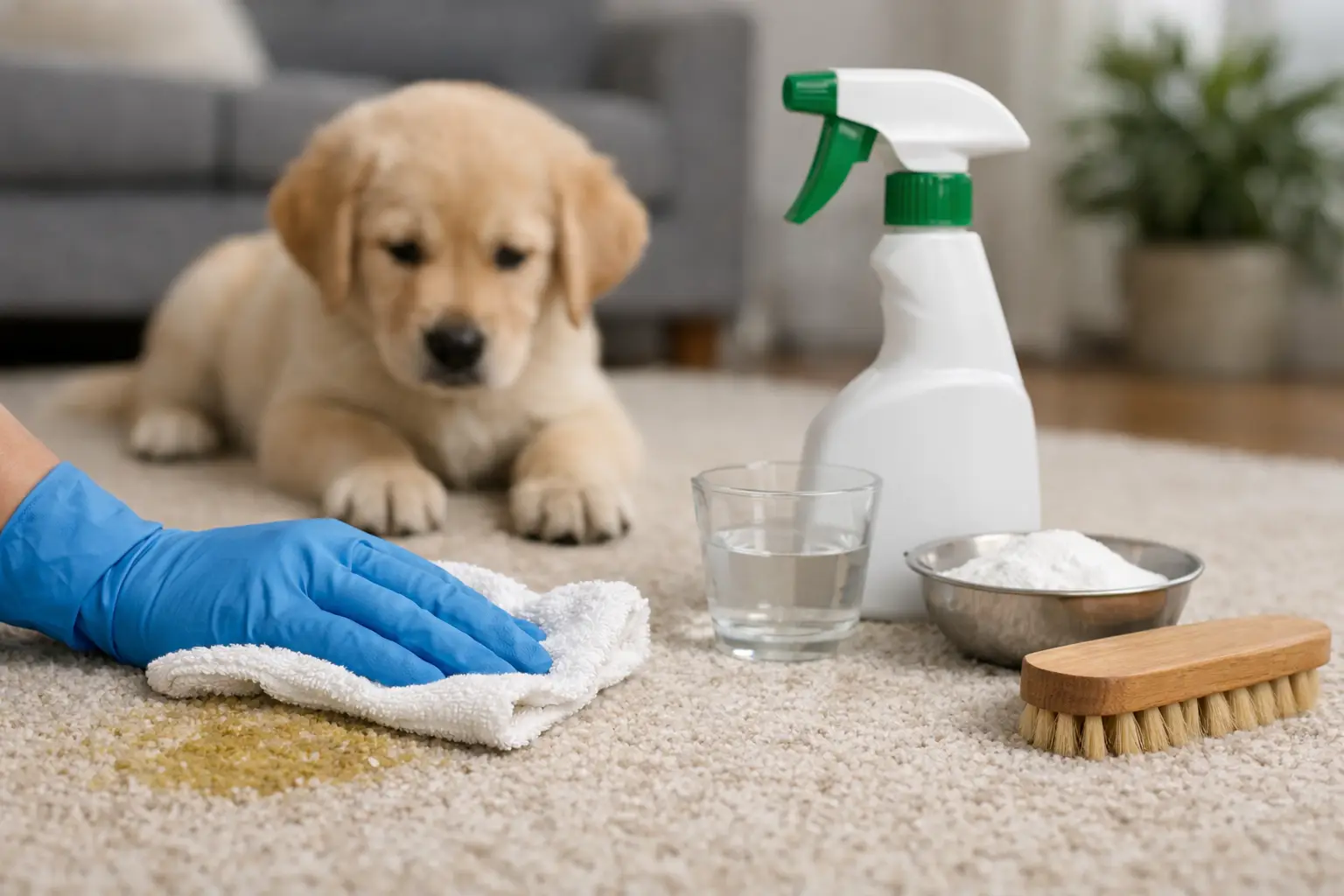
That wet spot in the corner is not just a quick cleanup job. If you are figuring out how to treat pet urine carpet, speed matters, but doing the right steps matters even more. Pet urine can soak below the carpet face fibers, into the backing, pad, and even the subfloor. If you only clean what you can see, the smell often comes back, and pets tend to return to the same spot.
The good news is that fresh accidents are usually manageable if you act fast and avoid the usual mistakes. Older stains are tougher. They often need deeper treatment because the odor is no longer sitting on the surface. It has bonded into the carpet system, and that is where cheap sprays and rushed cleanup usually fall short.
How to treat pet urine carpet before it sets
Start by blotting, not scrubbing. Use clean white towels or paper towels and press firmly to absorb as much liquid as possible. Stand on the towel if needed to pull more moisture up from the fibers. Keep switching to a dry section until the spot stops transferring.
Do not rub the area hard. Scrubbing can spread the urine, push it deeper, and rough up the carpet fibers. That can leave you with two problems instead of one – an odor issue and a worn-looking patch.
Once you have removed as much liquid as possible, rinse lightly with cool water and blot again. The goal is not to soak the carpet. You are trying to dilute what is left near the surface without driving it farther down.
After that, apply an enzyme-based pet treatment made for carpet urine contamination. This is the part many people skip, and it is usually why odors linger. Enzyme treatments are designed to break down the urine compounds that cause smell. A regular household cleaner may make the room smell better for a few hours, but that is not the same as neutralizing the source.
Let the treatment dwell according to the product directions. Then blot again and allow the area to dry completely. Drying matters because moisture left behind can create its own odor problems.
What not to do when cleaning pet urine from carpet
A lot of carpet damage happens after the accident, not during it. The wrong cleaner or too much water can make the spot harder to fix.
Avoid steam from a household machine on a fresh urine spot. Heat can set proteins and make the odor more stubborn. Also avoid over-wetting the area. If the carpet pad gets saturated, the smell can spread beyond the visible stain.
Be careful with strong store-bought deodorizers. Some products simply mask odor instead of removing it. Others leave residue that attracts soil, so the cleaned spot ends up looking dirtier over time. Bleach and harsh chemicals are also a bad idea. They can damage carpet color, weaken fibers, and create unnecessary safety issues in homes with kids and pets.
If you are tempted to use vinegar, the answer is that it depends. A mild vinegar solution can help with some light surface issues, but it is not a cure-all. On deeper contamination, it usually is not strong enough to solve the problem fully. It may reduce odor for a while, but if urine reached the pad, the source is still there.
Why pet urine odor keeps coming back
Pet urine is more complicated than a simple spill. As it dries, it becomes more concentrated. Bacteria feed on the organic material, and that process creates odor. Over time, the urine crystals can reactivate with humidity. That is why a room may smell worse on a rainy Wisconsin day or when the heat kicks on.
This is also why older stains are tricky. Even if the carpet surface looks clean, contamination underneath can keep releasing odor. In homes with repeated accidents, you may be dealing with multiple layers of buildup in the same area.
If your pet keeps sniffing or marking one spot, trust that behavior. Animals can smell residue long after people think the carpet is clean. That usually means the odor source has not been fully removed.
How to treat older pet urine stains in carpet
Older spots require a more thorough approach. First, locate the full affected area. What you see is not always the full footprint. A blacklight can sometimes help identify dried urine spots, especially in low-light conditions.
Blotting will not do much for a stain that dried days or weeks ago, so your focus shifts to rehydrating the contamination enough for treatment to work. Apply an enzyme-based urine treatment generously enough to reach the contamination zone, but do not flood the carpet. This is where people often guess wrong. Too little product does not reach the source. Too much can oversaturate the backing and pad.
Give it enough dwell time, then extract as much moisture as possible. If you only apply product and walk away, residue can remain in the carpet. For mild to moderate spots, this can help. For heavy contamination, especially if there is a strong ammonia smell, it is often not enough.
That is when professional treatment becomes the smart move, not an extra step. Deep urine problems are not just a surface-cleaning issue. They require the right process, the right chemistry, and enough extraction power to remove contamination instead of spreading it around.
When professional carpet cleaning is the better answer
There is a point where spot treatment stops being practical. If the odor fills the room, if the stain keeps reappearing, or if accidents have happened in the same area more than once, the problem is usually below the surface.
Professional hot water extraction is the high-standard method for flushing out embedded contamination from carpet fibers. When paired with proper pet stain and odor treatment, it does far more than what a consumer machine can handle. The difference is not just stronger suction. It is the ability to treat the affected area correctly, rinse out soils and urine residue, and reduce what is left in the carpet system.
For homeowners and business owners who want the job done right, this matters. Odor control is not about covering smells. It is about removing what is causing them. That takes trained technicians, proper equipment, and safe products that are tough on contamination without being reckless in the home.
At Lake Geneva Carpet Cleaning, that is exactly where experience shows. With more than three decades of hands-on work, truckmounted hot water extraction, pet-safe cleaning agents, and a quality-first approach, the company handles pet urine issues the way they should be handled – thoroughly. If you need help with persistent pet odor or recurring stains, call 262-581-6140.
How to protect your carpet after cleanup
Once the area is clean, focus on prevention. Watch for repeat accidents in the same location. If your pet has returned there before, the odor may not be fully gone, or there may be a behavioral or medical issue worth addressing.
Keep the carpet as dry as possible after treatment. Good airflow and fans can help speed drying. Avoid placing furniture over a damp spot too soon, because trapped moisture can create a stale smell and slow the whole process.
It also helps to schedule maintenance cleaning before odor issues build up. Pet homes put more stress on carpet, plain and simple. Between fur, tracked-in soil, body oils, and the occasional accident, carpets need deeper care to stay sanitary and last longer. Waiting until the whole room smells off usually means the cleanup will be harder.
The bottom line on how to treat pet urine carpet
If the accident is fresh, blot thoroughly, use cool water carefully, apply a true enzyme treatment, and let the area dry completely. That gives you the best shot at preventing a stain and stopping odor before it settles in. If the smell remains, if the spot is old, or if the urine likely reached the pad, surface cleaning will only take you so far.
Carpet is a major investment, and pet urine is one of the fastest ways to shorten its life when it is not handled correctly. A fast response helps, but a thorough response is what actually protects your carpet, your indoor air, and the way your home smells when someone walks through the door.
Leave a Reply