If your carpet looks decent but the room still feels dusty, smells stale, or seems to bother allergies, the problem may be what you cannot see. Carpet acts like a filter. It catches dirt, pollen, pet dander, dust mites, and tracked-in debris from daily life. That can be helpful for a while. But once the carpet is loaded up, every footstep can stir that material back into the air.
So, does carpet cleaning improve indoor air quality? Yes, when it is done thoroughly and with the right method, it can make a real difference. But the honest answer is not as simple as saying every carpet cleaning automatically gives you cleaner air. The result depends on how dirty the carpet is, what is trapped in it, and whether the cleaning method actually removes contamination instead of just freshening the surface.
Does carpet cleaning improve indoor air quality?
In many homes and businesses, it does. Carpet fibers hold onto airborne particles that eventually settle out of the air. Over time, those particles build up deep in the pile and backing. That includes common indoor irritants like dust, pet hair, pollen, skin flakes, food crumbs, and residue from shoes.
A proper deep cleaning removes a large amount of that embedded material. Once it is out of the carpet, there is less debris available to get kicked back up into the room. That can mean less lingering dust, fewer trapped odors, and a cleaner overall indoor environment.
This matters even more in households with pets, kids, heavy foot traffic, or people who spend a lot of time indoors. It also matters during Wisconsin weather swings, when mud, salt, moisture, and seasonal allergens get tracked inside and ground into the carpet.
Still, carpet cleaning is not a magic fix for every air quality problem. If the real issue is a dirty HVAC system, poor ventilation, excess humidity, or mold behind walls, carpet cleaning alone will not solve it. What it can do is remove one major reservoir of contamination from your indoor space.
Why carpet affects the air you breathe
A lot of people think of carpet as just a floor covering. In reality, it is one of the biggest collection points in the building. Anything carried in on shoes, paws, clothing, or moving air eventually settles somewhere, and carpet is excellent at catching it.
That includes dry particles and oily residue. Dust settles deep between fibers. Pollen gets tracked in from outside. Pet dander and hair build up in living areas and bedrooms. Spills leave behind sticky residue that holds onto even more dirt. If moisture gets involved, odors can develop and the carpet can start holding onto bacteria-related contamination as well.
When carpet is left in that condition too long, regular vacuuming helps but only to a point. Vacuums are good for maintenance, especially when they use strong filtration, but they do not fully flush out the deep material packed into the carpet base. That is where professional hot water extraction stands apart.
How deep cleaning actually helps
The reason deep carpet cleaning can improve indoor air quality comes down to removal. Not masking. Not pushing debris around. Actual removal.
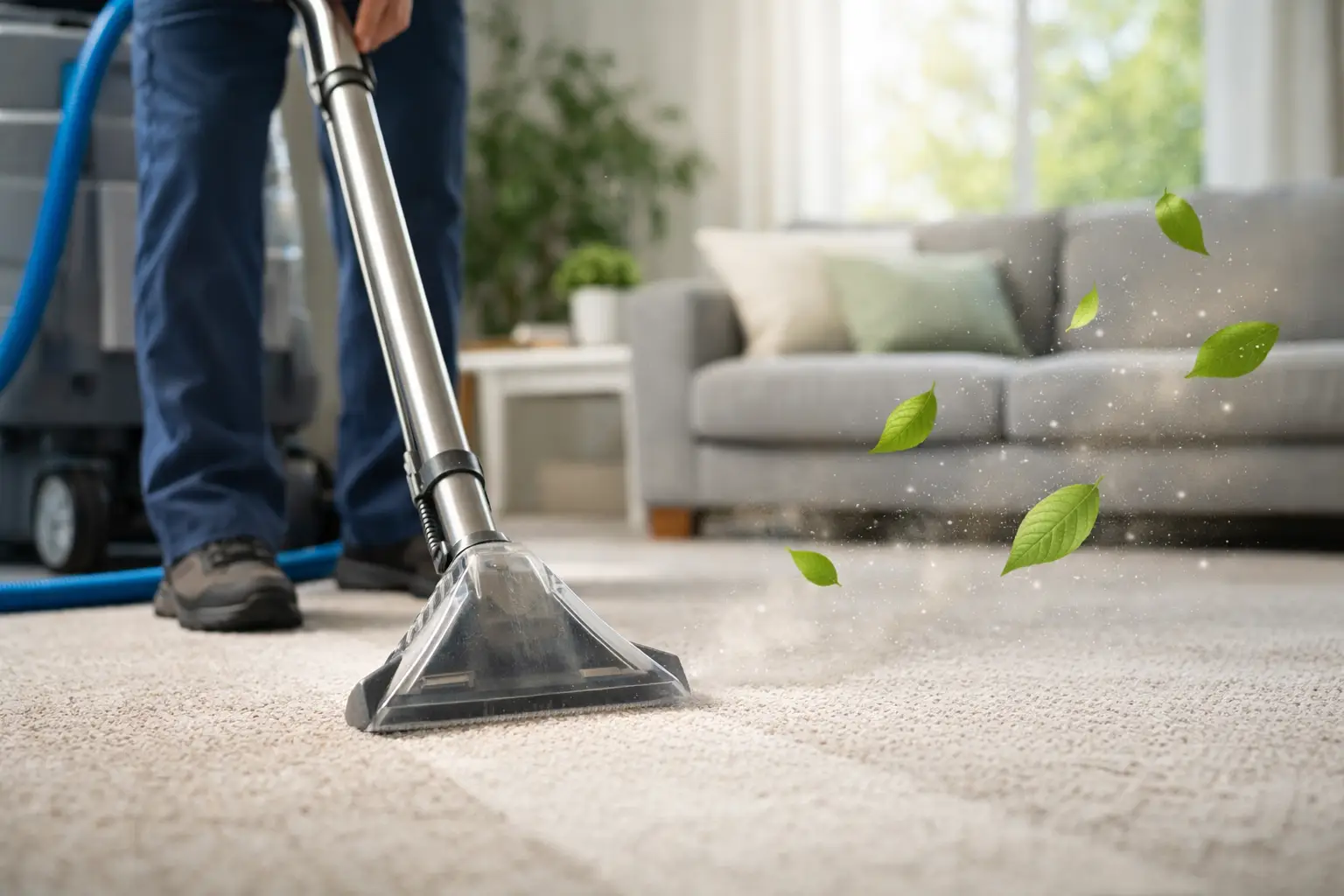
With truckmounted hot water extraction, heat, cleaning solution, agitation, and strong vacuum recovery work together to loosen and pull out embedded dirt, allergens, and residues from deep in the carpet. That matters because contamination does not stay neatly on the surface. It settles below where household tools can easily reach.
When that buildup is extracted, the carpet is no longer holding the same volume of pollutants. There is less trapped material to release into the air during everyday use. Rooms often smell cleaner because odor-causing contamination has been removed instead of covered up.
This is also why method matters so much. A light surface cleaning may make carpet look better for a short time, but appearance and air quality are not always the same thing. A carpet can look acceptable and still hold a heavy load of dust, dander, and residue below the visible surface.
Does carpet cleaning improve indoor air quality for allergy sufferers?
Often, yes, especially when allergens are part of the problem. Carpet can trap pollen, dust mite waste, pet dander, and other fine particles that tend to aggravate sensitive people. The more those materials build up, the more likely they are to affect comfort indoors.
Professional cleaning can reduce that allergen load by removing what has settled into the carpet. That does not mean carpet cleaning cures allergies. It means it can reduce one of the sources that contributes to symptoms.
For families with pets, this can be especially noticeable. Pet hair is visible. Pet dander usually is not. It gets deep into the carpet and upholstery and keeps circulating through normal daily activity. Homes with multiple pets, older pets, or recurring accidents usually need more than routine vacuuming to stay ahead of air quality and odor issues.
Odors and air quality are connected
People sometimes separate air quality from odor, but they are closely related. If a carpet smells musty, sour, or like pet accidents, that usually means something is sitting in the fibers or backing that should not be there.
Odors do not always mean dangerous air, but they do signal contamination. Food spills, tracked-in grime, pet urine, and moisture problems all leave behind material that affects how a room feels and smells. In commercial spaces, that stale carpet smell can also affect how customers and employees experience the space.
Deep carpet cleaning helps by removing the source of the odor. That is a big difference from deodorizing over the top. If the source stays in the carpet, the smell usually returns. If the contamination is properly treated and extracted, the room feels cleaner because it actually is cleaner.
When carpet cleaning helps the most
Some properties see a bigger improvement than others. If the carpet is relatively new, well maintained, and lightly used, the air quality gain may be modest. If the carpet has gone too long without a true deep cleaning, the difference can be substantial.
The biggest improvements usually show up in homes with pets, homes with young children, high-traffic hallways, entry areas, finished basements, and businesses where people track in dirt all day. Seasonal conditions also play a role. In this part of Wisconsin, winter salt, spring mud, and fall debris all add to what gets buried in carpet over time.
If someone in the building notices more dust than usual, lingering odors, or that heavy dirty-carpet feeling in the air, that is a sign the carpet may be contributing more than people realize.
What cleaning cannot fix
This is where a straight answer matters. Carpet cleaning improves indoor conditions, but it has limits.
If you have water damage that reached the pad or subfloor, hidden mold growth, poor ventilation, or an HVAC system blowing dust through the building, those issues need to be addressed directly. Carpet cleaning can remove contamination from the carpet itself, but it cannot correct every source of indoor air problems.
It also will not undo years of neglect with one quick pass if the carpet has severe buildup, heavy pet contamination, or permanent damage. In those cases, a professional assessment matters because the right treatment approach makes all the difference.
Why professional equipment matters
There is a major difference between doing a surface-level rinse and performing a true extraction cleaning. Strong equipment recovers more soil, more moisture, and more residue from deep in the carpet. That leads to a better result for cleanliness and a better result for the indoor environment.
Truckmounted hot water extraction remains the top standard because it combines deep flushing power with strong recovery. That is what helps remove the material that contributes to dust, allergens, and odors. It is also why trained technicians matter. The equipment is only part of the equation. Proper solution use, stain treatment, and extraction technique all affect the outcome.
Lake Geneva Carpet Cleaning focuses on that higher standard approach because the goal is not just to make carpet look cleaner for a day. It is to get the dirt and contamination out.
How often should carpet be cleaned for better air quality?
For many households, professional cleaning every 6 to 12 months is a solid maintenance range. Homes with pets, kids, allergy concerns, or heavier foot traffic often need it more often. Small businesses, offices, and customer-facing spaces may also need a tighter schedule to stay ahead of soil and odor buildup.
The right timing depends on use, not just the calendar. If your carpet dulls quickly after vacuuming, holds onto odors, or seems to release dust when walked on, it is probably overdue.
Clean carpet supports a cleaner indoor environment, but only if it stays on a regular maintenance cycle. Waiting until the carpet looks obviously dirty usually means a lot has already settled deep below the surface.
A cleaner home or workplace does not always start with what you can see. Sometimes the biggest difference comes from removing what has been hiding in the carpet all along. If your indoor air feels heavy, dusty, or stale, a proper deep cleaning is one of the smartest places to start. For help in Lake Geneva and nearby communities, call 262-581-6140 or visit https://lakegenevacarpetcleaningwi.com.
Leave a Reply